- English
- French
- German
- Portuguese
- Spanish
- Russian
- Japanese
- Korean
- Arabic
- Greek
- German
- Turkish
- Italian
- Danish
- Romanian
- Indonesian
- Czech
- Afrikaans
- Swedish
- Polish
- Basque
- Catalan
- Esperanto
- Hindi
- Lao
- Albanian
- Amharic
- Armenian
- Azerbaijani
- Belarusian
- Bengali
- Bosnian
- Bulgarian
- Cebuano
- Chichewa
- Corsican
- Croatian
- Dutch
- Estonian
- Filipino
- Finnish
- Frisian
- Galician
- Georgian
- Gujarati
- Haitian
- Hausa
- Hawaiian
- Hebrew
- Hmong
- Hungarian
- Icelandic
- Igbo
- Javanese
- Kannada
- Kazakh
- Khmer
- Kurdish
- Kyrgyz
- Latin
- Latvian
- Lithuanian
- Luxembou..
- Macedonian
- Malagasy
- Malay
- Malayalam
- Maltese
- Maori
- Marathi
- Mongolian
- Burmese
- Nepali
- Norwegian
- Pashto
- Persian
- Punjabi
- Serbian
- Sesotho
- Sinhala
- Slovak
- Slovenian
- Somali
- Samoan
- Scots Gaelic
- Shona
- Sindhi
- Sundanese
- Swahili
- Tajik
- Tamil
- Telugu
- Thai
- Ukrainian
- Urdu
- Uzbek
- Vietnamese
- Welsh
- Xhosa
- Yiddish
- Yoruba
- Zulu
Insulating Gloves Standards: A Guide for Global Importers
Founded in 1956, PPEMAX stands as a premier global manufacturer and supplier of full-range personal protective equipment. All our products comply with internationally recognized standards including IEC, ASTM, CE, UKCA, NIOSH and ISO9001. Equipped with a 2,000-square-meter modern production plant, we boast over 25 years of mature OEM & ODM capabilities to deliver one-stop customized solutions covering R&D design through worldwide logistics. Our safety gear is distributed across 134 countries globally. Upholding our core tenet “Safety First, Quality Priority”, we serve as a dependable long-term PPE partner for industrial enterprises around the world.
Sourcing electrical safety equipment is more than just price and delivery time. If your staff needs PPE to withstand high-voltage situations, then every purchasing choice is a matter of life and death. Insulating gloves are the first line of protection against electrical shock, arc flash, and contact burns in energised settings. Knowing the worldwide standards that regulate these essential safety tools—ASTM D120, IEC 60903, and EN 60903—allows importers to make educated choices to safeguard workers and meet regulatory requirements in many countries. This paper details the technical specifications, categorisation systems, and procurement techniques that differentiate acceptable protection from excellent safety performance, whether you are providing utilities, building sites, manufacturing plants, and more.
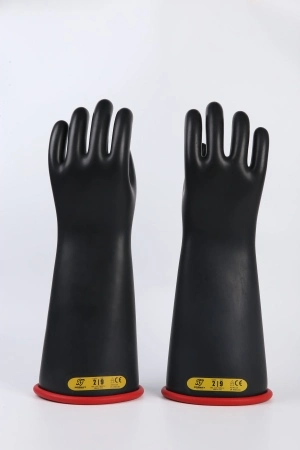

|
Parameter |
Specification |
|
Maximum Use Voltage |
17,000V AC / 25,500V DC |
|
Proof Test Voltage |
20,000V AC / 50,000V DC |
|
Typical Thickness |
2.3mm (ASTM D120 compliant) |
|
Material Type I |
Natural Rubber (high elasticity) |
|
Material Type II |
Synthetic/EPDM (ozone resistant) |
|
Standards Compliance |
ASTM D120, IEC/EN 60903 |
|
Temperature Range |
-40°F to +140°F (-40°C to +60°C) |
|
Color Options |
Orange, Red, Black |
Essential Criteria for Importers: Types and Ratings of Insulating Gloves
Voltage rating is the most important parameter of electrical protective gloves. Class 00 gloves are rated for 500V AC maximum usage voltage and are used for low-voltage applications in telecommunications, HVAC systems, and light industrial maintenance. Class 0 is rated up to 1,000V AC and is used for working on utility meters and for the repair of distribution panels. Higher Class – 1-4 – handle more demanding voltage situations, with Class 4 gloves taking care of workers in transmission substations and high-voltage switching stations, up to 36,000V AC.
Voltage Ratings and Proof Testing Requirements
All voltage classes of insulating gloves are fully proof-tested at voltages much in excess of operating voltages. We provide Class 00 gloves, rated for a maximum usage of 500V but able to endure 2,500V AC when proof testing is done, at PPE MAX. This safety margin includes environmental influences, material ageing, and unexpected voltage transients. Proof testing is performed before the first issue and periodically during the service life of the glove, usually every six months for Class 00 and Class 0 gloves, and may extend to twelve months for higher classes, depending on jurisdiction.
The testing process consists of immersing the gloves in water tanks and applying appropriate voltages while monitoring for current leakage. If electricity is detected flowing, the dielectric has broken down, and the glove must be retired immediately. Organisations that use this form of destructive testing must be able to turn inventory over enough to allow for the periodic testing without jeopardising the protection of the personnel.
Color Coding and Visual Identification Systems
The industry requirement is that there be a unique colour coding to avoid misunderstanding on work sites about voltage ratings. Class 00 gloves are usually beige or brown in colour and are marked with the voltage class, size, and latest test date. The higher voltage classes are colour-coded in a conventional way: red for Class 0, white for Class 1, yellow for Class 2, green for Class 3, and orange for Class 4. These visible indicators assist supervisors in verifying the proper selection of equipment during pre-work safety briefings and in reducing the potential for unintentional exposure to voltages that exceed the specifications of the gloves.
Length specification also affects the safety levels apart from the voltage classification. Standard 11-inch gloves are appropriate for most applications; however, 14-inch and 16-inch gloves provide additional forearm protection in situations when workers are reaching inside energised enclosures or working near exposed busbars. Our Class 00 products at PPE MAX are available in 11-inch and 14-inch models to meet the operating needs of the low-voltage class.
Durability Factors and Service Life Considerations
Dielectric characteristics decrease progressively due to temperature extremes, mechanical wear, chemical exposure, and UV light. Natural rubber latex is a great electrical insulator but is subject to ozone cracking and petroleum-based contamination. Service life is substantially affected by storage circumstances; gloves kept in cold, dark settings away from electric motors, welding equipment, and other sources of ozone will retain their protective characteristics far longer than gloves exposed to heat and light.
Electrical protection is compromised even by superficial-looking mechanical damage such as punctures, scrapes, and abrasions. All procedures with sharp edges, rough surfaces, or possible impact risks should be undertaken using electrical gloves along with leather protective gloves as required by standards. This multi-layered protection system improves service life and helps avoid mechanical breakdowns that might expose personnel to electrical risks.

Procurement Guide: How to Select and Buy Insulating Gloves for Your Business
Selecting appropriate electrical protective equipment requires analyzing multiple factors beyond voltage ratings. Procurement professionals must evaluate material compatibility with workplace contaminants, sizing accuracy for diverse workforce demographics, compliance documentation for regulatory audits, and manufacturer reliability for consistent supply chain performance.
Material Selection Criteria
Natural rubber latex gloves offer the optimal balance of flexibility, dielectric strength, and cost-effectiveness for most applications. They perform well in general electrical maintenance environments where chemical exposure remains minimal. However, facilities using petroleum-based lubricants, hydraulic fluids, or solvents benefit from synthetic formulations that resist degradation from these contaminants.
Nitrile-based gloves provide superior chemical resistance while maintaining adequate electrical insulation properties. EPDM formulations excel in high-temperature environments and demonstrate exceptional resistance to weathering and UV exposure. Our manufacturing experience since 1956 has shown that procurement teams often overlook material compatibility with workplace conditions, resulting in premature glove failure and increased replacement costs.
Compliance Certification Verification
Legitimate manufacturers provide comprehensive documentation demonstrating compliance with applicable standards for insulating gloves. This documentation includes third-party laboratory test reports, certification marks from recognized bodies, and detailed specifications confirming voltage ratings, material composition, and testing intervals. We provide ASTM D120 and IEC 60903 certification for our Class 00 gloves, along with CE marking for European market access, ensuring buyers receive fully compliant products regardless of destination market.
Importers should request manufacturer declarations of conformity, batch-specific test data, and traceability documentation linking received products to certified production runs. This paperwork proves essential during workplace safety audits and regulatory inspections, particularly for government procurement departments and multinational corporations maintaining centralized compliance programs.
Spotlight on PPE MAX Class 00 Solutions
Our Class 00 electrical protection gloves combine decades of manufacturing knowledge with modern material science. These gloves protect telecommunications installers, low-voltage industrial maintenance workers, and utility meter operators at 500V AC maximum use voltage and 2,500V AC proof testing. They accommodate 11- or 14-inch hand sizes and maintain dexterity for complex electrical operations.
Comfortable ergonomic design, ozone resistance, and high-quality natural rubber latex construction are essential. For simple identification, gloves include voltage class, size, and test date indications. These red or black boxes hold 20 pairs, simplifying bulk buying and inventory management. These 170-gram pairs are lightweight enough for all-day use without hand strain.
The value proposition extends beyond product details. Custom sizing, private labelling, and international shipping to 134 countries are offered at discounted bulk order costs. Our technical support team provides product training, rapid response times, and ongoing testing and maintenance.

If you're evaluating personal protective equipment suppliers and require batch-specific testing documents before placing an order, PPE MAX is able to provide official Certificates of Analysis, professional laboratory test reports, and product samples for your verification. Feel free to contact our team at marketing@ppemax.com to discuss your sourcing needs and obtain complete documentation for your quality assessment and procurement approval.
Maintenance, Testing, and Safe Use of Insulating Gloves
Protective equipment performs reliably only when properly maintained and regularly inspected. Establishing rigorous maintenance protocols and adhering to testing schedules prevent equipment failure during critical operations.
Routine Inspection Procedures
Before each usage, visual inspection should reveal visible damage such as punctures, rips, embedded foreign objects, and surface degradation. The test involves inflating the glove with air and placing pressure on the glove while listening for escaping air. The test is sensitive to small faults not detectable by visual examination. Users wrap up the cuff to trap air within. Then they compress the glove, listening and feeling for leaks. Any flaw discovered demands that gloves be immediately removed from service.
Dielectric strength electrical testing is conducted in recognised labs under regulated circumstances. Frequency of testing is dependent on voltage class and regulatory jurisdiction – Class 00 gloves are normally tested every six months, while some organisations may choose more cautious three-month intervals for high-use applications. Each manufacturing batch is delivered with comprehensive testing records, offering purchasers proof of their compliance processes.
Storage and Cleaning Best Practices
Proper storage reduces exposure to environmental degradation elements, therefore extending the service life of the gloves. Gloves should be stored in cool, dark areas away from heat sources, ozone-producing equipment, and direct sunlight. Hanging storage permits air circulation and avoids creasing that speeds material fatigue. Storage containers should not touch copper, brass, and other metals that catalyse rubber breakdown.
Cleaning eliminates impurities that degrade dielectric characteristics. Mild soap solutions and lukewarm water will handle most soiling; however, badly dirty gloves could need specialised cleaning agents as indicated by the manufacturers. Thorough washing of soap residues and full air drying minimise moisture trapping, which would cause material deterioration. With every shipment, we give specific cleaning techniques so end users may retain optimum glove performance throughout the servicing term.
Recognizing Retirement Indicators
Some situations require gloves to be retired immediately even if they pass test findings. Cracking on the surface, especially at stress areas such as knuckles and finger joints, is a sign of old age in the material. Embedded pollution from chemicals, petroleum products, or other foreign materials damages the electrical insulation. Ozone damage may be determined by discolouration and chalky white deposits on natural rubber gloves. If physical damage is evident, such as punctures, scratches, or rips, even if it seems slight, retirement is warranted, since electrical current tends to concentrate at defect locations.
The leather protector gloves that are integrated over the electrical gloves provide a full protection system. Leather covers provide modest arc flash shielding and protection against mechanical risks. This multilayer method is especially useful in utility distribution operations when glove integrity might be compromised by sharp metal edges, rough concrete surfaces, and falling items. User training in correct donning processes, inspection methods, and danger identification completes the safety framework.
Integrating Insulating Gloves Standards Into Your Procurement Strategy
Embedding compliance in procurement processes moves standards compliance from a passive tick-the-box activity to proactive risk management. These organisations have had fewer workplace mishaps, more efficient audit procedures, and a lower total cost of ownership despite a larger upfront investment in technology.
Building Compliance Into Sourcing Processes
Qualified vendor lists should only contain firms that demonstrate sustained certification management, strong quality management systems, and transparent supply chain traceability. Procurement requirements must specifically mention appropriate standards such as ASTM D120 or IEC 60903, and not just say "electrical gloves", and require documentation to be supplied with every shipment. In terms of contract conditions, testing support, replacement of equipment in case of failure, and technical support during regulatory audits should be included.
We build our client relationships around these needs, offering certification packages with each transaction, keeping thorough production records for traceability questions, and assisting buyers with workplace inspections. With six decades of manufacturing experience, our quality management system assures consistent product performance throughout production runs that may span months or years of continuous procurement agreements.
Real-World Implementation Example
A multinational mining company operating on four continents has uneven requirements for electrical protection equipment, complicating compliance monitoring and increasing the risk of incidents. The first step in their procurement transformation was to do complete hazard assessments at each location to determine voltage exposure levels and the requisite glove categories. They developed a centralised vendor qualification scheme that focused on manufacturers with multiple certifications to standards, which provided for standardised requirements across different regulatory countries.
The implementation team established extensive inspection and testing processes based on the most demanding relevant requirements to ensure compliance, no matter where the facility is located. They created framework agreements with certified suppliers, such as PPE MAX for Class 00 and Class 0 needs, setting up prices, delivery schedules, and documentation criteria for a three-year period. The program cut down electrical incidents by 67% in the first year and decreased procurement expenses via volume consolidation and simplification of vendor management.
Emerging Trends Shaping Future Requirements
Materials science improvements hold the promise of improving glove performance with greater flexibility, chemical and environmental resilience. Graphene-boosted rubber compositions might provide better electrical insulation with less substance, perhaps adding to dexterity without sacrificing protection. Smart glove technologies with integrated sensors may be used to check dielectric integrity in real-time, warning users of deterioration before failure.
The development of testing methodology is toward non-destructive procedures that may evaluate the state of gloves in service. Capacitance-based testing and infrared spectroscopy are promising for field-deployable testing instruments, possibly lengthening testing intervals and boosting safety margins. The regulatory climate is moving toward environmental responsibility, with more emphasis paid to production sustainability, material recyclability, and environmental effects throughout the lifespan. Procurement pros who track these trends put their organisations ahead of regulatory curves and unlock performance gains that better safeguard the workforce.
Conclusion
A thorough grasp of voltage ratings, material qualities, certification standards, and maintenance methods is crucial to protect workers in electrical situations. Electrical protection insulating gloves are subject to standards—ASTM D120, IEC 60903, and EN 60903—that offer a foundation for uniform safety performance across worldwide markets. The best procurement will marry these technological needs with practical factors like material compatibility, right-sizing, vendor dependability, and lifetime cost control. Partnering with experienced manufacturers provides organisations with compliance knowledge, technical support, and consistent product quality that turns safety equipment from a commodity buy to a strategic worker protection investment.
FAQ
1. How often should electrical protective gloves undergo testing?
Testing frequency depends on voltage class and regulatory jurisdiction. Class 00 and Class 0 gloves typically require electrical testing every six months under OSHA regulations and most international standards. Higher voltage classes—Class 1 and above—may extend to annual testing in some jurisdictions, though organizations operating under NFPA 70E guidelines often implement more conservative intervals. Beyond scheduled electrical testing, visual inspection and air inflation tests must occur before every use, with immediate glove removal from service upon detecting any defect, regardless of testing schedule compliance.
2. What voltage rating do high-voltage maintenance tasks require?
Task voltage determines minimum glove class requirements. Work on circuits between 500V and 1,000V AC requires Class 0 gloves at minimum, though many organizations specify Class 1 for an additional safety margin. Distribution systems operating between 1,000V and 7,500V demand Class 2 protection. Transmission work and substation maintenance involving voltages from 7,500V to 17,000V requires Class 3 gloves. The highest voltage applications—above 17,000V up to 36,000V—necessitate Class 4 protection. Safety margins built into these classifications account for voltage transients, ensuring protection exceeds nominal system voltage.
3. Can electrical gloves perform reliably in extreme temperatures?
Temperature affects rubber material properties significantly. Natural rubber latex gloves maintain flexibility and dielectric strength within typical industrial temperature ranges but become stiff and brittle below -25°C or above 65°C. Specialized formulations address extreme conditions—cold-weather compounds remain flexible at temperatures as low as -40°C, while heat-resistant variants tolerate brief exposure to elevated temperatures. Manufacturers provide temperature range specifications for each product line. Operations routinely encountering temperature extremes should consult technical specifications and consider supplementary protection or specialized material formulations designed for those conditions.
Partner With Trusted Electrical Safety Glove Manufacturers
PPE MAX brings 68 years of manufacturing expertise to your electrical safety procurement challenges. Our Class 00 insulating gloves deliver certified protection meeting both ASTM D120 and IEC 60903 standards, backed by comprehensive documentation supporting your compliance programs. We serve safety distributors, industrial procurement departments, and government agencies across 134 countries with competitive bulk pricing, customization capabilities, and responsive technical support. Whether you're establishing new supplier relationships or upgrading existing safety programs, our team provides the product knowledge and manufacturing reliability your workforce deserves. Contact our procurement specialists at marketing@ppemax.com to discuss your specific requirements, request product samples, or receive detailed quotations for your next electrical safety glove supplier partnership.
References
1. American Society for Testing and Materials (2021). ASTM D120-20 Standard Specification for Rubber Insulating Gloves. West Conshohocken, PA: ASTM International.
2. International Electrotechnical Commission (2018). IEC 60903:2018 Live Working - Electrical Insulating Gloves. Geneva: IEC Central Office.
3. Occupational Safety and Health Administration (2020). OSHA 29 CFR 1910.137 - Electrical Protective Equipment. Washington, DC: U.S. Department of Labor.
4. National Fire Protection Association (2021). NFPA 70E: Standard for Electrical Safety in the Workplace. Quincy, MA: NFPA Publications.
5. Cadick, J., Capelli-Schellpfeffer, M., and Neitzel, D. (2019). Electrical Safety Handbook, 4th Edition. New York: McGraw-Hill Education.
6. European Committee for Electrotechnical Standardization (2019). EN 60903:2019 Live Working - Gloves of Insulating Material. Brussels: CENELEC Management Centre.
Learn about our latest products and discounts through SMS or email