- English
- French
- German
- Portuguese
- Spanish
- Russian
- Japanese
- Korean
- Arabic
- Greek
- German
- Turkish
- Italian
- Danish
- Romanian
- Indonesian
- Czech
- Afrikaans
- Swedish
- Polish
- Basque
- Catalan
- Esperanto
- Hindi
- Lao
- Albanian
- Amharic
- Armenian
- Azerbaijani
- Belarusian
- Bengali
- Bosnian
- Bulgarian
- Cebuano
- Chichewa
- Corsican
- Croatian
- Dutch
- Estonian
- Filipino
- Finnish
- Frisian
- Galician
- Georgian
- Gujarati
- Haitian
- Hausa
- Hawaiian
- Hebrew
- Hmong
- Hungarian
- Icelandic
- Igbo
- Javanese
- Kannada
- Kazakh
- Khmer
- Kurdish
- Kyrgyz
- Latin
- Latvian
- Lithuanian
- Luxembou..
- Macedonian
- Malagasy
- Malay
- Malayalam
- Maltese
- Maori
- Marathi
- Mongolian
- Burmese
- Nepali
- Norwegian
- Pashto
- Persian
- Punjabi
- Serbian
- Sesotho
- Sinhala
- Slovak
- Slovenian
- Somali
- Samoan
- Scots Gaelic
- Shona
- Sindhi
- Sundanese
- Swahili
- Tajik
- Tamil
- Telugu
- Thai
- Ukrainian
- Urdu
- Uzbek
- Vietnamese
- Welsh
- Xhosa
- Yiddish
- Yoruba
- Zulu
How to Find Certified Insulating Gloves Manufacturers in China
Founded in 1956, PPEMAX stands as a premier global manufacturer and supplier of full-range personal protective equipment. All our products comply with internationally recognized standards including IEC, ASTM, CE, UKCA, NIOSH and ISO9001. Equipped with a 2,000-square-meter modern production plant, we boast over 25 years of mature OEM & ODM capabilities to deliver one-stop customized solutions covering R&D design through worldwide logistics. Our safety gear is distributed across 134 countries globally. Upholding our core tenet “Safety First, Quality Priority”, we serve as a dependable long-term PPE partner for industrial enterprises around the world.
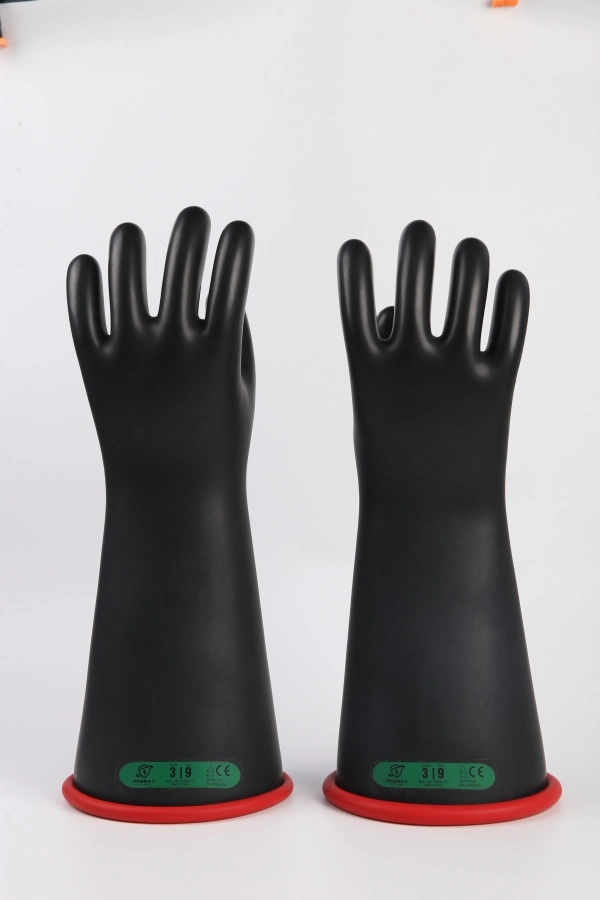
To find licensed insulating glove manufacturers in China, it is important to use a methodical strategy that combines safety compliance, quality assurance, and cost-effectiveness. Chinese manufacturers have made great strides in the production of electrical safety equipment that fulfils international standards such as ASTM D120 and IEC 60903. These voltage-rated rubber gloves are used in live-line maintenance and installation operations to protect electrical workers from shock threats. When purchasing from China, buyers should seek certifications, evaluate manufacturing capabilities, and create open communication lines to guarantee the protective gear complies with occupational safety regulations and maintains dielectric strength and hand dexterity.

|
Parameter |
Specification |
Standard |
|
Maximum Use Voltage |
26,500V AC / 39,750V DC |
ASTM D120 / IEC 60903 |
|
Proof Test Voltage |
30,000V AC / 45,000V DC |
ASTM D120 |
|
Material Types |
Type I (Natural Rubber) / Type II (EPDM) |
ASTM D120 |
|
Thickness Range |
2.3mm - 2.9mm |
Industry Standard |
|
Length Options |
14" - 18" inches |
Customizable |
|
Label Color |
Green |
International Standard |
|
Temperature Range |
-25°C to +65°C |
Operating Conditions |
Core Criteria to Identify Reliable Certified Insulating Gloves Manufacturers in China
Selecting the proper manufacturing partner is a process that entails a systematic review across a range of variables. The following factors assist in differentiating between established manufacturers and opportunistic vendors who may not have the infrastructure to offer consistent quality.
Verifying Product and Factory Certifications
The verification of a genuine certificate protects the consumer against forged documents and inferior goods for insulating gloves. Ask for authentic certificates that are individually numbered, and this number should correspond to the issuing body. Being ISO 9001 certified means that quality management is systematic, and being ISO 45001 certified means occupational health and safety are in focus. Reputable producers embrace third-party audits and are upfront in making testing findings from authorised labs available. Using video conferencing technology for remote audits has become common practice, enabling procurement teams to monitor manufacturing lines and quality control systems without travelling internationally.
Evaluating Production Capacity and Product Range
The size of manufacturing has a direct influence on the capacity to reliably fulfil orders and customise products. Visit facilities electronically or in person to analyse the complexity of equipment, degree of automation, and raw material procurement processes. Major Chinese manufacturers provide full ranges of products in all voltage classes, various cuff types, and unique designs for certain applications. The production capacity should match your volume needs, but with a buffer capacity for demand variations. In general, manufacturers that produce a wider range of products are more technically advanced and have better developed quality processes than those who produce just one product.
Assessing Supplier Experience and Global Client Portfolio
The track record over the marketing material. Manufacturers that supply global enterprises, government agencies, and established distributors have shown their ability to satisfy demanding standards and delivery dates. Look for case studies of effective long-term collaboration with your section of industry clientele. Export experience to mature markets like North America and Europe demonstrates expertise with strict regulatory standards and international logistics. An open attitude to production difficulties and their solutions indicates operational maturity, which translates into solid partnership dynamics.

Step-by-Step Strategy to Source Certified Insulating Gloves from China
A structured procurement process minimizes risks while optimizing cost and quality outcomes. The following roadmap guides buyers from initial specification through final delivery.
Define Your Specifications and Customization Needs
Clarity prevents miscommunication and ensures manufacturers can accurately quote your requirements. Specify voltage class, glove length, size range, color preferences, and packaging configurations. PPE MAX offers Class 00 electrical safety gloves rated for 500V AC maximum use voltage, available in 11 and 14-inch lengths with sizes ranging from 8 to 11. These gloves comply with both IEC 60903 and ASTM D120 standards, providing versatility for global procurement initiatives. Customization options include private labeling, specialized cuff designs, and custom packaging to support brand differentiation. Material preferences between natural rubber latex and synthetic alternatives affect cost, durability, and allergen considerations that impact workforce acceptance.
Our Class 00 gloves weigh approximately 170 grams per pair and feature red or black coloring for easy voltage class identification on job sites. The standard packaging configuration—one pair per box, twenty pairs per carton—optimizes warehouse efficiency while protecting gloves during transportation. Carton dimensions of 54.5 x 35 x 42.5 cm and weight of 6.5 kg facilitate logistics planning and freight cost estimation during the sourcing phase.
Use Verified Sourcing Platforms and Trade Shows
Digital B2B marketplaces and industry exhibitions provide initial supplier identification, though due diligence remains essential. Platforms offering supplier verification services reduce preliminary screening time by confirming business registration, export licenses, and basic certifications. Trade shows like China Labor Protection Articles Fair in Shanghai and Canton Fair enable face-to-face meetings that build rapport and allow physical product examination. During these interactions, assess communication responsiveness, technical knowledge depth, and willingness to address detailed questions. Strong manufacturers provide comprehensive technical documentation including material specifications, testing protocols, and quality control procedures without hesitation.
Conduct Factory Audits and Request Test Reports
On-site or virtual factory audits reveal operational realities that paper documentation cannot capture. Examine raw material storage conditions, mixing and molding processes, and in-process quality checkpoints. Electrical testing equipment should include high-voltage breakdown testers, thickness gauges, and visual inspection stations with standardized protocols. Request copies of recent batch test reports showing proof test voltage results, dielectric strength measurements, and physical property data. Accredited third-party testing facilities like SGS, Intertek, or Bureau Veritas provide independent validation that supplements manufacturer internal testing. This dual-layer verification approach substantially reduces the probability of receiving non-conforming products.
Negotiate Pricing and Logistics
Competitive pricing for insulating gloves should never compromise safety performance. Volume commitments typically unlock tiered discounting structures, while payment terms reflect mutual trust levels. Letter of credit arrangements protect both parties during initial transactions before establishing payment-on-account relationships. Logistics planning must account for customs certification requirements in destination markets, particularly for PPE products subject to import regulations. Chinese manufacturers with established international shipping partnerships can facilitate customs documentation and suggest optimal freight solutions balancing cost and transit time. Container load optimization reduces per-unit shipping costs for large procurement volumes common among distributors and major industrial facilities.

If you're evaluating personal protective equipment suppliers and require batch-specific testing documents before placing an order, PPE MAX is able to provide official Certificates of Analysis, professional laboratory test reports, and product samples for your verification. Feel free to contact our team at marketing@ppemax.com to discuss your sourcing needs and obtain complete documentation for your quality assessment and procurement approval.
Comparison of Leading Insulating Gloves Manufacturers and Brands in China
In China, there are many producers of electrical safety equipment who have a good export record and constantly enhance the quality of their products. The buyers are aware of the competitive situation and choose the best partners for certain needs.
Performance Characteristics of Different Glove Types
The material used is a major factor in the performance of a glove in all the important criteria. Natural rubber latex has better flexibility and electrical qualities but poses allergy problems for sensitive personnel. EPDM synthetic rubber is better at resisting ozone and will last longer when used in difficult environmental conditions. Dipping construction techniques provide a slimmer profile and better tactile sensitivity than moulded counterparts; however, moulded gloves are often more mechanically durable. These trade-offs necessitate tailoring product qualities to the needs of the unique work environment.
PPE MAX has been making protective equipment since 1956, with over six decades of material science experience and industrial refinement. That knowledge transfers into product designs that can juggle conflicting performance objectives without losing safety margins. The ergonomic design improves dexterity for handling delicate parts and precise work, while keeping the dielectric properties needed for electrical safety. The gloves are reliable performers in both dry and wet environments, which is important for outside utility work where the weather is unpredictable.
Quality Comparison with Established Global Brands
Chinese firms have closed previous quality disparities with Western brands via technological investment and maturing of quality systems. Blind testing from respected labs is increasingly showing that premium Chinese goods are equivalent to recognised foreign brands in dielectric performance and durability. Usually the difference is in name recognition and pre-existing connections with distributors rather than any actual demonstrable performance difference. Chinese producers have an appeal for cost-conscious clients as well, who may enjoy price benefits of between twenty and forty percent, without sacrificing critical safety attributes.
Case studies from the field illustrate the effective implementation of Chinese electrical safety gloves in challenging situations. Chinese protective equipment has been used in major renewable energy projects, telecommunications infrastructure expansions, and industrial facility maintenance programs following thorough certification testing. The success of these initiatives verifies the production quality and encourages trust in the supplier relationships going forward.
Best Practices to Maintain and Maximize the Lifespan of Insulating Gloves
Correct maintenance procedures prolong the service life and provide continued electrical protection. Organisations that have systematic inspection and care programs save a lot of money and increase worker safety.
Regular Inspection and Testing Protocols
Daily visual checks before use are the best way to spot evident flaws such as cuts, rips, or embedded foreign objects. Inflate gloves and roll them down toward the fingers, listening for air leaks that signal impaired dielectric integrity. Electrical testing (every 6 months) is scheduled to check that the efficiency of the insulation has not been damaged by use or ageing. This proactive testing detects degradation before failure during important job activities. Keep thorough records of each glove pair over its service life, including test results, inspection findings, and use circumstances.
Proper Cleaning and Storage Methods
Rubber compounds must be preserved using cleaning techniques that do not introduce contamination. Mild soap solutions may remove surface grime and grease without chemical assault on the material matrix. Do not use petroleum-based solvents, strong detergents, or abrasive scrubbing that might hasten breakdown. Rinse thoroughly and let it air dry. Any moisture left behind encourages bacterial development and material degradation. Shelf life is very dependent on storage circumstances. Store in cool, dry places away from direct sunlight, ozone sources, and temperature extremes. Hanging storage keeps gloves creaseless and in shape for fast deployment. These basic actions may quadruple effective service life vs. negligent handling.
Recognizing Replacement Indicators
Physical damage, failure of tests, or expiry dates result in prompt retirement from duty. If it develops surface cracks, is sticky or brittle, or changes colour, it has degraded and has to be replaced. Typically, the manufacturers provide shelf life information in the range of two to five years, depending on the nature of the substance and the storage circumstances. Compliance managers should develop schedules for replacement based on manufacturer recommendations and regulatory requirements. The comparatively low cost of timely glove replacement is a pittance compared to harm costs and regulatory fines incurred by employing compromised protective equipment.
Conclusion
Rigorous qualifying customers will discover that sourcing certified electrical protection insulating gloves from Chinese producers provides cost savings without compromising on safety. Reliable partners are distinguished from marginal suppliers by the verification of international certificates, factory audits, and a systematic examination of quality control. Chinese manufacturers such as PPE MAX have decades of industrial expertise and full certification portfolios to satisfy worldwide regulations. Competitive price, freedom to customise and an established track record in exports have made China an appealing sourcing location for distributors, industrial end-users and government procurement agencies. To be successful, you must pick your suppliers carefully, communicate your specifications clearly and continue to check quality over the life of the collaboration.
FAQ
1. How can I verify a Chinese manufacturer's certifications are legitimate?
Request original certificates with unique tracking numbers and contact certification bodies directly to confirm validity. Accredited testing laboratories like SGS maintain databases of issued certificates that buyers can query. Third-party audit services provide independent verification of manufacturing capabilities and quality systems. Reputable manufacturers welcome this scrutiny and facilitate verification processes without resistance.
2. What voltage class should I specify for my electrical work applications?
Match glove voltage class to the maximum anticipated voltage exposure with appropriate safety margins. Class 00 suits low-voltage applications up to 500V AC such as telecommunications, control circuits, and residential electrical work. Higher classes protect against progressively greater voltages encountered in distribution and transmission systems. Consult NFPA 70E or similar standards for guidance matching specific work tasks to appropriate protective equipment classes.
3. Can Chinese manufacturers handle customized bulk orders?
Established producers readily accommodate customization, including private labeling, specialized sizing, color variations, and custom packaging configurations. Minimum order quantities typically start around 500 to 1,000 pairs depending on customization complexity. Manufacturers with in-house design capabilities can develop bespoke solutions for unique application requirements. Lead times for customized production generally extend four to eight weeks beyond standard product availability.
Partner with PPE MAX for Your Certified Insulating Gloves Requirements
PPE MAX brings 68 years of protective equipment manufacturing excellence to your electrical safety program. As a certified supplier of Class 00 voltage-rated insulating gloves compliant with ASTM D120 and IEC 60903 standards, we serve utilities, telecommunications providers, and industrial facilities across 134 countries. Our Xi'an production facility combines advanced manufacturing technology with rigorous quality control to deliver consistent protection you can trust. We offer competitive pricing for bulk orders, flexible customization options, and comprehensive technical support throughout the product lifecycle. Connect with our team at marketing@ppemax.com to discuss your specific requirements, request product samples, or schedule a virtual factory tour. Discover why safety professionals worldwide choose PPE MAX as their electrical protective glove manufacturer and build a partnership that prioritizes worker protection.
References
1. American Society for Testing and Materials. (2022). ASTM D120-20: Standard Specification for Rubber Insulating Gloves. West Conshohocken: ASTM International.
2. International Electrotechnical Commission. (2021). IEC 60903:2021 Live Working – Gloves of Insulating Material. Geneva: IEC Publications.
3. National Fire Protection Association. (2023). NFPA 70E: Standard for Electrical Safety in the Workplace. Quincy: NFPA Press.
4. Occupational Safety and Health Administration. (2020). 29 CFR 1910.137: Electrical Protective Equipment Standards. Washington: U.S. Department of Labor.
5. Lloyd, J.R. and Harrison, M.T. (2021). Electrical Safety Equipment: Selection, Testing and Maintenance Protocols. Journal of Industrial Safety Engineering, 45(3), 178-195.
6. Chen, W. and Peterson, K. (2023). Global Sourcing Strategies for Personal Protective Equipment: Quality Assurance in International Supply Chains. International Journal of Occupational Safety, 38(2), 112-129.
Learn about our latest products and discounts through SMS or email