- English
- French
- German
- Portuguese
- Spanish
- Russian
- Japanese
- Korean
- Arabic
- Greek
- German
- Turkish
- Italian
- Danish
- Romanian
- Indonesian
- Czech
- Afrikaans
- Swedish
- Polish
- Basque
- Catalan
- Esperanto
- Hindi
- Lao
- Albanian
- Amharic
- Armenian
- Azerbaijani
- Belarusian
- Bengali
- Bosnian
- Bulgarian
- Cebuano
- Chichewa
- Corsican
- Croatian
- Dutch
- Estonian
- Filipino
- Finnish
- Frisian
- Galician
- Georgian
- Gujarati
- Haitian
- Hausa
- Hawaiian
- Hebrew
- Hmong
- Hungarian
- Icelandic
- Igbo
- Javanese
- Kannada
- Kazakh
- Khmer
- Kurdish
- Kyrgyz
- Latin
- Latvian
- Lithuanian
- Luxembou..
- Macedonian
- Malagasy
- Malay
- Malayalam
- Maltese
- Maori
- Marathi
- Mongolian
- Burmese
- Nepali
- Norwegian
- Pashto
- Persian
- Punjabi
- Serbian
- Sesotho
- Sinhala
- Slovak
- Slovenian
- Somali
- Samoan
- Scots Gaelic
- Shona
- Sindhi
- Sundanese
- Swahili
- Tajik
- Tamil
- Telugu
- Thai
- Ukrainian
- Urdu
- Uzbek
- Vietnamese
- Welsh
- Xhosa
- Yiddish
- Yoruba
- Zulu
How Often Should Dielectric Gloves Be Tested and Inspected?
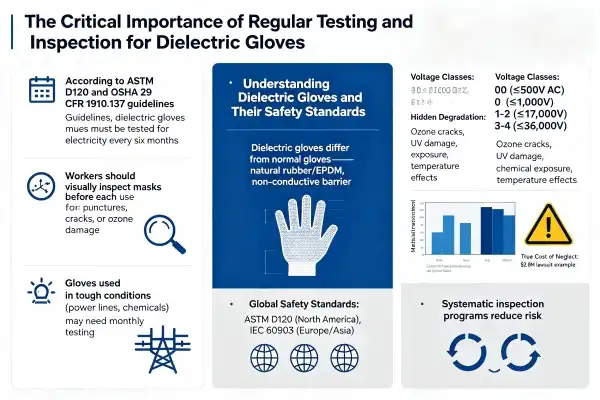
According to ASTM D120 and OSHA 29 CFR 1910.137 guidelines, dielectric gloves must be tested for electricity every six months, no matter how often they are used. In addition to the required approval every six months, workers should look at the masks visually before each use to see if they are punctured, cracked, or damaged by ozone. Gloves that are used in tough conditions, like working on power lines or with chemicals, may need to be tested every month to make sure they keep protecting your hands. This two-layer method combines daily monitoring with professional electrical testing to make sure that the insulation quality of the glove doesn't change over time.
Understanding Dielectric Gloves and Their Safety Standards
What Makes Dielectric Gloves Different
Electrical insulation gloves are not the same as other hand safety. These specialised tools, which are made from natural rubber or manufactured elastomers like EPDM, provide a barrier that is not conductive and has been tested to withstand certain voltage levels. Normal gloves guard against cuts and chemicals, but dielectric gloves stop electrical current from getting to the skin of the person wearing them. This difference is very important in places like substations, overhead line fixes, and service EV batteries, where people can accidentally touch live wires even when safety measures are taken.
Global Safety Standards That Shape Procurement
There are two main rules that control how well electrical gloves work around the world. ASTM D120, which is used all over North America, sets standards for checking and categorising voltages. In the meantime, IEC 60903 is used as a standard in Europe, Asia, and other parts of the world. For both systems, gloves must pass strict tests of their electrical strength, physical properties, and marking standards. When we make gloves at PPE MAX, we have to follow these standards—they're the basis for making sure that the gloves always protect, whether they're going to a building site in Texas or a mine in South Africa.
Voltage Classes and Matching Risk to Protection
Based on the highest power they can handle, dielectric gloves are divided into six groups. Class 00 can handle up to 500 volts AC, which means it can be used for low-voltage electronics work. Class 0 goes up to 1,000 volts, which is usually what is needed to read a utility meter. Classes 1 and 2 in the middle range of dielectric gloves protect people who work on distribution lines that are up to 17,000 volts. Classes 3 and 4 of high-voltage dielectric gloves protect against gearbox voltages of up to 36,000 volts. To choose the right class, you need to know exactly what your working voltage is and add a safety range to account for short-lived spikes. Specifications for dielectric gloves must match recorded risk estimates; if they don't, workers are at risk and regulations are broken.
Why Regular Testing and Inspection of Dielectric Gloves Matter
The Hidden Degradation Process
A dangerous belief holds for many safety managers: approved gloves are safe until they are clearly broken. The truth shows otherwise. Rubber materials break down in a number of ways that are hard to see at first glance. When exposed to ozone, tiny cracks appear on the surface and spread through the material. UV light breaks the ties between molecules, which lowers the dielectric strength. Some cleaning products and petroleum products can damage the structure of elastomers. Changes in temperature speed up the ageing process. Gloves lose their defensive power over time, even if they are kept properly. When these failures are tested regularly, they are found before workers have to rely on broken tools in an emergency.
Calculating the True Cost of Neglect
We talked to safety heads who learned the hard way how important testing is. One factory client put off regular testing to save money, but then they were sued for $2.8 million after an arc flash event involving gloves that didn't work. Electrical accidents can lead to legal problems, OSHA fines, shutdowns of operations, higher insurance rates, and a drop in confidence among workers. When you look at these effects against how much it costs to test gloves, which is usually $15 to $30 per pair, the numbers become clear. Systematic inspection programs are like insurance payments that you can actually control. With each testing cycle, the level of risk goes down in a way that can be measured.
How Often Should Dielectric Gloves Be Tested and Inspected?
Daily Pre-Use Visual Inspection
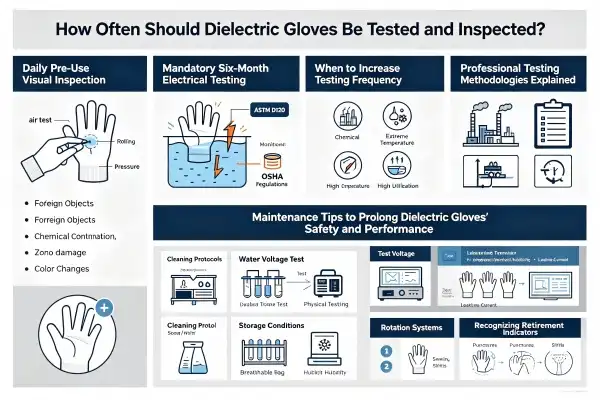
Workers must examine gloves before every shift. This quick protocol catches obvious defects that develop between professional tests. We teach clients the "air test" technique: roll the cuff to trap air inside, then apply pressure while watching for escaping air that indicates punctures. Check for embedded foreign objects, chemical contamination, sticky surfaces suggesting ozone damage, and color changes revealing material breakdown. Pay special attention to fingertips and stress points where wear concentrates. This frontline vigilance costs nothing yet prevents most compromised gloves from reaching service.
Mandatory Six-Month Electrical Testing
ASTM D120 and OSHA regulations establish unambiguous requirements: electrical insulating gloves must undergo dielectric proof testing every six months. This interval applies universally—gloves stored unused still require testing because aging occurs during storage. The process involves submersing gloves in water, then applying voltage above the maximum use rating while monitoring leakage current. Certified laboratories use specialized equipment calibrated to detect minute insulation failures invisible to human inspection. Testing also verifies that physical properties, including tensile strength, tear resistance, and elongation, remain within acceptable limits.
When to Increase Testing Frequency
Certain operational conditions demand more frequent evaluation. Gloves used in chemical plants where solvent exposure occurs may need monthly testing. Equipment subjected to extreme temperature cycling—such as Arctic construction or desert utilities—degrades faster than standard aging curves predict. High-utilization scenarios, where gloves see daily use rather than occasional deployment, accelerate wear patterns. We recommend organizations track usage hours through logbooks, establishing testing triggers based on accumulated exposure rather than calendar intervals alone. This approach optimizes safety margins while controlling testing expenditures.
Professional Testing Methodologies Explained
Two primary testing approaches serve different operational needs for dielectric gloves. On-site testing employs portable equipment that safety teams operate at their facilities, offering immediate results and convenience. Certified laboratory testing provides a more thorough evaluation with traceable documentation meeting legal standards. Laboratories conduct water voltage tests applying 50% more voltage than dielectric gloves encounter during use, guaranteeing a margin beyond minimum requirements. Physical testing machines measure puncture resistance, checking whether the protective capacity of dielectric gloves remains intact. Each tested glove receives documentation showing test voltage, leakage current, and pass/fail determination—records proving due diligence during regulatory audits.
Maintenance Tips to Prolong Dielectric Gloves' Safety and Performance
Cleaning Protocols That Preserve Insulation
Proper cleaning extends glove life while maintaining dielectric properties. We recommend washing gloves after each use with mild soap and lukewarm water not exceeding 120°F. Hot water accelerates rubber deterioration. Avoid petroleum-based cleaners, solvents, and abrasive scrubbing that damage surface integrity. Rinse thoroughly—soap residue attracts contaminants. Air-dry gloves away from direct sunlight and heat sources; forced air drying causes uneven temperature exposure that weakens materials. Never use washing machines or dryers; mechanical agitation and heat destroy protective capacity.
Storage Conditions That Prevent Premature Aging
Environmental factors during storage significantly impact glove longevity. Store gloves in cool, dry, dark locations away from ozone sources like electric motors and welding equipment. Hang gloves or lay them flat; folding creates stress concentration points where cracks initiate. Keep gloves separated from sharp objects, chemicals, and petroleum products. We provide clients with breathable storage bags that protect against light exposure while allowing moisture evaporation. Ideal storage temperatures range between 50°F-70°F with humidity below 75%. Gloves stored properly often exceed their typical 12-month service life, though testing remains mandatory regardless of condition.
Rotation Systems and Usage Documentation
Organizations managing large glove inventories should implement rotation schedules ensuring consistent wear distribution. Number each glove pair, then maintain logs recording inspection dates, test results, and usage frequency. This documentation serves multiple purposes: identifying gloves approaching retirement, demonstrating compliance during audits, and tracking cost-per-use metrics. Rotation prevents scenarios where certain pairs see excessive use while others sit unused, maximizing fleet lifespan. We've helped clients develop digital tracking systems integrating barcode scanning, automated test scheduling, and predictive replacement algorithms.
Recognizing Retirement Indicators
Even well-maintained gloves eventually require retirement. ASTM D120 specifies maximum service life limits—typically 12 months from the manufacturing date for natural rubber gloves, though testing can extend this period if dielectric properties remain acceptable. Retire gloves immediately upon discovering punctures, cuts deeper than surface scratches, embedded contamination that won't clean, swelling indicating chemical attack, or stiffness suggesting excessive aging. When test results show leakage current approaching failure thresholds, replace gloves rather than risking borderline protection. False economy: keeping marginal gloves in service creates catastrophic risk disproportionate to replacement costs.
Procurement Insights: Choosing the Right Dielectric Gloves and Testing Services
Critical Selection Factors for Procurement Teams
Specifying dielectric gloves requires balancing multiple performance dimensions. Voltage rating alignment with hazard assessments forms the foundation—underrated dielectric gloves provide no protection, while excessive rating sacrifices dexterity unnecessarily. Material choice between natural rubber and synthetic options affects ozone resistance, flexibility, and lifespan. Consider whether workers require Type I (non-ozone-resistant) or Type II (ozone-resistant) construction based on environmental exposure. Anatomical curved designs reduce hand fatigue during extended wear. Evaluate sizing availability, ensuring proper fit across diverse workforce demographics. Finally, verify manufacturer certifications demonstrating consistent quality systems for dielectric gloves.
Bulk Purchasing Strategies and Customization Options
Large-scale buying has many benefits besides lowering unit costs. When you make a volume promise, you can get customised options like colour-coding for voltage classes, RFID tracking tags that are built in, and private labelling that helps your safety brand stand out. We work with OEM partners to make goods that are specifically designed to meet the needs of each operation. For example, we can make gloves with special sizes that work with Arctic glove liners, chemicals that don't react with certain solvents, or longer cuffs that protect the arms more. Flexible contract terms allow for changing demand while keeping supplies on hand. Our global delivery network, which includes 134 countries, makes sure that supply lines stay stable even when things go wrong in other parts of the world.
When buying in bulk, quality testing programs become even more important. We ask that providers provide records of batch tests, certificates of material makeup, and checks of the production process. Before placing big orders, ask for sample evaluation programs so that your safety teams can test the comfort, agility, and longevity. Set clear acceptance standards, such as the number of visible flaws, the range of allowed dimensions, and the required performance levels. Work with providers that offer on-site training to make sure your employees know how to properly use, check, and maintain equipment. It will only work as well as the people who are using it can do it.
Conclusion
Systematic testing and inspection of electrical insulating gloves represents a non-negotiable foundation of electrical safety programs. The six-month mandatory testing interval, combined with daily pre-use inspections, creates layered defenses catching failures before they cause injuries. Procurement decisions extending beyond cost considerations to emphasize quality, proper voltage ratings, and supplier reliability pay dividends through reduced incidents, lower liability exposure, and extended asset utilization. Organizations that view testing as an operational investment rather than an expense consistently achieve superior safety outcomes while optimizing total cost of ownership.
FAQ
1. How can I verify a glove's most recent test results?
Certified testing laboratories affix tags to gloves showing test date, next due date, voltage class, and serial number. Maintain centralized tracking systems, logging each glove's test history. Many organizations now use digital platforms scanning glove tags to retrieve complete testing records instantly. Suppliers should provide test certificates documenting batch performance before shipment.
2. Are electrical insulating gloves suitable for wet environments?
Moisture significantly reduces dielectric protection. While gloves maintain some insulation when damp, wet conditions compromise safety margins unpredictably. Workers encountering wet environments should use leather protector gloves over insulating layers, creating a moisture barrier. Dry gloves thoroughly after exposure before returning to service, and schedule additional testing following significant wetting incidents.
3. What advantages does on-site testing offer versus laboratory services?
On-site testing provides immediate results without shipping delays, reducing downtime when glove availability is critical. Portable equipment suits remote locations where laboratory access proves difficult. Laboratory testing offers more comprehensive evaluation with calibrated equipment, detailed documentation meeting legal standards, and independent verification free from internal pressures. Many organizations combine approaches: quarterly on-site checks supplementing semi-annual laboratory certifications.
Partner with PPE MAX for Comprehensive Electrical Safety Solutions
Protecting your workforce demands more than purchasing gloves—it requires partnership with suppliers who understand your operational challenges. PPE MAX combines 65 years of manufacturing excellence with hands-on experience testing our own equipment in real-world conditions. Our team doesn't just produce insulating gloves; we use them, trust them, and continuously improve them based on field feedback from partners across 134 countries.
We invite procurement managers, safety engineers, and distributors to explore our complete electrical protection catalog. Beyond industry-leading dielectric gloves spanning all voltage classes, we provide certified testing services, customized manufacturing capabilities, and bulk purchasing programs optimized for B2B efficiency. Whether you're establishing a new safety program or upgrading existing protocols, our technical experts offer consultation tailored to your specific hazard profile and regulatory requirements for dielectric gloves.
Contact our dedicated team at marketing@ppemax.com to discuss your electrical safety needs. As a trusted dielectric gloves supplier with global reach, we deliver guaranteed compliance, flexible terms, and responsive service that scales with your operations. Request a detailed quote today and discover how decades of reliable quality and extensive industry experience translate into protection you can depend on when voltage and safety intersect.
References
1. Occupational Safety and Health Administration. (2022). "Electrical Protective Equipment." OSHA Technical Manual, Section III, Chapter 5.
2. ASTM International. (2021). "ASTM D120-20 Standard Specification for Rubber Insulating Gloves." ASTM Volume 10.03 Electrical Protective Equipment.
3. International Electrotechnical Commission. (2020). "IEC 60903:2020 Live Working - Electrical Insulating Gloves." IEC Standards Catalog.
4. National Fire Protection Association. (2021). "NFPA 70E: Standard for Electrical Safety in the Workplace." 2021 Edition.
5. Institute of Electrical and Electronics Engineers. (2019). "IEEE Guide for Testing Electrical Insulating Gloves." IEEE Standards Association.
6. American Public Power Association. (2023). "Electrical Safety Program Guidelines for Public Utilities." APPA Safety Manual, 12th Edition.
Learn about our latest products and discounts through SMS or email