- English
- French
- German
- Portuguese
- Spanish
- Russian
- Japanese
- Korean
- Arabic
- Greek
- German
- Turkish
- Italian
- Danish
- Romanian
- Indonesian
- Czech
- Afrikaans
- Swedish
- Polish
- Basque
- Catalan
- Esperanto
- Hindi
- Lao
- Albanian
- Amharic
- Armenian
- Azerbaijani
- Belarusian
- Bengali
- Bosnian
- Bulgarian
- Cebuano
- Chichewa
- Corsican
- Croatian
- Dutch
- Estonian
- Filipino
- Finnish
- Frisian
- Galician
- Georgian
- Gujarati
- Haitian
- Hausa
- Hawaiian
- Hebrew
- Hmong
- Hungarian
- Icelandic
- Igbo
- Javanese
- Kannada
- Kazakh
- Khmer
- Kurdish
- Kyrgyz
- Latin
- Latvian
- Lithuanian
- Luxembou..
- Macedonian
- Malagasy
- Malay
- Malayalam
- Maltese
- Maori
- Marathi
- Mongolian
- Burmese
- Nepali
- Norwegian
- Pashto
- Persian
- Punjabi
- Serbian
- Sesotho
- Sinhala
- Slovak
- Slovenian
- Somali
- Samoan
- Scots Gaelic
- Shona
- Sindhi
- Sundanese
- Swahili
- Tajik
- Tamil
- Telugu
- Thai
- Ukrainian
- Urdu
- Uzbek
- Vietnamese
- Welsh
- Xhosa
- Yiddish
- Yoruba
- Zulu
How Often Should Class 1 Insulating Gloves Be Replaced?
Electrical protective gloves save lives every day, but safety managers still have a hard time figuring out how often to change them. Class 1 Insulating Gloves need to be changed when they fail electrical tests, get obvious damage, or hit the service life limits suggested by the manufacturer. This is usually after 6 months of use or 12 months of storage before the first problem. Still, choices about replacement are based on more than just dates; they are also affected by how often Class 1 Insulating Gloves are used, how exposed they are to the environment, the results of inspections, and following the rules. By understanding these factors, you can keep your team safe without having to pay extra or leave legal loopholes when managing Class 1 Insulating Gloves.
Understanding Class 1 Insulating Gloves and Their Role in Electrical Safety
Every year, electrical dangers kill people in workplace settings, so it's not an option not to wear the right safety gear. Class 1 insulating gloves, which can withstand up to 7,500 volts AC or 11,250 volts DC, are the main thing that protects workers from voltage exposure that could be deadly. These special rubber gloves protect against dielectric damage in a way that regular work gloves just can't.
Since 1956, PPE MAX has been making these important safety tools. In that time, we've seen how proper insulation technology has changed while staying true to basic safety principles. Our goods are certified to meet the strict ASTM D120 and IEC 60903 standards, which means they will work the same way in a variety of operating settings. The white colour-coded cuffs on our Class 1 types make them easy to spot right away. This keeps people from dangerously using lower-rated equipment on voltage systems that aren't compatible.
Materials and Construction Standards
Because it is such a good insulator, natural rubber latex is used to make safe electrical insulation gloves. The thickness of the material is carefully set to balance safety with flexibility. It goes from 0.7 mm to 1.5 mm. When working with small parts or links that are easily damaged, workers need to be safe and sensitive to touch. This is why the choice of material is so important. Compounds that are immune to ozone and UV light are used in our manufacturing process. These compounds make the products last longer in tough weather conditions. As part of the testing process, each batch of products is made to withstand a proof test voltage of 10,000V AC and a maximum withstand voltage of 20,000V AC. These are safety gaps that go beyond the stated powers in the real world.
Primary Applications Across Industries
Voltage-rated gloves are used by utility companies for repair work on power lines and operations at substations. Every day, electrical workers who are upgrading panels or installing circuits depend on these tools. Having the right shielding gear is important for places like factories that use high-voltage machinery, building sites that need portable power systems, telecoms infrastructure teams, and industrial repair groups. One thing that all of these areas have in common is that wherever there are live electrical systems, the right safety gear is required, not just recommended.
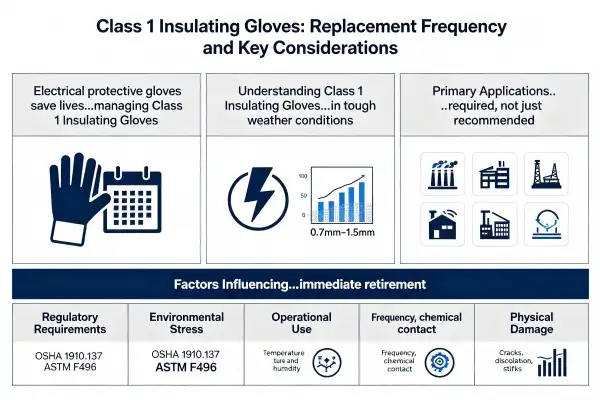
Factors Influencing the Replacement Frequency of Class 1 Insulating Gloves
Replacement timing for Class 1 Insulating Gloves involves balancing safety imperatives against operational costs. Premature replacement wastes resources, while delayed replacement compromises worker protection. Several critical factors determine optimal replacement intervals for Class 1 Insulating Gloves that procurement professionals must evaluate systematically.
Regulatory Requirements and Testing Mandates
When OSHA rule 1910.137 and ASTM F496 standards are put together, they set clear testing frequencies: once gloves are put to use, they must be electrically tested every six months. This check is done every six months to make sure that the dielectric quality hasn't dropped below safe levels. Gloves that are stored before they are used can go a year without being tested, but they must still be inspected visually before they are used for the first time. These rules are in place because rubber materials break down over time, even when they are not being used. Oxidation, contact with the climate, and material ageing happen no matter how often something is handled. Compliance isn't just a procedure; it's based on years of business understanding about how to avoid failures and lower risks.
Environmental and Operational Stress Factors
Extreme temperatures make rubber break down much faster. When gloves are stored near steam lines, heating systems, or direct sunlight, the molecules break down more quickly than when they are kept properly. The amount of humidity also affects the stability of the material. For example, too much wetness could weaken the insulation over time. Replacement needs are directly related to how much something is used. Teams that do electrical work every day put on gloves through repeated voltage stress, mechanical bending, and contact with chemicals that could be dangerous. Even if the equipment was made to the same specs, gloves that are used once a week in controlled settings will last longer than equipment that is used every day in harsh circumstances. Chemical contact is another factor. Some solvents, oils, or cleaning agents can damage rubber compounds, so they need to be replaced right away instead of waiting for tests to be planned.
Physical Damage Indicators
Visible wear patterns signal replacement needs before scheduled testing deadlines. Cracks, especially near fingers or stress points, indicate structural compromise that eliminates protective capabilities. Surface discoloration beyond normal aging patterns suggests chemical attack or UV damage. Stiffness or loss of elasticity means the rubber has begun irreversible degradation. Tackiness or excessive oiliness indicates compound breakdown. Any puncture, tear, or embedded foreign object demands immediate retirement regardless of testing schedules or service duration. Procurement managers should establish clear criteria for field-level rejection, empowering workers to remove compromised equipment from service immediately rather than waiting for formal inspection cycles.
How to Properly Inspect and Test Class 1 Insulating Gloves for Safety Compliance
Systematic inspection and testing protocols form the backbone of reliable electrical safety programs. These procedures identify compromised equipment before it fails during actual use, preventing injuries that result from undetected defects.
Visual Inspection Procedures
Before each use, workers must conduct thorough visual examinations under adequate lighting. Hold the glove up to light sources, checking for thin spots, embedded particles, or punctures that might not be immediately obvious. Examine seams and edges where manufacturing joins may weaken over time. Look for any color changes, surface cracking, or texture abnormalities compared to new equipment standards. This daily user inspection takes mere minutes but catches most physical damage before gloves enter hazardous environments. Safety managers should train personnel on specific defect patterns and provide reference samples showing unacceptable conditions.
Air Inflation Testing Method
The air inflation test—sometimes called the glove stretch test—detects small holes or weak spots invisible during visual inspection. Roll the glove cuff inward to trap air inside, creating an inflated balloon effect. Squeeze gently while listening and feeling for air leaks. Move systematically across all surfaces, paying special attention to fingertips and between fingers where punctures commonly occur. Any detectable air loss indicates a compromise requiring immediate replacement. This field test for Class 1 Insulating Gloves should supplement rather than replace electrical testing, but provides quick verification between formal testing intervals. The technique requires no special equipment and takes approximately one minute per Class 1 Insulating Gloves glove.
Laboratory Electrical Testing Standards
Professional electrical testing facilities subject gloves to controlled voltage application while submerged in water, detecting current leakage that indicates insulation failure. Testing voltage exceeds maximum use ratings to verify safety margins remain adequate. Equipment records show exact leakage current values, creating documentation trails for regulatory compliance and risk management. The difference between internal inspections and professional laboratory testing lies in precision and documentation. While field inspections catch obvious damage, laboratory equipment identifies degradation invisible to visual or manual examination. Organizations managing large workforces typically contract with certified testing providers who handle logistics, documentation, and compliance reporting.
PPE MAX partners with qualified testing laboratories globally, helping clients establish testing schedules aligned with regulatory requirements while minimizing operational disruption. Our technical support team assists customers in developing comprehensive inspection programs tailored to specific operational demands.
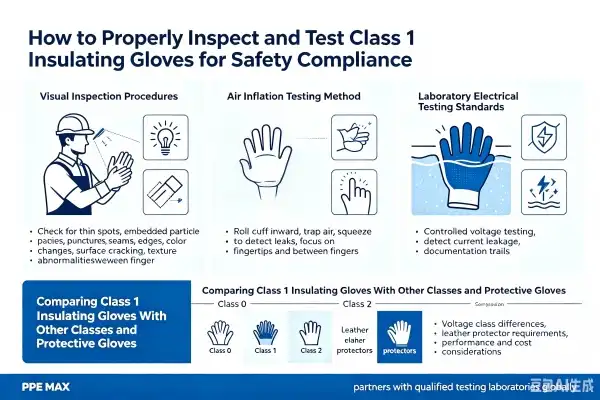
Comparing Class 1 Insulating Gloves With Other Classes and Protective Gloves
Understanding voltage classifications and complementary protective equipment helps procurement teams select appropriate solutions while avoiding both over-specification costs and dangerous under-protection.
Voltage Class Differences
Class 0 gloves rated for 500V AC maximum use serve low-voltage applications where Class 1 equipment would be unnecessarily heavy and expensive. Class 2 gloves rated for 17,000V AC address medium-voltage systems beyond Class 1 capabilities. Each classification carries different testing intervals, material thickness, and cost structures. Matching glove class to actual system voltage represents fundamental safety practice—using inadequate ratings invites catastrophic failure regardless of inspection diligence. Replacement patterns also vary by class. Lower-voltage gloves typically see more frequent casual use, accelerating mechanical wear. Higher-voltage gloves often serve specialized tasks with less frequent deployment but greater voltage stress per use. These usage patterns influence service life predictions and inventory management strategies.
Leather Protector Requirements
Rubber insulating gloves alone offer insufficient mechanical protection against cuts, abrasions, and punctures encountered during actual work. Leather protector gloves worn over rubber layers absorb mechanical trauma that would otherwise compromise dielectric barriers. This two-layer system addresses the dual challenge of electrical insulation and physical durability. Leather protectors require daily visual inspection but no electrical testing since they serve mechanical rather than dielectric functions. Replacement timing depends entirely on physical wear—tears, excessive thinning, or degraded grip surfaces indicate retirement needs. Procurement specifications should bundle insulating gloves with appropriately sized leather protectors rather than treating them as separate purchases.
Performance and Cost Considerations
Leading manufacturers offer varying warranty terms, material formulations, and quality control standards that impact the total cost of ownership beyond initial purchase prices. PPE MAX products undergo rigorous quality verification at multiple production stages, reducing field failure rates that create hidden costs through work stoppages, injury incidents, and compliance violations. Bulk purchasing arrangements with reliable suppliers provide price advantages while ensuring consistent product availability. Organizations with multi-site operations benefit from standardized equipment specifications that simplify training, testing protocols, and inventory management across locations.
Best Practices for Procuring and Maintaining Class 1 Insulating Gloves in Bulk
Strategic procurement approaches reduce total safety equipment costs while maintaining compliance and worker protection. Large-scale buyers face unique opportunities and challenges compared to small-volume purchasers.
Supplier Selection Criteria
Certification verification should precede any procurement decision. Confirm suppliers provide documentation proving ASTM D120 and IEC 60903 compliance through recognized testing laboratories. Investigate manufacturing quality control systems—ISO certifications and third-party audits provide objective evidence of consistent production standards. PPE MAX welcomes facility visits to our Xi'an manufacturing location, where potential partners observe production processes, quality testing procedures, and material sourcing firsthand. This transparency builds confidence that our 65 years of manufacturing experience translates into reliable product performance.
Evaluate supplier track records for Class 1 Insulating Gloves through customer references from similar industries. Safety equipment failures carry consequences far beyond replacement costs, making supplier reliability paramount. Global supply chain capabilities for Class 1 Insulating Gloves matter tremendously for organizations operating across multiple countries—consistent product availability prevents dangerous substitutions when preferred equipment runs short.
Contract Negotiations and Terms
Volume pricing structures reward bulk commitments while requiring careful inventory management to prevent obsolescence. Negotiate flexible delivery schedules that match actual consumption rates rather than forcing large inventory positions that age before deployment. Warranty terms should address both manufacturing defects and reasonable service life expectations under proper use conditions. Return and replacement policies protect buyers from defective batches while establishing clear procedures for addressing quality concerns. After-sales technical support—including testing coordination, training materials, and compliance guidance—adds substantial value beyond product pricing alone. At PPE MAX, our technical assistance hotline and responsive customer support team, reachable at bettybing@ppemax.com, helps clients maximize equipment value throughout the product lifecycle.
Storage and Handling Protocols
Proper care greatly stretches the useful life of gloves and stops them from breaking down too quickly. Insulating gloves should be kept in cool, dry, dark places away from ozone sources like electric motors and welding tools, with the fingers facing up in protective bags. Don't fold or crease things because that makes stress points where cracks start. Keep rubber gloves and leather covers separate when storing them for a long time to keep them from deforming. Set up store rotation systems to make sure that the older items are used up before the newest ones are brought in. Label storage cases with the dates they were received and the dates they need to be tested. This makes compliance tracking clear. Instead of spreading equipment out across sites where conditions can't be tracked, set aside specific storage places that meet environmental requirements.
Controlling the temperature is more important than many buying teams think. Too much heat speeds up the breakdown of chemicals, and too little cold can make things break easily. Keeping materials in storage between 50°F and 70°F (10°C and 21°C) makes them last longer and keeps their dielectric properties until they are used.
Conclusion
To figure out how often to change Class 1 Insulating Gloves, you have to balance meeting regulations, checking the gloves' physical state, and meeting business needs. Effective safety programs are built on daily eye checks, electricity tests every six months, and the right way to store things. In addition to calendar plans, procurement professionals must look at a number of other factors, such as the frequency and severity of use, the setting in which the item will be used, the results of inspections, and maker instructions. Companies that work with dependable providers that offer approved goods, full testing support, and technical know-how can keep workers safe while lowering costs and improving compliance performance.
FAQ
1. How often must Class 1 rubber insulating gloves undergo electrical testing?
Regulations require electrical testing every 6 months after gloves enter active service. If stored without use, they can remain untested for up to 12 months from the manufacture date before initial deployment. These intervals establish minimum compliance standards, though organizations facing particularly harsh conditions or intensive use patterns may implement more frequent testing schedules.
2. Can insulating gloves be used without leather protector gloves?
Standard practice prohibits using rubber insulating gloves without leather protectors. The rubber provides dielectric insulation but remains vulnerable to mechanical damage—cuts, punctures, and abrasions—that immediately compromise electrical protection. Leather protectors absorb mechanical trauma while maintaining the flexibility needed for manual tasks. This two-layer system addresses complementary protection needs that neither component achieves alone.
3. What indicates immediate replacement regardless of testing schedules?
Any visible crack, puncture, tear, or embedded foreign object demands immediate retirement. Surface discoloration, excessive stiffness, tackiness, or loss of elasticity also signal material degradation requiring replacement. Chemical contamination or exposure to incompatible substances necessitates removal from service. These physical indicators override scheduled testing intervals because they represent immediate safety compromises.
Partner With PPE MAX for Reliable Class 1 Insulating Gloves Supply
PPE MAX brings 65 years of manufacturing expertise to organizations seeking dependable electrical safety solutions. As a Class 1 Insulating Gloves manufacturer serving 134 countries, we combine rigorous quality control with competitive bulk pricing structures designed specifically for industrial distributors, large-scale construction operations, and procurement departments managing complex safety requirements. Our Class 1 Insulating Gloves meet ASTM D120, IEC 60903, and OSHA standards, backed by comprehensive certifications including CE marking for European markets. We understand that reliable suppliers do more than deliver products—they provide technical support, testing coordination, and customization capabilities that address your specific operational challenges. Contact our team at marketing@ppemax.com to discuss your requirements and discover how our global supply chain, flexible contract terms, and decades of industry experience can strengthen your worker protection programs while simplifying procurement logistics.
References
1. American Society for Testing and Materials. (2016). ASTM D120-14a: Standard Specification for Rubber Insulating Gloves. West Conshohocken, PA: ASTM International.
2. International Electrotechnical Commission. (2018). IEC 60903:2018 Live Working - Gloves of Insulating Material. Geneva: IEC Publications.
3. Occupational Safety and Health Administration. (2020). OSHA Standard 1910.137: Electrical Protective Equipment. Washington, DC: U.S. Department of Labor.
4. American Society for Testing and Materials. (2019). ASTM F496-19: Standard Specification for In-Service Care of Insulating Gloves and Sleeves. West Conshohocken, PA: ASTM International.
5. National Fire Protection Association. (2021). NFPA 70E: Standard for Electrical Safety in the Workplace. Quincy, MA: NFPA Publications.
6, Institute of Electrical and Electronics Engineers. (2019). IEEE Guide for Maintenance Methods on Energized Power Lines. Piscataway, NJ: IEEE Standards Association.
Learn about our latest products and discounts through SMS or email