- English
- French
- German
- Portuguese
- Spanish
- Russian
- Japanese
- Korean
- Arabic
- Greek
- German
- Turkish
- Italian
- Danish
- Romanian
- Indonesian
- Czech
- Afrikaans
- Swedish
- Polish
- Basque
- Catalan
- Esperanto
- Hindi
- Lao
- Albanian
- Amharic
- Armenian
- Azerbaijani
- Belarusian
- Bengali
- Bosnian
- Bulgarian
- Cebuano
- Chichewa
- Corsican
- Croatian
- Dutch
- Estonian
- Filipino
- Finnish
- Frisian
- Galician
- Georgian
- Gujarati
- Haitian
- Hausa
- Hawaiian
- Hebrew
- Hmong
- Hungarian
- Icelandic
- Igbo
- Javanese
- Kannada
- Kazakh
- Khmer
- Kurdish
- Kyrgyz
- Latin
- Latvian
- Lithuanian
- Luxembou..
- Macedonian
- Malagasy
- Malay
- Malayalam
- Maltese
- Maori
- Marathi
- Mongolian
- Burmese
- Nepali
- Norwegian
- Pashto
- Persian
- Punjabi
- Serbian
- Sesotho
- Sinhala
- Slovak
- Slovenian
- Somali
- Samoan
- Scots Gaelic
- Shona
- Sindhi
- Sundanese
- Swahili
- Tajik
- Tamil
- Telugu
- Thai
- Ukrainian
- Urdu
- Uzbek
- Vietnamese
- Welsh
- Xhosa
- Yiddish
- Yoruba
- Zulu
Full Mask Respirator Buying Guide: Key Factors to Consider
Understanding the differences between full-face respirators is very important when looking at breathing safety for your industry workers. This complete buying guide gives procurement managers, dealers, and safety experts the information they need to choose gadgets that meet legal requirements and work reliably. When workers wear the right Full Mask Respirator, they are protected from dangerous airborne contaminants and can stay comfortable during long shifts. This has a direct effect on your operations' output and safety metrics. A Full Mask Respirator helps ensure reliable respiratory protection in demanding industrial environments.
Understanding Full Mask Respirators – What You Need to Know
Core Functions and Design Architecture
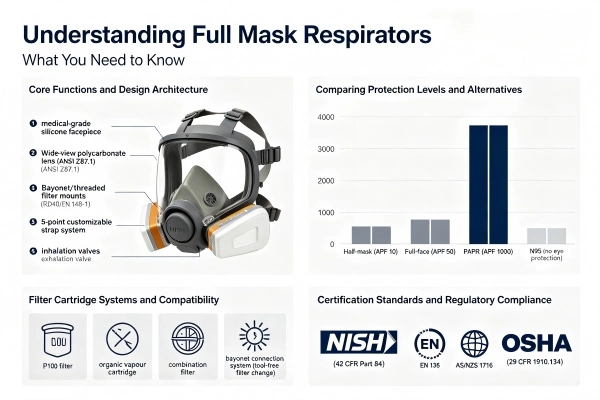
When respiratory protection devices cover the whole face, they seal off the area so that polluted air is filtered before it is breathed in. At the same time, they protect the eyes and facial tissue from exposure. The devices have a facepiece made of medical-grade silicone or thermoplastic rubber, a wide-view polycarbonate lens that meets ANSI Z87.1 impact standards, and a filter mounting system that uses bayonet links or threaded mounts that meet RD40/EN 148-1 standards. The facepiece forms a tight seal across the forehead, lips, and chin. When you breathe in, this creates negative pressure that forces air only through the filter tubes. Two inhalation valves make it easier to breathe when you're working out hard, and an exhalation valve in the middle keeps the lens from fogging up. At PPE MAX, our 5-point customisable strap system spreads pressure evenly, so there are no hot spots during 8-hour shifts like there are with cheaper systems.
Comparing Protection Levels and Alternatives
Half-mask respirators protect the airways that carry air to and from the lungs, but they don't protect the eyes well enough for high-concentration settings. The Assigned Protection Factor (APF) is very different for each type of gadget. Half-masks usually get an APF of 10, which means they cut exposure to a tenth of the level of the environment. In air-purifying modes, full-face devices reach APF 50, which means they can handle amounts up to 50 times the Permissible Exposure Limit. Powered Air-Purifying Respirators (PAPRs) have APF rates that can hit 1000, but they are more expensive to buy and take care of and require more work. N95 filtering facepiece respirators are a useful way to protect yourself from healthcare and irritating dust, but they can't be used again and again, and don't protect your eyes. Full-face air-purifying respirators are the best way to protect yourself, be comfortable, and save money when working with chemicals, cleaning, asbestos removal, or making medicines.
Filter Cartridge Systems and Compatibility
To match security to risk factors, it's important to understand how filters work in a Full Mask Respirator. P100 screens are great for getting rid of welding smoke, silica dust, biological agents, and 99.97% of other particles in the air, even oil-based droplets. Activated carbon in organic vapour cylinders binds flammable organic chemicals that are widespread in paints and liquid handling. For settings with more than one danger, combination filters for a Full Mask Respirator combine particulate filtering with vapour adsorption. The choice of filter affects how well it protects, how long it lasts, and how hard it is to breathe. At PPE MAX, we design our respirators with bayonet connection systems that let you change the filter without tools in less than 10 seconds. This cuts down on downtime during shift changes. Our screens use standard thread designs that work with secondary makers. This gives you more buying options and keeps you from getting locked into one seller, which limits your supply chain choices.
Certification Standards and Regulatory Compliance
For the US market, NIOSH approval under 42 CFR Part 84 is still the minimum standard. This covers production quality, filter efficiency, breathing resistance, and leaking standards. Masks in Europe are grouped into three classes based on how well they protect against breathing and how long they last. These classes are EN 136 compliance, Class 1 (light work), Class 2 (medium work), and Class 3 (heavy work). AS/NZS 1716 approval is needed for business in Australia. Under 29 CFR 1910.134, OSHA rules require lung protection programs that include fit tests, training, medical exams, and written processes. The teams that buy things have to make sure that the gadgets they choose meet both the standards for product approval and the requirements for putting the program into action. Our breathing protection gear is made to go above and beyond several international standards at the same time. This makes it easier for businesses that operate in more than one legal area to follow the rules.
Key Factors to Consider When Choosing a Full Mask Respirator
Fit Testing and Facial Seal Integrity
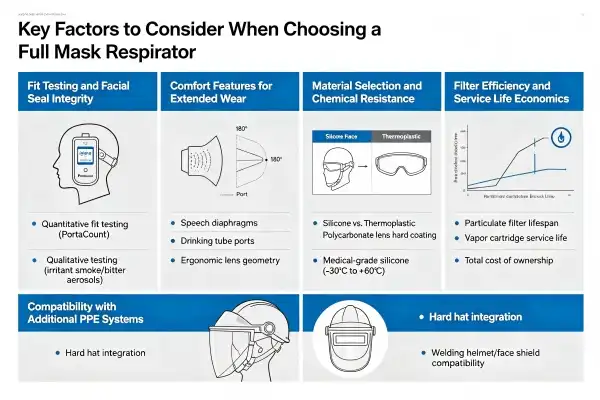
The most sophisticated filtration technology fails if the facepiece doesn't seal properly against facial contours. Quantitative fit testing using PortaCount devices measures actual leakage during simulated work activities, generating fit factors that indicate seal quality. Qualitative testing using irritant smoke or bitter aerosols provides a cost-effective screening method for routine verification. Facial hair interferes with seal integrity, making many devices unsuitable for workers who cannot maintain clean-shaven faces in the sealing area. PPE MAX designs incorporate soft silicone sealing flanges that conform to diverse facial structures, including variations in bone structure, scar tissue, and age-related tissue changes. Our respirators accommodate 95% of facial dimensions within the small, medium, and large size range, reducing fit-test failure rates that increase procurement complexity.
Comfort Features for Extended Wear
Worker compliance depends heavily on comfort during extended shifts. Breathing resistance, pressure points, heat buildup, and communication difficulties all contribute to removal tendencies that compromise protection. We integrate speech diaphragms that preserve voice clarity without requiring seal breaks, addressing a common complaint in supervisory roles. Our drinking tube ports allow hydration without mask removal, particularly valuable in hot environments where dehydration risks compound chemical exposure hazards. The ergonomic lens geometry expands peripheral vision to 180 degrees, reducing the tunnel-vision effect that causes spatial disorientation and increases accident risk. Weight distribution through the 5-point harness prevents neck fatigue during overhead work and eliminates the bouncing common with 4-point systems.
Material Selection and Chemical Resistance
Silicone facepieces offer superior chemical resistance, flexibility across temperature ranges, and hypoallergenic properties compared to thermoplastic alternatives. The material withstands repeated exposure to solvents, acids, and alkaline solutions without degradation that compromises seal integrity. Polycarbonate lenses resist impact but require hard coatings to prevent scratching during cleaning and storage. We source medical-grade silicone that remains pliable from -30°C to +60°C, accommodating Arctic construction sites and tropical industrial facilities without material stiffening or excessive softening. The anti-fog lens treatments utilize hydrophilic coatings that spread condensation into transparent films rather than vision-obscuring droplets, maintaining visibility during temperature transitions between work areas.
Filter Efficiency and Service Life Economics
Particulate filter lifespan in a Full Mask Respirator depends on dust loading rates, with heavily contaminated environments requiring daily changes while clean facilities achieve weeks of use. Vapor cartridge service life for a Full Mask Respirator follows breakthrough curves based on contaminant concentration, humidity, and temperature. End-of-service-life indicators provide visual warnings when the Full Mask Respirator cartridge capacity nears exhaustion. Understanding the total cost of ownership requires calculating filter replacement frequency and costs relative to the initial device investment. Reusable masks with replaceable filters deliver substantial savings compared to disposable alternatives in sustained-use scenarios. PPE MAX provides detailed service life data specific to common industrial chemicals, enabling accurate budget projections and inventory planning.
Compatibility with Additional PPE Systems
Hard hat integration poses significant challenges as suspension systems interfere with head harness positioning. We design compatible harness geometries that route under hard hat suspensions without compromising seal or creating pressure points. Our respirators also accommodate welding helmets, face shields, and hearing protection without requiring specialized adapters that complicate procurement. Communication headsets, cooling vests, and supplied air systems may require specific model selections. Procurement teams should audit existing PPE inventories and verify compatibility before large-scale purchases. We offer compatibility testing services at our Xi'an facilities, allowing customers to validate equipment integration before committing to bulk orders.
Popular Brands and Models for Procurement Managers
Evaluating Manufacturer Reputation and Support Infrastructure
The respiratory protection market includes established manufacturers with decades of proven performance and emerging suppliers offering competitive pricing. Brand reputation reflects product reliability, regulatory compliance history, and support infrastructure, including training resources, spare parts availability, and technical assistance. Leading manufacturers invest substantially in research, maintaining certification laboratories, and conducting field studies that inform design improvements. We've operated since 1956, accumulating institutional knowledge across industrial hygiene, material science, and manufacturing processes that translates directly into product refinement. Our engineering team holds patents in valve technology, lens treatments, and harness systems that address real-world failure modes identified through warranty analysis.
Comparing Feature Sets and Innovation
Different manufacturers emphasize distinct design priorities. Some optimize for minimal breathing resistance, others prioritize maximum field of vision, and certain models focus on communication clarity. Understanding your workforce's primary concerns helps narrow selection criteria effectively. At PPE MAX, we integrate speech diaphragms as standard features rather than costly options, recognizing that communication failures contribute to incident rates in team environments. Our bayonet filter system enables one-handed cartridge changes while wearing gloves, addressing a practical concern voiced repeatedly by chemical plant maintenance teams. These innovations emerge from direct customer feedback gathered across 134 countries where our equipment operates daily.
Sourcing Through Authorized Distribution Networks
Counterfeit respiratory protection poses serious risks, with substandard materials and non-compliant filters entering supply chains through unauthorized vendors. Procurement teams must verify distributor authorization and implement incoming inspection protocols. Genuine products include serialization, holographic labels, and documentation that confirms certification test lot numbers. We maintain a global distribution network with authorized partners who carry authentic products, provide proper training, and honor warranty commitments. Direct factory purchases offer advantages for large-volume buyers, including custom labeling, bulk packaging configurations, and flexible payment terms. Our sales team at bettybing@ppemax.com assists with vendor verification and authentication procedures that protect your procurement integrity.
Maintenance, Cleaning, and Long-Term Use Guidelines
Establishing Cleaning Protocols and Frequencies
Proper maintenance directly impacts both the Full Mask Respirator device lifespan and protection reliability. Cleaning removes contaminants that degrade elastomers, prevents biological growth in valves, and maintains lens clarity. After each use, wipe external surfaces of the Full Mask Respirator with damp cloths to remove gross contamination. Weekly deep cleaning using mild detergent solutions and warm water removes accumulated residues. Avoid petroleum-based solvents, harsh alkaline cleaners, and abrasive scrubbing that damage silicone and coatings. We recommend pH-neutral cleaners specifically formulated for elastomers. Immerse disassembled components for 10 minutes, gently agitate to dislodge particles from valve seats, then rinse thoroughly with clean water. Air dry completely before reassembly to prevent moisture accumulation that promotes microbial growth.
Inspection Routines and Replacement Criteria
Monthly inspections should examine the facepiece for cracks, tears, and permanent deformation. Check valve function by covering inlets and attempting inhalation—properly functioning valves prevent airflow. Examine head straps for elasticity loss and buckle integrity. Lens scratches that intersect create stress concentrations, leading to impact failure. Component replacement proves more economical than complete device replacement when wear affects isolated parts. We stock replacement lenses, valves, and harnesses with typical delivery within 72 hours to minimize equipment downtime. Maintaining a 10% spare parts inventory relative to your deployed fleet ensures continuous availability despite component wear or damage.
Storage Conditions and Shelf Life Management
Clean respirators should be kept in covered cases out of direct sunlight, away from equipment that makes ozone, and at room temperature. UV light breaks down elastomers, and ozone from electric motors and welding speeds up the breakdown. If you store something properly, it will last longer than 5 years instead of just 3. Use purchase date stickers to set up first-in, first-out product movement. Even gadgets that aren't being used get old materials over time, which makes them less useful. We laser-etch the date of manufacture on every facepiece, which lets us keep track of the product's age accurately over its entire life. This openness helps you keep track of your supplies and makes sure that workers get the right tools at the right time for their jobs.
Conclusion
To choose the right breathing protection, you have to weigh technical needs, worker comfort, legal compliance, and the total cost of ownership. Full-face breathing devices protect better than half-masks and are necessary for all-hazards settings where eye protection is needed. Your investment's security will depend on how well it is certified, how well it fits, how well the filters are chosen, and how strict the care program is. Industrial operations' purchasing teams can get more from working with producers who have a track record of dependability, a global support network, and quick expert help. Your employees deserve tools that have been improved over many years and are backed by a promise to keep them safe every day.
FAQ
1. What distinguishes full-face respirators from half-mask alternatives?
Full-face models cover the entire face, providing simultaneous respiratory and eye protection with higher Assigned Protection Factors (APF 50 versus APF 10). They suit environments with irritating gases, high particulate concentrations, and splash hazards where half-masks prove inadequate. The complete facial seal also prevents contaminant contact with mucous membranes.
2. How often should filter cartridges be replaced?
Replacement frequency depends on contaminant type, concentration, and usage duration. Particulate filters require changing when breathing resistance increases noticeably or according to workplace exposure assessments. Vapor cartridges need replacement based on breakthrough time calculations or end-of-service-life indicators. Typical intervals range from daily (heavy dust) to monthly (low-concentration vapors).
3. Can these respirators accommodate workers wearing prescription glasses?
Eyeglasses interfere with facial seals and cannot be worn inside full-face respirators. Prescription lens inserts that mount inside the facepiece provide vision correction without compromising seal integrity. We offer compatible insert frames that accommodate most prescription ranges without additional fitting procedures.
Partner With PPE MAX for Your Respiratory Protection Needs
Securing reliable respiratory protection for your workforce begins with choosing a Full Mask Respirator supplier who understands the complexities of industrial safety procurement. At PPE MAX, we leverage 65+ years of manufacturing expertise to deliver certified Full Mask Respirator equipment that meets NIOSH, EN 136, and AS/NZS 1716 standards across our global distribution network spanning 134 countries. Our Xi'an manufacturing facilities combine advanced production capabilities with rigorous quality control, ensuring every Full Mask Respirator device leaving our factory delivers consistent protection. Whether you need bulk orders with custom labeling, OEM manufacturing partnerships, or technical consultation on workplace respiratory programs, our team provides comprehensive support from initial specification through ongoing maintenance guidance. Contact marketing@ppemax.com today to discuss your specific requirements, request product samples, or arrange a facility visit to experience our commitment to worker safety firsthand.
References
1. National Institute for Occupational Safety and Health (2018). NIOSH Guide to the Selection and Use of Particulate Respirators. Department of Health and Human Services Publication No. 96-101.
2. Occupational Safety and Health Administration (2020). Respiratory Protection Standard 29 CFR 1910.134: Compliance Guide. U.S. Department of Labor.
3. European Committee for Standardization (2019). EN 136:1998 Respiratory Protective Devices - Full Face Masks - Requirements, Testing, Marking. CEN Technical Committee 79.
4. American National Standards Institute (2015). ANSI Z88.2-1992: Practices for Respiratory Protection. American Industrial Hygiene Association.
5. International Safety Equipment Association (2021). Comprehensive Guide to Respiratory Protection Equipment Selection and Maintenance. ISEA Technical Publication Series.
6. British Standards Institution (2017). BS 4275:1997 Guide to Implementing an Effective Respiratory Protective Equipment Programme. BSI Standards Publication.
Learn about our latest products and discounts through SMS or email