- English
- French
- German
- Portuguese
- Spanish
- Russian
- Japanese
- Korean
- Arabic
- Greek
- German
- Turkish
- Italian
- Danish
- Romanian
- Indonesian
- Czech
- Afrikaans
- Swedish
- Polish
- Basque
- Catalan
- Esperanto
- Hindi
- Lao
- Albanian
- Amharic
- Armenian
- Azerbaijani
- Belarusian
- Bengali
- Bosnian
- Bulgarian
- Cebuano
- Chichewa
- Corsican
- Croatian
- Dutch
- Estonian
- Filipino
- Finnish
- Frisian
- Galician
- Georgian
- Gujarati
- Haitian
- Hausa
- Hawaiian
- Hebrew
- Hmong
- Hungarian
- Icelandic
- Igbo
- Javanese
- Kannada
- Kazakh
- Khmer
- Kurdish
- Kyrgyz
- Latin
- Latvian
- Lithuanian
- Luxembou..
- Macedonian
- Malagasy
- Malay
- Malayalam
- Maltese
- Maori
- Marathi
- Mongolian
- Burmese
- Nepali
- Norwegian
- Pashto
- Persian
- Punjabi
- Serbian
- Sesotho
- Sinhala
- Slovak
- Slovenian
- Somali
- Samoan
- Scots Gaelic
- Shona
- Sindhi
- Sundanese
- Swahili
- Tajik
- Tamil
- Telugu
- Thai
- Ukrainian
- Urdu
- Uzbek
- Vietnamese
- Welsh
- Xhosa
- Yiddish
- Yoruba
- Zulu
How much do Class 2 insulating gloves cost?
Class 2 insulating gloves typically cost between $25 to $85 per pair, depending on material quality, manufacturer, and order volume. Premium electrical rubber gloves made from natural rubber command higher prices due to superior elasticity and durability. Synthetic rubber alternatives offer cost-effective solutions for budget-conscious procurement managers. Bulk purchasing can reduce unit costs by 15-30%, making these essential safety products more affordable for large-scale industrial operations. Certification requirements and voltage ratings up to 17,000 volts justify the investment for electrical safety compliance.
Understanding Class 2 Insulating Gloves: Features and Safety Standards
Class 2 insulating gloves represent specialized protective equipment engineered to safeguard personnel working with electrical systems up to 17,000 volts. These high-voltage protective devices serve as the primary barrier between workers and potentially lethal electrical hazards in industrial environments. The classification system, established by ASTM D120 standards, defines Class 2 gloves as suitable for a maximum use voltage of 17,000 volts AC and proof test voltage of 20,000 volts AC.
Material Composition and Performance Characteristics
The development of electrical rubber gloves depends fundamentally on natural or synthetic rubber compounds specifically designed for electrical separator properties. Characteristic elastic gives remarkable versatility, tear resistance, and dielectric quality, making it the favored fabric for requesting applications. These gloves experience thorough vulcanization forms that improve atomic cross-linking, resulting in made strides cover execution and expanded benefit life. Manufacturing determinations require exact control of elastic thickness, regularly extending from 1.0mm to 1.5mm for Lesson 2 applications. The dielectric properties must withstand electrical push without breakdown, while keeping up adaptability for adaptiveness during work operations. Quality control measures include person testing of each glove match to confirm compliance with electrical judgment and physical strength standards.
Compliance Requirements and Testing Protocols
Regulatory compliance shapes the establishment of Course 2 protection glove determinations, with OSHA 29 CFR 1910.137 ordering the appropriate choice and use of electrical defensive hardware. ASTM D120 sets up nitty gritty testing methods for electrical protection gloves, including verification testing, visual assessment, and intermittent retesting prerequisites. Worldwide benchmarks such as IEC 60903 give extra rules for worldwide markets and send out applications. Testing conventions include subjecting gloves to electrical push tests, physical strength tests, and natural resistance tests. Each glove must illustrate reliable execution beneath indicated voltage levels while maintaining basic keenness throughout the testing process. Documentation necessities incorporate certification records, test reports, and traceability data basic for administrative compliance and quality assurance.
Key Factors Influencing the Cost of Class 2 Insulating Gloves
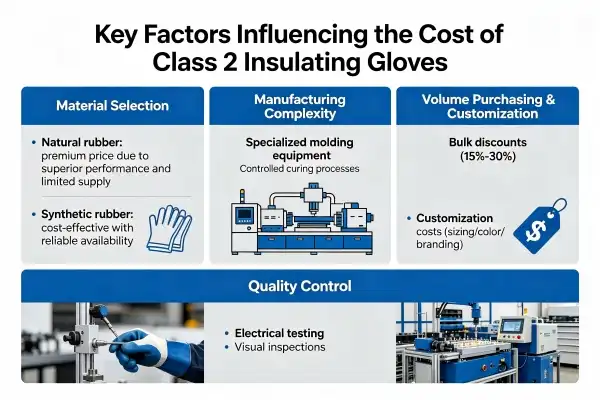
Understanding the various cost drivers helps procurement professionals make informed decisions when sourcing Class 2 insulating gloves for their organizations. Material selection represents the most significant factor affecting pricing, with natural rubber commanding premium prices due to superior performance characteristics and limited supply sources. Manufacturing complexity, including specialized molding equipment and controlled curing processes, contributes substantially to production costs.
Material Quality and Source Considerations
Natural elastic sourcing includes rural considerations that affect accessibility and estimating solidness all through the year. Climate conditions, geographic restrictions, and collecting cycles cause supply variances that specifically influence crude fabric costs. Premium grades of common elastic with upgraded virtue and consistency command higher costs but convey prevalent electrical separator properties and amplified benefit life. Synthetic elastic choices offer cost-effectiveness and reliable accessibility, in spite of the fact that execution characteristics may change compared to normal elastic definitions. Progressed engineered compounds join specialized additives that upgrade dielectric quality and natural resistance, positioning these materials as practical choices for particular applications. The choice between common and manufactured materials altogether impacts unit estimating and long-term cost considerations.
Manufacturing Process and Quality Control
The generation of Lesson 2 protection gloves requires specialized fabricating capabilities that incur high costs. Exactness molding hardware, controlled environment curing frameworks, and comprehensive testing offices represent considerable capital investments for producers. These generation prerequisites restrain the number of qualified providers and make estimating structures that reflect fabricating complexity. Quality control forms incorporate personal electrical testing of each glove match, visual assessments for surrenders, and documentation of test results. These comprehensive quality confirmation measures include esteem through improved security affirmation, but contribute to higher generation costs. Producers with built-up quality frameworks and certifications regularly command premium pricing due to diminished procurement risks and improved reliability.
Volume Purchasing and Customization Options
Bulk obtaining courses of action give openings for critical taken a toll diminishments, with volume rebates regularly extending from 15% to 30% depending on purchase amounts and provider connections. Large-scale obtainment empowers producers to optimize generation runs and diminish per-unit overhead costs. Long-term supply understandings frequently incorporate favorable pricing structures and ensured accessibility during high-demand periods. Customization necessities such as particular measuring, color coding, or bundling adjustments affect estimating structures. Standard sizes and arrangements benefit from economies of scale, whereas specialized prerequisites require dedicated production runs with higher unit costs. Custom branding, labeling, or certification prerequisites include esteem for wholesalers but increase acquisition costs for end users.
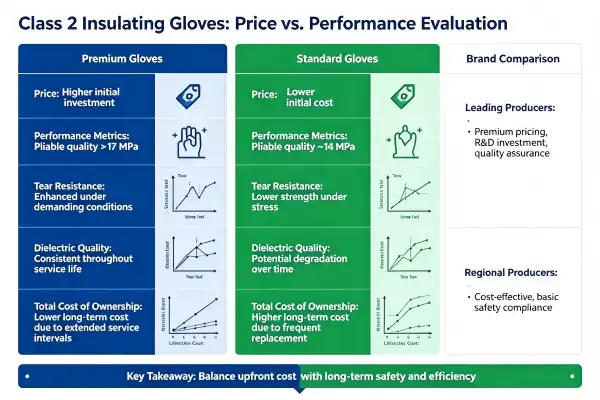
Comparing Class 2 Insulating Gloves: Price vs. Performance
Evaluating Class 2 insulating gloves requires balancing upfront costs against long-term performance, safety benefits, and operational efficiency. Premium electrical rubber gloves justify a higher initial investment through superior durability, enhanced safety margins, and reduced replacement frequency. Understanding performance differentiators helps procurement managers optimize the total cost of ownership while maintaining safety standards.
Performance Metrics and Value Analysis
Premium Lesson 2 gloves illustrate a predominant pliable quality, regularly surpassing 17 MPa compared to 14 MPa for standard grades. Upgraded tear resistance, measured by pant tear quality, has made strides in strength beneath demanding work conditions. These execution preferences translate into amplified benefit intervals and diminished substitution costs over the glove lifecycle. Dielectric quality consistency speaks to another basic execution calculation that legitimizes premium estimating. High-quality gloves keep up electrical separator properties throughout their service life, whereas lower-grade choices may involvement debasement that compromises safety performance. The venture in premium gloves gives improved security edges and decreased risk of electrical incidents.
Brand Comparison and Market Positioning
Leading producers in the electrical security industry have built up a reputation for quality and unwavering quality that bolsters premium estimating procedures. Built up brands contribute intensely in research and improvement, progressed fabricating forms, and comprehensive quality assurance programs. These ventures result in items that provide reliable execution and solid assurance for electrical workers. Regional producers regularly give cost-effective choices that meet fundamental security prerequisites whereas advertising competitive pricing for price-sensitive applications. In any case, procurement directors must carefully assess certifications, quality consistency, and long-term accessibility when considering these options. The adjustment between fetched investment funds and hazard moderation requires exhaustive provider assessment and item testing.
Total Cost of Ownership Considerations
Calculating add up to taken a toll on possession includes assessing the buy cost, the benefit of life, support requirements, and replacement frequency. Premium gloves with amplified benefit intervals may convey lower total costs in spite of a higher initial investment. Upkeep contemplations incorporate assessment frequency, testing requirements, and capacity conditions that influence glove longevity. Operational proficiency components incorporate specialist consolation, ability, and efficiency impacts that impact in general esteem. Gloves with predominant fit and adaptability empower more proficient work execution, possibly offsetting higher acquisition costs through improved efficiency. These operational benefits require assessment within the broader setting of work environment productivity and security performance.
Purchasing Class 2 Insulating Gloves: Procurement Tips for B2B Buyers
Strategic procurement of Class 2 insulating gloves involves evaluating multiple factors beyond initial purchase price. Supplier selection criteria should encompass product quality, certification credentials, delivery reliability, and long-term partnership potential. Effective procurement strategies optimize cost, quality, and risk management while ensuring consistent availability of critical safety equipment.
Supplier Evaluation and Selection Criteria
Qualified providers must illustrate compliance with important security benchmarks and keep up current certifications for their manufacturing offices. ISO 9001 quality administration frameworks give confirmation of steady production processes and quality control measures. Provider reviews and office reviews confirm fabricating capabilities and quality confirmation, hones basic for basic security applications. Financial soundness and commerce progression planning guarantee dependable long-term supply connections. Providers with broadened fabrication capabilities and vigorous supply chain management can keep up reliable accessibility amid market disturbances. Geographic differences in fabricating areas give extra supply security for organizations with basic security requirements.
Negotiation Strategies and Contract Terms
Volume commitments empower favorable estimating transactions while guaranteeing consistent supply accessibility. Multi-year contracts with characterized estimating structures give budget consistency and supply security. Contract terms ought to incorporate execution determinations, quality requirements, and delivery plans that align with operational needs. Warranty arrangements and return approaches ensure against item absconds and quality issues. Comprehensive guarantee scope ought to incorporate substitution costs, sped up conveyance for basic needs, and specialized support for product-related issues. Clear return arrangements empower effective determination of quality concerns without disturbing operations.
Certification Verification and Quality Assurance
Product certification confirmation includes looking into test reports, certification archives, and compliance records. Bona fide certifications from recognized testing research facilities give affirmation of administrative compliance and security execution. Fake items pose critical security dangers and administrative compliance issues that can result in genuine consequences for organizations and workers. Quality affirmation measures incorporate approaching review strategies, examining conventions, and execution testing. Standard quality reviews and provider appraisals keep up steady item quality throughout the supply chain. Documentation prerequisites include traceability records, test certificates, and compliance documentation essential for administrative compliance and risk protection.
Care, Maintenance, and Shelf Life: Maximizing the Value of Your Class 2 Insulating Gloves
Proper maintenance practices significantly extend the service life of Class 2 insulating gloves while maintaining their protective performance. Comprehensive maintenance programs include storage protocols, inspection procedures, and testing schedules that optimize glove performance and safety assurance. Understanding shelf life limitations and replacement criteria prevents safety compromises while maximizing equipment investment.
Storage and Handling Best Practices
Optimal storage conditions require controlled temperature and humidity environments that prevent rubber degradation and maintain electrical properties. Storage temperatures between 50°F and 70°F (10°C to 21°C) with relative humidity below 80% provide ideal conditions for extended shelf life. Protection from direct sunlight, ozone exposure, and chemical contamination prevents premature aging and performance degradation. Proper handling procedures include avoiding sharp objects, excessive stretching, and contact with oils or solvents that can compromise rubber integrity. Storage systems should prevent folding, creasing, or compression that creates stress concentrations and potential failure points. Rotation procedures ensure older inventory receives priority use while maintaining product freshness.
Inspection Protocols and Testing Requirements
Regularly wear electrical rubber gloves for potential defects before they compromise safety performance. Visual inspections should examine the entire glove surface for cuts, punctures, embedded foreign objects, or signs of deterioration. Flexibility testing verifies that rubber compounds maintain appropriate elasticity without cracking or stiffness that indicates aging. Electrical testing requirements vary by application and regulatory requirements, typically ranging from monthly to annual intervals. In-house testing capabilities enable frequent verification of electrical integrity without external laboratory delays. Testing equipment must receive regular calibration and maintenance to ensure accurate results and regulatory compliance.
Replacement Criteria and Lifecycle Management
Replacement schedules should consider chronological age, usage frequency, and exposure conditions that affect glove performance. Maximum service periods typically range from six months to two years, depending on application severity and manufacturer recommendations. Usage tracking systems monitor individual glove history and ensure timely replacement before safety performance degrades. Lifecycle management programs optimize replacement timing while maintaining safety margins. Predictive replacement based on usage patterns and performance monitoring prevents unexpected failures while avoiding premature replacement of serviceable equipment. Cost optimization requires balancing replacement frequency against safety requirements and total cost considerations.
Partner with PPE MAX for Premium Class 2 Insulating Gloves
PPE MAX has served as a trusted global supplier of certified Class 2 insulating electrical rubber gloves since 1956, delivering premium protection solutions to industrial and OEM clients worldwide. Our comprehensive product portfolio meets stringent international safety standards while providing customized sizing and bulk order solutions designed to optimize procurement efficiency across 134 countries.
Manufacturing Excellence and Quality Assurance
Our advanced manufacturing facilities incorporate state-of-the-art production technology and rigorous quality control processes that ensure consistent product performance. Every glove undergoes individual electrical testing and comprehensive quality verification before shipment. Our ISO 9001-certified quality management systems assure manufacturing excellence and regulatory compliance. Decades of manufacturing experience enable PPE MAX to deliver products that exceed industry standards for durability, safety performance, and reliability. Our engineering team continuously develops improved formulations and manufacturing processes that enhance product performance while maintaining competitive pricing. Investment in research and development ensures our products incorporate the latest advances in electrical safety technology.
Comprehensive Service and Technical Support
Our technical support team provides expert consultation for product selection, application requirements, and compliance specifications. Custom sizing capabilities accommodate specific workforce requirements and specialized applications. Responsive customer service ensures efficient order processing, delivery coordination, and post-sale support throughout the product lifecycle. Bulk purchasing programs deliver significant cost savings while ensuring consistent product availability for large-scale operations. Our global distribution network provides reliable delivery to international markets with comprehensive logistics support. Partnership with PPE MAX ensures access to premium protective equipment essential for operational safety and regulatory compliance.
Conclusion
Class 2 insulating glove costs reflect the complex balance between material quality, manufacturing excellence, and safety performance requirements. Understanding pricing factors enables procurement professionals to make informed decisions that optimize both cost efficiency and worker protection. Premium electrical rubber gloves justify a higher initial investment through superior durability, enhanced safety margins, and reduced total cost of ownership. Effective procurement strategies consider supplier qualifications, product certifications, and long-term partnership potential beyond initial purchase price. Proper maintenance and lifecycle management maximize equipment value while maintaining critical safety performance throughout the service period.
FAQ
What is the recommended testing interval for Class 2 insulating gloves?
OSHA regulations require electrical testing of Class 2 insulating gloves every six months or before use if the previous test date exceeds this interval. Additional testing is required immediately before use if gloves show signs of damage or have been subjected to electrical stress. Visual inspections should occur before each use to identify potential defects that could compromise safety performance.
How do I choose between natural and synthetic rubber Class 2 insulating gloves?
Natural rubber provides superior elasticity, tear resistance, and electrical properties, making it ideal for demanding applications where maximum protection is essential. Synthetic rubber alternatives offer consistent availability, price stability, and adequate performance for standard electrical work. The choice depends on application requirements, budget considerations, and performance priorities specific to your operational environment.
Are custom sizes available for Class 2 insulating gloves to accommodate specific workforce requirements?
Most manufacturers offer custom sizing options to accommodate workforce-specific requirements and ensure proper fit for optimal protection. Custom sizing typically requires minimum order quantities and extended lead times compared to standard sizes. Proper fit is essential for both safety performance and worker comfort, making custom sizing a valuable option for organizations with unique sizing requirements.
Contact PPE MAX for Your Class 2 Insulating Glove Requirements
PPE MAX delivers premium Class 2 insulating gloves that exceed industry standards for electrical protection and durability. Our electrical rubber gloves supplier's expertise spans over six decades, providing certified products to clients across 134 countries. Contact us at marketing@ppemax.com to receive tailored quotes for bulk purchasing options and explore our comprehensive range of electrical safety solutions. Our technical team provides expert consultation to ensure optimal product selection for your specific applications and regulatory requirements.
References
1. American Society for Testing and Materials. "ASTM D120 Standard Specification for Rubber Insulating Gloves." Annual Book of ASTM Standards, Vol. 10.03, 2019.
2. Occupational Safety and Health Administration. "Electrical Protective Equipment Standards: 29 CFR 1910.137." Federal Register, U.S. Department of Labor, 2018.
3. International Electrotechnical Commission. "IEC 60903 Live Working - Gloves of Insulating Material." International Standards for Electrical Safety Equipment, 2019.
4. National Institute for Occupational Safety and Health. "Criteria for a Recommended Standard: Working in Confined Spaces." Publication No. 80-106, Centers for Disease Control and Prevention, 2017.
5. Institute of Electrical and Electronics Engineers. "IEEE 1048 Guide for Protective Grounding of Power Lines." Standards for Electrical Safety Practices, 2018.
6. American National Standards Institute. "ANSI/ASTM F496 Standard Specification for In-Service Care of Insulating Gloves and Sleeves." Safety Equipment Standards Compendium, 2019.
Learn about our latest products and discounts through SMS or email