- English
- French
- German
- Portuguese
- Spanish
- Russian
- Japanese
- Korean
- Arabic
- Greek
- German
- Turkish
- Italian
- Danish
- Romanian
- Indonesian
- Czech
- Afrikaans
- Swedish
- Polish
- Basque
- Catalan
- Esperanto
- Hindi
- Lao
- Albanian
- Amharic
- Armenian
- Azerbaijani
- Belarusian
- Bengali
- Bosnian
- Bulgarian
- Cebuano
- Chichewa
- Corsican
- Croatian
- Dutch
- Estonian
- Filipino
- Finnish
- Frisian
- Galician
- Georgian
- Gujarati
- Haitian
- Hausa
- Hawaiian
- Hebrew
- Hmong
- Hungarian
- Icelandic
- Igbo
- Javanese
- Kannada
- Kazakh
- Khmer
- Kurdish
- Kyrgyz
- Latin
- Latvian
- Lithuanian
- Luxembou..
- Macedonian
- Malagasy
- Malay
- Malayalam
- Maltese
- Maori
- Marathi
- Mongolian
- Burmese
- Nepali
- Norwegian
- Pashto
- Persian
- Punjabi
- Serbian
- Sesotho
- Sinhala
- Slovak
- Slovenian
- Somali
- Samoan
- Scots Gaelic
- Shona
- Sindhi
- Sundanese
- Swahili
- Tajik
- Tamil
- Telugu
- Thai
- Ukrainian
- Urdu
- Uzbek
- Vietnamese
- Welsh
- Xhosa
- Yiddish
- Yoruba
- Zulu
What class of insulating gloves do I need?
Selecting the appropriate class of electrical rubber gloves depends on your maximum operational voltage requirements. Class 00 protects against 500V AC, Class 0 handles up to 1,000V AC, Class 1 covers 7,500V AC, Class 2 protects against 17,000V AC, Class 3 safeguards up to 26,500V AC, and Class 4 provides protection for 36,000V AC applications. The glove class rating must exceed your highest anticipated working voltage to ensure adequate protection for electrical workers across industrial environments.
Understanding Electrical Rubber Gloves: Classes and Usage
Electrical rubber gloves serve as vital PPE for workers exposed to electrical risks, commonly protecting electricians, utility personnel, manufacturing operators, and maintenance technicians. These specialized gloves create an insulating barrier between workers and energized equipment, preventing electrical current from traveling through the body during routine operations or emergency situations.
Classification System and Voltage Ratings
The industry categorizes protection gloves into six unmistakable classes, each designed for particular voltage ranges. Course 00 gloves ensure against 500 volts AC and 750 volts DC, making them reasonable for low-voltage applications like private electrical work. Course 0 handles up to 1,000 volts AC and 1,500 volts DC, commonly utilized in commercial electrical installations. Class 1 gloves cover 7,500 volts AC and 11,250 volts DC, fitting for dissemination framework work. Lesson 2 ensures against 17,000 volts AC and 25,500 volts DC, basic for transmission line upkeep. Lesson 3 shields specialists up to 26,500 volts AC and 39,750 volts DC, whereas Lesson 4 gives the most extreme assurance for 36,000 volts AC and 54,000 volts DC applications in high-voltage utility operations.
Insulation Mechanism and Material Composition
Modern electrical elastic gloves utilize characteristic elastic compounds or engineered materials designed to avoid electrical current entry through atomic structure control. The cover properties depend on fabric thickness, composition, and exactness of fabrication that meets ASTM D120 benchmarks. Quality producers like PPE MAX utilize thorough testing conventions to confirm dielectric quality over temperature ranges and natural conditions. The glove development incorporates numerous layers outlined to maintain separator keenness while giving the ability for complex assignments. Characteristic elastic remains the favored fabric for most applications due to its predominant electrical properties, in spite of the fact that manufactured options offer upgraded chemical resistance in specialized situations where petroleum items or mechanical solvents pose extra risks.
Key Factors to Consider When Choosing the Class of Insulating Gloves
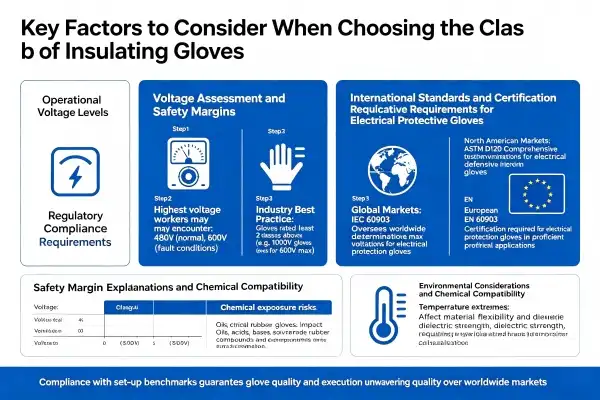
Selecting the appropriate insulating glove class requires careful evaluation of operational voltage levels, environmental conditions, and regulatory compliance requirements. The fundamental principle mandates that glove ratings must exceed the maximum anticipated voltage by a significant safety margin to account for voltage fluctuations and unexpected electrical events.
Voltage Assessment and Safety Margins
Begin by conducting a careful appraisal of all electrical frameworks inside your operational environment. Record the most noteworthy voltage levels specialists might experience, including potential fault conditions that might create unsafe circumstances. Industry best practices suggest selecting gloves evaluated at least two classes over your greatest working voltage to give satisfactory assurance margins. Consider voltage homeless people, exchanging surges, and hardware breakdowns that might briefly hoist electrical possibilities past typical working parameters. Control framework engineers ought to collaborate with security experts to distinguish worst-case scenarios and guarantee glove determinations suit these conditions without compromising laborer protection.
International Standards and Certification Requirements
Compliance with set-up benchmarks guarantees glove quality and execution unwavering quality over worldwide markets. ASTM D120 gives comprehensive testing conventions for electrical defensive gloves in North American markets, whereas IEC 60903 oversees worldwide determinations. European markets require EN 60903 certification for electrical protection gloves utilized in proficient applications. These guidelines order thorough testing strategies counting dielectric quality confirmation, physical property evaluations, and maturing resistance assessments. Obtainment groups ought to confirm that providers keep up current certifications and provide documentation supporting compliance with pertinent territorial requirements. Our fabrication office keeps up certifications over different worldwide guidelines, empowering us to serve assorted worldwide markets with steady quality assurance.
Environmental Considerations and Chemical Compatibility
electrical rubber gloves impact glove determination choices past essential voltage necessities. Chemical presentation from oils, acids, bases, or solvents can corrupt elastic compounds and compromise electrical cover properties. Temperature extremes influence fabric adaptability and dielectric quality, requiring specialized definitions for cruel working conditions. Humidity levels affect both comfort and electrical execution, especially in tropical or marine situations where dampness collection postures extra challenges. UV radiation introduction amid open-air work can accelerate fabric degradation, requiring gloves with upgraded climate resistance. Select producers offer specialized compounds built for particular natural challenges, while keeping up electrical security capabilities.
How to Test, Inspect, and Maintain Insulating Gloves for Optimal Safety?
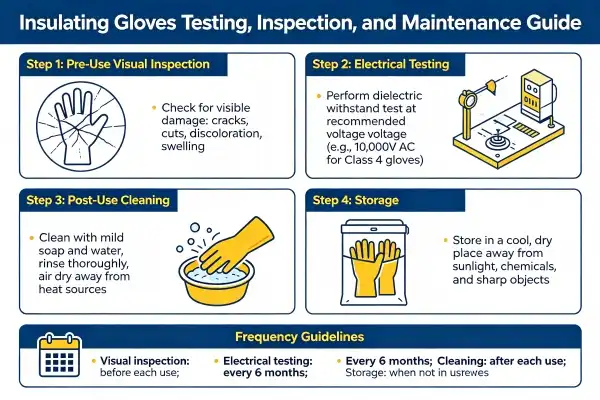
Maintaining protective efficacy requires systematic inspection and testing protocols that detect potential defects before they compromise worker safety. Proper maintenance extends glove lifespan while ensuring consistent protection levels throughout the service period.
Pre-Use Inspection Procedures
Every utilization cycle ought to start with a visual review of the glove surface for cuts, punctures, implanted outside objects, or signs of chemical contamination. Check crease astuteness, especially around fingers and sleeve ranges where push concentrations are created. See for color changes, breaking, or surface weakening that demonstrates fabric degradation. Perform discuss expansion testing by catching discuss the interior of the glove and checking for spills. This basic method uncovers pinhole abandons undetectable amid visual review. Roll the swollen glove tenderly while tuning in for getting away, discussing, or feeling for weight loss. Any recognized spill renders the glove risky for electrical work and requires prompt replacement.
Formal Testing Requirements and Documentation
Regulatory guidelines command occasional electrical testing at intervals extending from six months to three years, depending on glove course and utilization frequency. Proficient testing offices utilize specialized hardware to confirm dielectric quality according to ASTM or IEC standards. These tests apply controlled voltage levels while observing current spillage to guarantee separator keenness remains inside worthy limits. Maintain nitty-gritty testing records, archiving test dates, occurrences, and glove distinguishing proof numbers. This documentation bolsters compliance reviews and makes a difference in tracking glove execution over time. Set up testing plans that guarantee gloves stay current throughout their benefit period, dodging crevices that may expose specialists to unprotected electrical hazards.
Storage and Care Best Practices
Proper capacity ensures gloves from natural harm that degrades cover properties. Store gloves in defensive holders absent from coordinate daylight, ozone sources, and temperature extremes. Dodge contact with petroleum items, sharp objects, or chemicals that might cause defilement or physical damage. Clean gloves frequently, utilizing mild cleanser and water, dodging harsh chemicals or abrasive materials that might compromise elasticity. Permit total drying some time recently, the capacity to anticipate shape development or fabric disintegration. Supplant gloves, agreeing to producer suggestions or when testing uncovers corrupted execution, prioritizing specialist security over fetched considerations.
Comparing Different Types and Brands of Electrical Rubber Gloves
Understanding distinctions between electrical rubber gloves and other protective equipment helps procurement teams make informed decisions that balance protection, comfort, and operational efficiency. Material selection, manufacturing quality, and supplier reputation significantly impact long-term value and worker safety outcomes.
Material Technologies and Performance Characteristics
Natural elastic compounds give fabulous electrical cover properties with prevalent adaptability over temperature ranges experienced in most mechanical applications. These materials offer ideal adaptability for complex errands whereas keeping up strong dielectric quality. In any case, normal elastic appears to have restricted resistance to petroleum products and certain mechanical chemicals. Synthetic options, including nitrile and neoprene mixes, convey improved chemical resistance while relinquishing some electrical execution compared to common rubber. These materials exceed expectations in situations where oil introduction or chemical defilement pose critical dangers. Progressively manufactured definitions endeavor to adjust electrical assurance with chemical resistance, although fabric costs regularly increase with improved execution capabilities.
Quality Indicators and Supplier Evaluation
Reputable producers contribute to advanced testing gear and quality control frameworks that guarantee steady item execution. See for providers keeping up ISO 9001 certification near pertinent electrical security benchmarks. Fabricating office reviews gives an understanding of generation capabilities and quality administration systems. PPE MAX has built our notoriety through six decades of steady quality conveyance in over 134 nations. Our testing conventions surpass industry standards, and our fabrication processes consolidate different quality checkpoints to avoid inadequate items from reaching clients. This commitment to brilliance has set up long-term associations with major mechanical organizations and government offices worldwide.
Comfort and Ergonomic Considerations
Worker acknowledgment specifically connects with consolation levels and ergonomic plan highlights. Well-designed gloves adjust security requirements with hand portability, grasp capability, and material durability required for exact work. Poor-fitting gloves decrease efficiency and may expose laborers to hazardous hazards as laborers look for alternatives. Consider glove measuring choices, inside surfaces, and sleeve plans that accommodate different hand shapes and work requirements. Amplified wear applications benefit from moisture-wicking properties and ergonomic forming that diminishes hand weariness. Adjust these consolation highlights with security levels and strength requirements particular to your operational environment.
Where and How to Purchase Certified Electrical Rubber Gloves?
Strategic sourcing approaches ensure access to certified electrical protective equipment while optimizing cost structures and supply chain reliability. Supplier selection criteria should emphasize certification compliance, quality consistency, and service capabilities that support long-term partnerships.
Supplier Certification and Quality Verification
Verify that potential suppliers maintain current certifications for applicable standards, including ASTM D120, IEC 60903, or EN 60903, depending on your regional requirements. Request documentation supporting these certifications, along with test reports demonstrating compliance with electrical and physical property specifications. Evaluate supplier quality management systems, including ISO 9001 certification and manufacturing facility capabilities. Site audits provide valuable insights into production processes, testing equipment, and quality control procedures. Established suppliers with proven track records offer greater assurance of consistent product quality and reliable delivery performance.
Bulk Purchasing Strategies and Cost Management
Volume purchasing programs provide cost advantages while ensuring adequate inventory levels for large organizational requirements. Negotiate pricing structures that recognize volume commitments while maintaining flexibility for changing operational needs. Consider the total cost of ownership, including testing, replacement, and administrative expenses, rather than focusing solely on unit prices. PPE MAX offers comprehensive volume pricing programs designed for industrial distributors, large construction companies, and government procurement departments. Our global manufacturing capacity enables consistent supply even during market disruptions, while our extensive product range supports one-stop shopping for complete PPE requirements. Contact our team at bettybing@ppemax.com to discuss customized pricing structures aligned with your specific procurement needs.
Logistics and Supply Chain Considerations
International procurement requires careful attention to shipping regulations, customs requirements, and delivery timelines. Electrical protective equipment may face specific regulatory restrictions depending on destination countries and end-use applications. Partner with suppliers experienced in global logistics who understand regulatory compliance requirements. Our extensive distribution network spans 134 countries with established logistics partnerships that ensure reliable delivery to remote locations. We maintain regional inventory positions to reduce lead times while providing local technical support for installation and training requirements. This global infrastructure supports emergency procurement needs and routine replenishment programs with equal efficiency.
Conclusion
Electrical rubber glove classes require careful evaluation of voltage requirements, environmental conditions, and regulatory compliance standards. The classification system provides clear guidance for matching protection levels to operational needs, while proper testing and maintenance protocols ensure consistent safety performance throughout the glove service life. Quality supplier partnerships deliver long-term value through consistent product availability, technical support, and cost optimization strategies. Our six decades of experience serving industrial customers worldwide have demonstrated the importance of balancing protection requirements with practical considerations, including comfort, durability, and total cost of ownership.
FAQ
What class of gloves do I need for 10,000-volt applications?
Class 2 electrical rubber gloves protect voltages up to 17,000V AC, making them appropriate for 10,000 volt applications. These gloves offer an adequate safety margin above your operational voltage while meeting ASTM D120 requirements for high-voltage electrical work.
How often should insulating gloves be tested?
Testing frequency depends on glove class and usage patterns. Class 00 and Class 0 gloves require testing every six months, while Class 1 through Class 4 gloves need testing annually. High-use applications may require more frequent testing to ensure continued protection effectiveness.
Can electrical rubber gloves protect against chemical exposure?
Standard electrical rubber gloves provide limited chemical protection compared to specialized chemical-resistant gloves. Natural rubber compounds resist some chemicals but degrade when exposed to petroleum products, acids, or strong solvents. Consider synthetic alternatives for applications involving significant chemical exposure risks.
What is the difference between AC and DC voltage ratings?
DC voltage ratings are typically 50% higher than AC ratings for the same glove class due to different electrical stress patterns. Class 1 gloves protect against 7,500V AC or 11,250V DC, reflecting this relationship between alternating and direct current protection levels.
Partner with PPE MAX for Premium Electrical Rubber Gloves
PPE MAX stands ready to support your electrical safety requirements with certified insulating gloves manufactured to the highest industry standards. Our comprehensive product line covers all voltage classes with extensive customization capabilities for specialized applications across industrial environments.
As a leading electrical rubber gloves supplier, we combine six decades of manufacturing expertise with global distribution capabilities serving 134 countries. Our quality management systems ensure consistent performance while competitive pricing structures support both routine procurement and emergency requirements. Contact marketing@ppemax.com today to discuss your specific needs and receive personalized product recommendations backed by our commitment to protecting workers worldwide.
References
1. American Society for Testing and Materials. "Standard Specification for Rubber Insulating Gloves." ASTM International, 2023.
2. International Electrotechnical Commission. "Live Working - Gloves of Insulating Material." IEC Standards Publication 60903, 2022.
3. National Institute for Occupational Safety and Health. "Electrical Safety Guidelines for Industrial Operations." NIOSH Publication Series, 2023.
4. Institute of Electrical and Electronics Engineers. "Guide for Safety in AC Substation Grounding." IEEE Standards Association, 2022.
5. Occupational Safety and Health Administration. "Personal Protective Equipment Standards for Electrical Workers." Federal Register Documentation, 2023.
6. International Safety Equipment Association. "Global Standards for Electrical Protective Equipment Manufacturing and Testing." Industry Safety Publications, 2022.
Learn about our latest products and discounts through SMS or email