- English
- French
- German
- Portuguese
- Spanish
- Russian
- Japanese
- Korean
- Arabic
- Greek
- German
- Turkish
- Italian
- Danish
- Romanian
- Indonesian
- Czech
- Afrikaans
- Swedish
- Polish
- Basque
- Catalan
- Esperanto
- Hindi
- Lao
- Albanian
- Amharic
- Armenian
- Azerbaijani
- Belarusian
- Bengali
- Bosnian
- Bulgarian
- Cebuano
- Chichewa
- Corsican
- Croatian
- Dutch
- Estonian
- Filipino
- Finnish
- Frisian
- Galician
- Georgian
- Gujarati
- Haitian
- Hausa
- Hawaiian
- Hebrew
- Hmong
- Hungarian
- Icelandic
- Igbo
- Javanese
- Kannada
- Kazakh
- Khmer
- Kurdish
- Kyrgyz
- Latin
- Latvian
- Lithuanian
- Luxembou..
- Macedonian
- Malagasy
- Malay
- Malayalam
- Maltese
- Maori
- Marathi
- Mongolian
- Burmese
- Nepali
- Norwegian
- Pashto
- Persian
- Punjabi
- Serbian
- Sesotho
- Sinhala
- Slovak
- Slovenian
- Somali
- Samoan
- Scots Gaelic
- Shona
- Sindhi
- Sundanese
- Swahili
- Tajik
- Tamil
- Telugu
- Thai
- Ukrainian
- Urdu
- Uzbek
- Vietnamese
- Welsh
- Xhosa
- Yiddish
- Yoruba
- Zulu
Electrical Rubber Gloves: How Tight Should the Fit Be?
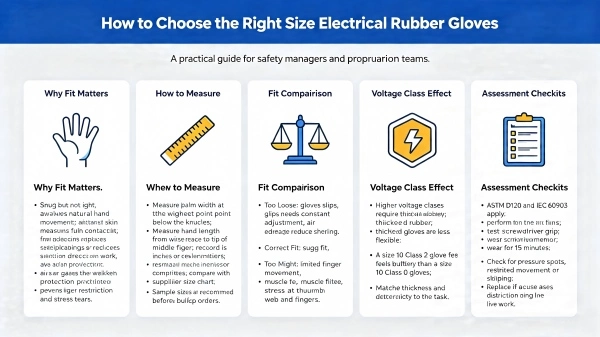
When working with high-voltage equipment, picking the right-sized electrical rubber gloves isn't just a matter of personal taste; it's a very important safety choice. The best fit should be snug but not tight, letting your hands move naturally while staying in full touch with your skin to keep the insulation in place. Too-loose gloves can slip when doing exact work or leave air holes that weaken dielectric protection. On the other hand, gloves that are too tight can make it hard to move your fingers and may tear when put under stress. To find this balance, you need to know the size of your hand, the material of the glove, and how voltage class changes thickness and flexibility.
Understanding the Importance of Proper Fit for Electrical Rubber Gloves
Working with safety managers in energy plants and mines for years, I've seen firsthand how the fit of gloves affects both the number of accidents and how well workers follow safety rules. When linemen say their hands are tired in the middle of their shift or when electricians take off their insulation gloves to do small jobs, it's usually because the gloves are too small, not because the workers were careless.
Common Fit Issues and Their Safety Implications
Glove sliding is one of the problems that buying teams tell us about most often. People who work overhead have to constantly re-adjust their grip because their electrical rubber gloves move around when they are even one size too big. When techs are working with live conductors, this small problem turns into a big danger. The distraction takes the focus off the electrical danger, and the holes between the glove and skin can make the shield less effective.
On the other hand, gloves that are too small also cause major problems. Fingers that can't move freely make it hard to feel things, which makes it hard to use tools or find things by touch. When workers put on tight gloves, their hand muscles get tired faster, which makes their grip weaker after a while. We have records of situations where too much tension led to early tears at stress points, mainly around the thumb web and fingers, which could have let electrical currents through.
Industry Standards Governing Glove Sizing
In the United States, ASTM D120 is the standard that all rubber insulating gloves must meet. It sets six voltage classes, ranging from Class 00 (up to 500V AC) to Class 4 (up to 36,000V AC). This standard spells out performance requirements, but it doesn't say much about how to make sure that all makers' products work the same. The IEC 60903 standard, which is widely used in foreign markets, uses a similar method for classifying things but slightly different ways to test them.
A lot of procurement workers don't think about how voltage class affects fit traits directly. For higher voltage levels, the rubber has to be stronger, which naturally makes it less flexible and less responsive to touch. This is true even if both gloves are marked as size 10. A Class 2 glove rated for 17,000V will always feel bigger than a Class 0 glove rated for 1,000V. Knowing this link helps safety managers set reasonable standards when choosing gloves for their employees with different types of jobs.
How to Determine the Right Fit for Electrical Rubber Gloves
Choosing insulating gloves that fit right requires a thorough evaluation process that goes beyond just getting your normal glove size. Because dielectric protection is so specific, measurements need to be taken that most people who buy gloves don't think about.
Measuring Your Hands Accurately
To begin, find the length of your hand at the biggest point across the palm. This is usually just below the knuckles, where your fingers meet your hand. Use a measuring tape made of flexible cloth and make sure it fits snugly without pressing down on the tissue. Write down this size in either inches or centimetres, based on the size chart provided by your seller. Next, measure the length of the hand from the gap in the wrist to the tip of the middle finger when the hand is fully stretched.
Manufacturers use these two main measurements to give sizes, though different names have different ideas about what they mean. Some European manufacturers like smaller gaps between sizes than North American makers do. This is why a size 9 from one provider might fit like a size 10 from another. When buying from more than one seller, we always suggest getting sample sizes to make sure they fit before committing to big orders.
Evaluating Material Properties and Elasticity
Because it is so flexible and has great insulating strength, natural rubber is still the most common material used to make electrical rubber gloves. During production, vulcanisation of the rubber combination creates cross-linked molecular chains that give the material flexibility while keeping its insulation qualities. Because of this, the glove can stretch about 10 to 15 per cent while being worn and used, but then it goes back to its original size.
Knowing about this stretch trait helps you guess how something will fit in real life. If you put on a glove and it feels a little tight at first, it will usually loosen up after a few minutes as your body heat warms the rubber and your hand movements work the material. However, too much stretching means that the product is too small, which makes the rubber wall thinner and could affect the safety limit built into the voltage rating. Through tests, we've found that putting on the glove should take some effort, but shouldn't make your skin turn white or hurt once it's on.
Practical Fit Assessment Techniques
After putting on the gloves, do a thorough test of your agility. While making a tight fist, fully extend your fingers ten times, noticing if they pinch or feel squished. Take a screwdriver and pretend to turn a screw to see if you can keep a firm grip without using too much force. These easy tests show fit issues that aren't clear from a basic review.
For the comfort test, the gloves must be worn for fifteen minutes while normal work tasks are carried out. After this break-in time, if the gear fits well, you should forget that you're wearing safety gear. Being aware of the gloves all the time, whether from pressure spots, limited movement, or being too loose, is a sign of a size problem that will get worse with prolonged use.
Comparison of Electrical Rubber Gloves Based on Fit and Performance
When a company needs to buy voltage-rated gloves, the fit and performance of gloves from different brands vary a lot. This makes choosing a brand a strategic choice instead of a simple purchase.
Leading Brand Sizing Methodologies
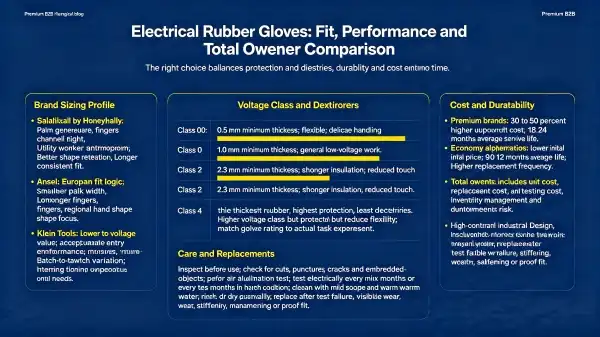
Honeywell's Salisbury brand, which PPE MAX has looked into a lot as part of our work to develop new products, uses a size method that is based on decades of hand anthropometry data from utility workers. Their electrical rubber gloves tend to run a little bigger in the palm while keeping the finger channels tight. This makes it easier to hold tools without fingertip bunching up. Ansell uses a European method for sizing that favours smaller palm widths and longer fingers. This works with the different hand shapes that are popular in some parts of the world.
Based on what our customers have told us, Salisbury gloves keep their shape better over time, bending or shrinking less after being used over and over again. This stability is very important for fleet management because gloves keep their original fit for longer, which means they don't have to be replaced as often because of size issues. Klein Tools has affordable choices that work well enough for lower voltage classes, but their sizes change more between groups of production, so you have to be more careful about managing your inventory.
Balancing Protection Level with Wearability
When choosing insulation gloves, the main trade-off is weighing the benefits of electrical safety against the needs of the job. As the voltage class goes up, the rubber gets thicker, which makes it stronger as an insulator but less sensitive to touch and less flexible. At a minimum thickness of 0.5 mm, Class 00 gloves feel almost like medical gloves, which lets you handle delicate parts. Class 2 gloves, which must be at least 2.3 mm thick, feel much bulkier, which makes small motor work much harder.
This makes it hard for organisations to buy things because they have to deal with different electricity conditions. Choosing the highest voltage class gives you the most options, but workers may not wear gloves for lower-risk jobs because they are hard for them to control. We suggest that you look at your real exposure levels and choose the lowest voltage class that gives you enough protection with a safety cushion. You should then keep a smaller stock of higher-rated gloves for specific tasks.
Lifecycle Cost Considerations for Bulk Purchasing
The purchase price is only one part of the total cost of owning a glove. Quality shielding gloves from well-known brands usually cost 30 to 50 per cent more than cheaper options, but this extra money is well spent because the better gloves last longer and break down less often. During our quality testing, luxury gloves lasted an average of 18 to 24 months with normal industry use. On the other hand, economy gloves had to be replaced after 9 to 12 months because they were physically worn out or failed tests.
When you buy in bulk, you should talk about more than just the unit price. You should also talk about how to handle your supplies and how flexible the sizes are. Modern sellers offer vendor-managed inventory programs where they keep stock at your facilities and restock based on how much is used. This way, you don't have to keep money in safety stock and can be sure that you always have the right size. We'll talk more about custom fit projects soon, which are another way to get the best cost-performance results in large-scale operations.
Best Practices for Maintaining the Fit and Safety of Electrical Rubber Gloves
As long as you follow the right care steps, your insulating gloves will keep their protective structure and the right size for your workers. This will protect your investment and keep your workers safe.
Routine Inspection Protocols
Before each use, workers should look over the whole surface of the glove to see if it has any cuts, punctures, foreign objects stuck in it, or signs of ozone damage that show up as surface cracks. The air inflation test is still the best way to find small holes in the cuff in the field. Simply roll the cuff up to trap air inside, then apply pressure while hearing and feeling for air exiting. Any leak that can be seen, no matter how small, makes the glove useless.
Periodic electrical tests at times set by ASTM F496 are the only way to be sure of the dielectric's integrity. In-service gloves need to be tested every six months, but for gloves used in harsh settings, many companies choose to test them only every three months. In these tests, voltage is applied across the rubber while the leaking current is measured. This finds wear and tear before it affects security. Knowing these testing dates helps buying teams figure out what new stock they will need.
Cleaning and Storage Guidelines
Cleaning electrical rubber gloves after each use gets rid of dirt and other things that speed up the breakdown of rubber. We suggest washing with light soap and warm water. Stay away from cleaners made from petroleum or harsh acids that break down the molecules of rubber. Remove all soap remains completely with water, as alkaline buildup can speed up the ageing process. Let the gloves dry naturally, away from direct heat sources, before putting them away.
Replacement Timing and Warranty Considerations
Setting clear criteria for replacement takes away the need for biased judgment in the choice to dispose. In addition to electrical test failures, gloves that show obvious wear and tear, major stiffening or softening of the rubber, or changes in size that make them uncomfortable to wear should be thrown away. Most makers offer warranties that cover flaws in the material or the way the product was made, but not damage caused by use, exposure, or poor upkeep.
We keep thorough service records that show when each glove was issued, how it was inspected, and what tests it was put through. This information shows trends in how things break down and how long they should last based on your working conditions. This helps you make more accurate predictions about when you'll need to replace things and plan your budget. A lot of the time, the small amount of work that goes into regular tracking is worth it because it leads to useful insights.
Procurement Considerations: How to Source Electrical Rubber Gloves with the Optimal Fit
To strategically buy voltage-rated gloves, you need to find sources that can show both high-quality products and a reliable supply chain. You should also set up your purchasing processes so that everyone on your team gets the same fit.
Identifying Certified Suppliers and Manufacturers
Check the supplier's certification against important standards as the first step in your review. Getting certificates from ASTM, IEC, and ISO means that the quality systems and manufacturing methods meet certain standards. Ask for proof of relationships with third-party testing labs; trustworthy makers keep ongoing verification programs with separate testing labs. Suppliers who are ready to give test results, documentation for quality assurance, and the ability to track back to the manufacturing lot show that they are committed to being open and honest.
For PPE MAX, sixty years of meeting the safety needs of industry have taught us that connections with suppliers are just as important as product specs. Since 1956, we've built our name on reliable quality and quick technical help. We know that safety managers need partners who understand the problems they face in the workplace, not just vendors who fill orders. Talking to possible suppliers about your specific uses is a good way to find out how technical they are. Knowledgeable suppliers will ask you a lot of questions about voltage exposures, weather conditions, and the makeup of your workforce before they suggest products.
Strategic Approaches to Wholesale Buying
Setting up master deals with the main electrical rubber glove providers is helpful for companies with big or geographically spread out workforces. Most of the time, these frameworks offer tiered prices based on annual volume promises, with bigger savings for purchases above certain levels. Aside from lowering unit costs, these kinds of deals usually include extra services that make the business more valuable, like on-site fitness centres, personalised workout plans, and personal account management.
Custom Fit and OEM Partnership Opportunities
Large companies are looking into custom-fit programs more and more to get around the size problems that come with normal glove choices. The first step in these projects is to measure everyone's hands as part of a large-scale effort to find out how different people's hands are sized. Then, suppliers suggest the best standard size options and, if necessary, based on sales, create custom size specs for groups that don't fit into the usual ranges.
OEM manufacturing agreements from PPE MAX let companies choose specific fit features, labelling methods, or packaging arrangements that make their safety programs better. Custom glove programs are especially helpful for businesses that do business in more than one country because they let them standardise on uniform fit patterns, even if hand sizes vary from country to country. These relationships have minimum order sizes that only allow mid- to large-sized businesses with steady, recurring demand to use them. However, the gains in user acceptance and safety compliance that follow often make the investment worth it.
Conclusion
To get the best fit in electrical rubber gloves, you have to consider your hand size, the material's qualities, the voltage class standards, and your own personal comfort preferences. When something doesn't fit right, it can make a person uncomfortable, lose their dexterity, get tired quickly, and even compromise their electrical safety. For procurement programs to work, they need to start with accurate original sizing, use consistent quality products, follow good upkeep practices, and keep checking to see if the fit is right for everyone in the workforce. By using the methodical approach to choosing gloves described here, safety managers can greatly improve both the usefulness of protection and user compliance.
FAQ
1. What happens if electrical insulating gloves are too tight?
When electrical rubber gloves are too tight, they cut off blood flow and make it hard to move your fingers, which makes your hands tired quickly after a while of wearing them. Too much tension puts stress on the flex points, which speeds up wear and could lead to tears that compromise electrical safety. When workers are uncomfortable, they often take off their gloves too soon, which puts them at risk of being exposed.
2. Can I wear liner gloves to improve the fit of loose rubber gloves?
When worn over rubber insulation gloves, leather protective gloves protect against mechanical damage instead of adjusting the fit. Thin cotton or synthetic inner gloves worn under can, however, take up a little extra room while making you more comfortable by soaking up sweat. Make sure that any inner material you want to use is allowed for use with your specific rubber glove. Some fabrics can get in the way of inspections.
3. How does glove thickness affect fit perception?
Higher voltage class gloves are made of thicker rubber, which makes them less flexible and less responsive to touch. No matter what size it is, a Class 2 glove will always feel bigger than a Class 0 glove. When workers move from one voltage class to another, they often notice differences in how things fit, even though the dimensions stay the same. This is because of changes in the thickness of the material, not the real size.
Partner with PPE MAX as Your Trusted Electrical Rubber Gloves Supplier
Choosing the right electrical rubber gloves maker will determine whether your employees are always safe or have to deal with size issues that make safety programs less effective. Since its founding in 1956, PPE MAX has gained more than 60 years of specialised experience. Its goods are trusted by building, mining, energy, and industrial activities all over the world. Our technical team knows how fit, voltage class, and workforce diversity are all connected in complex ways. They can provide both standard-size solutions and unique OEM solutions that are made to fit your needs. Contact us at marketing@ppemax.com if you are a procurement professional with complex safety needs to talk about how our all-around approach to electrical safety gloves can improve the success of your program while lowering lifetime costs through high-quality and quick support.
References
1. There is an American Society for Testing and Materials. "ASTM D120-19 Standard Specification for Rubber Insulating Gloves." 2019 ASTM International.
2. The Institute of Electrical and Electronics Engineers. "IEEE 1584-2018 Guide for Performing Arc-Flash Hazard Calculations." 2018 IEEE Standards Association.
3. National Association for Fire Protection. "NFPA 70E-2021 Standard for Electrical Safety in the Workplace." NFPA 2020.
4. Safety and Health Administration for the Workplace. "Guidance for Choosing and Using Electrical Safety Gear." OSHA Technical Manual, Section VIII, Chapter 1, 2018.
5. International Commission for Electrotechnical Standards. The 2002 IEC Standards list insulating gloves as "IEC 60903:2002 Live Working."
6. Lattimore, Samuel K. and Williams, Robert J. "Anthropometric Hand Dimensions and Implications for PPE Sizing Standards." Journal of Occupational Safety Research, Vol. 47, No. 3, 2020, pp. 234–249.
Learn about our latest products and discounts through SMS or email