- English
- French
- German
- Portuguese
- Spanish
- Russian
- Japanese
- Korean
- Arabic
- Greek
- German
- Turkish
- Italian
- Danish
- Romanian
- Indonesian
- Czech
- Afrikaans
- Swedish
- Polish
- Basque
- Catalan
- Esperanto
- Hindi
- Lao
- Albanian
- Amharic
- Armenian
- Azerbaijani
- Belarusian
- Bengali
- Bosnian
- Bulgarian
- Cebuano
- Chichewa
- Corsican
- Croatian
- Dutch
- Estonian
- Filipino
- Finnish
- Frisian
- Galician
- Georgian
- Gujarati
- Haitian
- Hausa
- Hawaiian
- Hebrew
- Hmong
- Hungarian
- Icelandic
- Igbo
- Javanese
- Kannada
- Kazakh
- Khmer
- Kurdish
- Kyrgyz
- Latin
- Latvian
- Lithuanian
- Luxembou..
- Macedonian
- Malagasy
- Malay
- Malayalam
- Maltese
- Maori
- Marathi
- Mongolian
- Burmese
- Nepali
- Norwegian
- Pashto
- Persian
- Punjabi
- Serbian
- Sesotho
- Sinhala
- Slovak
- Slovenian
- Somali
- Samoan
- Scots Gaelic
- Shona
- Sindhi
- Sundanese
- Swahili
- Tajik
- Tamil
- Telugu
- Thai
- Ukrainian
- Urdu
- Uzbek
- Vietnamese
- Welsh
- Xhosa
- Yiddish
- Yoruba
- Zulu
Are Your Class 1 Insulating Gloves Properly Certified?
Founded in 1956, PPEMAX stands as a premier global manufacturer and supplier of full-range personal protective equipment. All our products comply with internationally recognized standards including IEC, ASTM, CE, UKCA, NIOSH and ISO9001. Equipped with a 2,000-square-meter modern production plant, we boast over 25 years of mature OEM & ODM capabilities to deliver one-stop customized solutions covering R&D design through worldwide logistics. Our safety gear is distributed across 134 countries globally. Upholding our core tenet “Safety First, Quality Priority”, we serve as a dependable long-term PPE partner for industrial enterprises around the world.
Class 1 Insulating Gloves that have received the proper certification can make the difference between electrical accidents that could kill someone and activities that are safe. These special rubber gloves must have valid approvals from recognised testing labs following ASTM D120, IEC 60903, or EN 60903 standards. They must protect workers from voltages up to 7,500V AC or 11,250V DC. If your employees don't have the right certifications, they are taking huge risks that no company can afford to ignore.
Understanding Class 1 Insulating Gloves and Their Certification
Class 1 Insulating Gloves are the first line of defence for utility workers, electricians, and repair workers who work with live systems every day. When we talk about voltage-rated rubber gloves, the method that rates them tells us how much safety each one gives.
What Makes These Gloves Essential
People who work for utility companies, factories, building sites, telecommunications infrastructure, and industrial repair operations use these high-performance dielectric barriers. The gloves protect against electrical shock and arc flash dangers while still letting you move your hands freely enough to do complicated tasks like handling tools or connecting wires on live equipment. Since 1956, Xi'An PPE MAX Co., Ltd. has been making these life-saving items because we know that each pair means someone's safe return home.
Core Technical Specifications
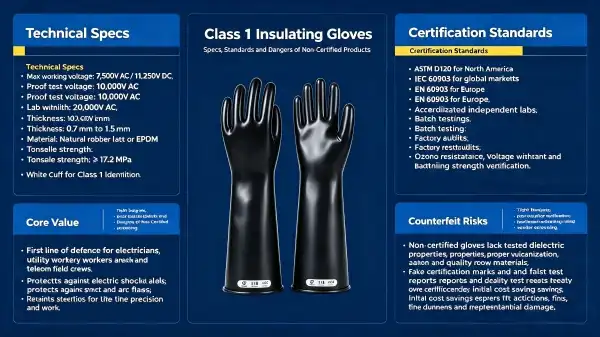
The specs spell out efficiency standards that can't be lowered. The highest voltage that can be used is 7,500V AC, and the highest voltage that can be used for testing is 10,000V AC. During lab tests, the gloves must be able to handle 20,000V AC. The thickness of the material is usually between 0.7 mm and 1.5 mm, which is a good balance between dielectric strength and hand comfort. When we make things, we use either high-quality natural rubber latex or EPDM synthetic rubber, based on how the product will be used.
The Certification Framework
There are international safety standards because electricity crashes are still very dangerous. IEC 60903 covers foreign areas, ASTM D120 controls markets in North America, and EN 60903 handles needs in Europe. Testing labs that are accredited do thorough dielectric tests, physical property checks, and weather resistance checks. These separate, third-party labs make sure that every batch of products meets standards for ozone resistance, voltage withstand, and tensile strength (usually more than 17.2 MPa). The white colour-coded cuff shows that the rating is Class 1, so workers don't choose lower-rated protection for higher voltage tasks by mistake.
Certification groups have strict rules for keeping an eye on things of Class 1 Insulating Gloves. They do regular market surveillance testing, check the paperwork for quality control, and do audits of factories. This multi-layered verification method makes sure that all production runs are the same and keeps end users safe from getting bad goods into the supply chain.
Common Misconceptions and Risks of Non-Certified Gloves
A lot of the time, bad ideas that affect worker safety and the organization's liability affect procurement choices.
The False Economy Trap
A lot of people think that gloves that aren't certified and come from sketchy sources offer the same level of safety for less money. This false belief has caused deaths that could have been avoided in a number of fields. Products that aren't approved may look the same, but they don't have the tested dielectric properties, correct curing methods, or high-quality raw materials that are needed for reliable electrical insulation. The original savings are lost when you think about how much an accident could cost, as well as fines, lost work time, and damage to your image.
Counterfeit Product Proliferation
More and more people around the world are worried about fake electrical safety tools. Smart counterfeiters copy certification marks, make fake test reports, and make packaging that looks real enough to fool even experienced procurement pros. When put under electrical stress, these goods fail horribly, putting workers in danger of dangerous current flow. We've seen companies buy gloves that were labelled wrong and were rated for lower voltage classes without realising it, which leads to false trust that ends in tragedy.
Root Causes of Certification Neglect
Several things lead to bad choices about buying. Buyers who are on a tight budget are forced to choose the cheapest options without doing enough research. When working with foreign supply chains, it becomes harder to be sure that a supplier is legitimate. The procurement team doesn't have enough expert knowledge to properly evaluate certification documents. Because of time constraints, seller screening processes are sped up. These organisational flaws leave holes that dishonest sellers take advantage of, putting workers in too much danger.
How to Verify and Select Properly Certified Electrical Safety Gloves
Systematic checks tell the difference between real goods and dangerous fakes.
Document Authentication Checklist
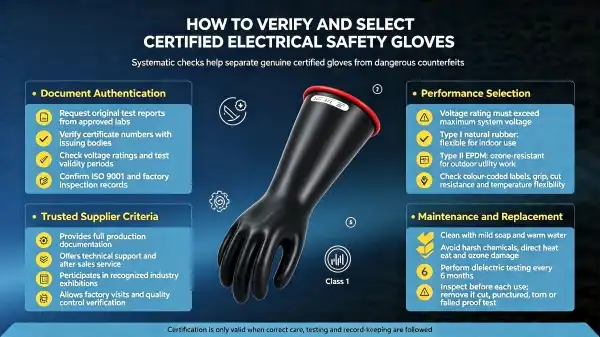
Start by asking for full certification packages that include original test results from approved labs, data on how to track each batch, and maker declarations of conformity. Check certificate numbers directly with the organisations that issued them by visiting their websites or getting in touch with them. Make sure that the testing times are within the acceptable periods and that the voltage ratings meet your needs. Check to see if the maker is still certified in ISO 9001 quality management and if the plant has been inspected by the people in charge of certification.
Essential Performance Features
Beyond certification, you should also look at real factors that affect how well you do in the field of Class 1 Insulating Gloves. The voltage number must be higher than your system's highest voltage by a safe amount. The choice between Type I natural rubber and Type II EPDM depends on the environment. For example, Type II needs to be resistant to ozone for utility work that is done outside, while Type I is better for controlled indoor settings because it is more flexible. Worker compliance and job effectiveness are both affected by ergonomic design. Colour-coded labelling methods keep voltage classes from getting mixed up. When a leather cover is compatible, it keeps the rubber from getting damaged by use.
At PPE MAX, our goods are made with sensible design principles that have been honed over many years of field feedback. The gloves have a good grip even when they're wet, don't tear or cut easily, and stay flexible across the temperature ranges that are common in industrial settings.
Identifying Trustworthy Suppliers
Reputable makers show they are open by letting you tour their facilities, providing thorough production paperwork, and being ready to answer technical questions. They have long-term relationships with government bodies and big businesses, which means they have to keep doing good work. Look for suppliers that have booths at well-known industry events like the A+A Safety Exhibition in Germany. That's where we regularly show off new products and meet sourcing professionals from around the world. Check to see if the company gives full after-sales support, such as helpful technical hotlines, easy return policies, and ongoing training materials.
Customers are welcome to come see our cutting-edge factories in Xi'an, China, where they can see our full range of quality control systems in action and see how products are tested.
Maintenance, Testing, and Longevity of Certified Electrical Protection
The validity of the certification rests on following the right care steps for the whole life of the glove.
Routine Care Procedures
Normal procedures for care. Use light soap and warm water to clean your gloves after each use. Do not use harsh chemicals that break down rubber materials. Keep the clothes dry at room temperature and away from direct heat sources. Keep them in climate-controlled places in protective fabric bags to keep them from getting UV rays, ozone, or mechanical damage. Do not fold gloves too much or put them in leather covers for long periods of time, as this will permanently change their shape.
Dielectric Testing Requirements
As soon as gloves are put to use, they have to be electrically tested every six months. If you store new gloves the right way, they may last for twelve months before they need to be replaced. To test, the glove has to be inflated to look for pinholes, and dielectric proof tests have to be done at certain voltages. Keep thorough records of test dates, results, and worker names to meet audit standards and show that you are following the rules. These services are offered by third-party testing labs, but a lot of big companies set up their own testing departments.
Replacement Decision Criteria
Before each use, a visual check finds clear flaws like cuts, holes, foreign objects embedded in the surface, or wear and tear on the surface. Gloves that show these signs must be taken out of service right away, no matter when they are scheduled to be tested. Manufacturers usually say that they should be replaced every twelve months under normal use. However, harsh settings may require more frequent cycles. When proof tests fail, whole production batches may need to be looked at to find problems with the quality system as a whole.
Procurement Best Practices for Certified Voltage-Rated Gloves
Strategic buying weighs the short-term costs against the long-term benefits and reduced risks.
Purchasing Strategy Optimisation
When you order a bulk of Class 1 Insulating Gloves, you save a lot of money per unit, which is especially helpful for companies with a lot of employees. But glove shelf life and storing space limitations must be taken into account when deciding how much to order. Just-in-time buying lowers the cost of keeping inventory on hand, but it needs trusted supplier relationships and regular product supply. For large sales, we offer affordable pricing structures, and we're also flexible enough to work with our global customers' different buying cycles.
Contract Negotiation Frameworks
Effective contracts have terms that promise certification and hold sellers responsible for making sure the products are real. Include rules for sending documents in groups, the right to regular audits, and ways to fix problems when they happen. The warranty should cover both problems with the way the product was made and problems with how it works that happen too soon. When questions come up during implementation, operations are protected by the availability of technical help and reaction times.
Value Analysis Over Price Comparison
Think about the total cost of ownership instead of just the price of the item. When compared to cheaper options, certified gloves from well-known brands last longer, break down less often, and expose wearers to fewer accidents. Figure out how much possible electrical accidents will cost in terms of medical bills, fines from the government, legal fees, lost work time, and higher insurance premiums. Companies always find that premium approved goods give them a better return on their investment by lowering risk and improving operating dependability.
Logistics and Documentation Verification
When the packages arrive, make sure they come with the right batch paperwork, markings to help you identify each glove, and storage directions. Before taking packages, check the integrity of the packing and look over the gloves for damage from shipping. Set up clear receiving procedures to make sure that only goods with the right certifications get into your inventory management system. Individual polybags for security and sturdy bulk shipping boxes are some of the packaging options we offer. We can also make custom distributor packaging to meet the needs of your brand.
Conclusion
Verifying certifications is a duty that procurement workers in charge of electricity safety programs can't avoid. The difference between properly approved insulating gloves and options that don't meet standards decides whether your employees are safe or exposed to risks that could have been avoided. Organisations that pair with reputable makers like PPE MAX, use systematic verification processes, and stick to strict testing plans show that they really care about worker safety. The small amount of money you spend on certification validation pays off in huge ways: accidents are avoided, you follow the rules, and your facilities' operations stay honest.
FAQ
1. How Often Must Voltage-Rated Rubber Gloves Undergo Testing?
Once gloves are in use, they have to be tested for insulating properties every six months. If gloves are kept properly, they can stay on shelves for a year before they need to be tested for the first time. Leather covers need to be looked at every day, but they don't need to be tested electrically.
2. Can Workers Use Rubber Gloves Without Leather Protectors?
It is not acceptable to wear rubber gloves without leather protection. The protectors keep the dielectric qualities from being quickly harmed by cuts, punctures, and abrasions. ASTM D120 gloves are made to be worn with safety outer hands while working with electricity.
3. What Distinguishes Type I From Type II Rubber Materials?
Type II EPDM synthetic rubber doesn't crack when exposed to ozone or UV light, which makes it perfect for use in outdoor service areas and storage areas with changing temperatures. Type I natural rubber is the most flexible and dexterous, but it needs to be kept in controlled, ozone-free settings. The best material choice depends on your working settings.
Partner With PPE MAX for Certified Electrical Safety Solutions
Your workers deserve to be protected by a company with decades of experience and strict quality standards. As a top maker of Class 1 Insulating Gloves with more than 65 years of experience keeping workers safe in 134 countries, PPE MAX has products that are internationally approved and meet ASTM D120, IEC 60903, and OSHA standards. Our thorough quality control systems, ability to customise for OEM partnerships, and helpful technical support team are all ready to meet your unique business needs. Contact our team at marketing@ppemax.com to discuss bulk procurement options, arrange facility tours, or request detailed certification documentation that demonstrates our commitment to your workforce safety. We don't just manufacture protective equipment—we partner with organisations building cultures of safety excellence.
References
1. American Society for Testing and Materials. (2021). ASTM D120-20: Standard Specification for Rubber Insulating Gloves. West Conshohocken, PA: ASTM International.
2. International Electrotechnical Commission. (2019). IEC 60903:2019 Live Working - Electrical Insulating Gloves. Geneva: IEC Publications.
3. Occupational Safety and Health Administration. (2020). OSHA 1910.137: Electrical Protective Equipment Standards and Compliance Guidelines. Washington, DC: U.S. Department of Labour.
4. National Institute for Occupational Safety and Health. (2018). Electrical Safety in the Workplace: Best Practices for Personal Protective Equipment Selection and Maintenance. Cincinnati, OH: NIOSH Publications.
5. European Committee for Electrotechnical Standardisation. (2020). EN 60903:2020 European Standards for Electrical Insulating Gloves. Brussels: CENELEC.
6. Institute of Electrical and Electronics Engineers. (2022). IEEE Guide for Testing and Certification of Electrical Protective Equipment in Industrial Applications. Piscataway, NJ: IEEE Standards Association.
Learn about our latest products and discounts through SMS or email