- English
- French
- German
- Portuguese
- Spanish
- Russian
- Japanese
- Korean
- Arabic
- Greek
- German
- Turkish
- Italian
- Danish
- Romanian
- Indonesian
- Czech
- Afrikaans
- Swedish
- Polish
- Basque
- Catalan
- Esperanto
- Hindi
- Lao
- Albanian
- Amharic
- Armenian
- Azerbaijani
- Belarusian
- Bengali
- Bosnian
- Bulgarian
- Cebuano
- Chichewa
- Corsican
- Croatian
- Dutch
- Estonian
- Filipino
- Finnish
- Frisian
- Galician
- Georgian
- Gujarati
- Haitian
- Hausa
- Hawaiian
- Hebrew
- Hmong
- Hungarian
- Icelandic
- Igbo
- Javanese
- Kannada
- Kazakh
- Khmer
- Kurdish
- Kyrgyz
- Latin
- Latvian
- Lithuanian
- Luxembou..
- Macedonian
- Malagasy
- Malay
- Malayalam
- Maltese
- Maori
- Marathi
- Mongolian
- Burmese
- Nepali
- Norwegian
- Pashto
- Persian
- Punjabi
- Serbian
- Sesotho
- Sinhala
- Slovak
- Slovenian
- Somali
- Samoan
- Scots Gaelic
- Shona
- Sindhi
- Sundanese
- Swahili
- Tajik
- Tamil
- Telugu
- Thai
- Ukrainian
- Urdu
- Uzbek
- Vietnamese
- Welsh
- Xhosa
- Yiddish
- Yoruba
- Zulu
Are Electrical Rubber Gloves Suitable for Outdoor Work?
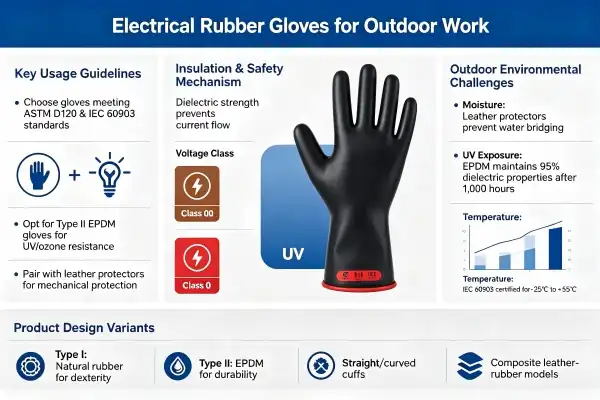
Electrical rubber gloves can be used outside as long as they are chosen and cared for properly. As long as they meet the right voltage class ratings and environmental approvals, these specialised insulation electrical rubber gloves protect workers from electrical dangers outside. Gloves that meet ASTM D120 and IEC 60903 standards are needed for working outside in situations like rain, UV light, and changes in temperature. Choosing Type II gloves made of EPDM materials makes them more resistant to ozone and UV light, which makes them perfect for long-term work outside. When you wear electrical rubber gloves with leather protectors, you get extra mechanical protection against cuts and scrapes that are common in the field. This makes sure that utility workers, linemen, and industrial technicians who work on energised equipment outside are completely safe.
Understanding Electrical Rubber Gloves and Their Functionality
Electrical rubber gloves serve as the critical barrier between workers and potentially fatal electrical currents. We've spent decades at PPE MAX perfecting these protective solutions because we understand what's at stake—lives depend on this equipment performing flawlessly every single time.
What Makes Insulating Gloves Essential for Electrical Work
When someone wears dielectric gloves, an electric current can't flow through their body and into the ground. The rubber material has a very high dielectric strength, which means it doesn't let electricity flow through it even when it's under a lot of voltage stress. These aren't like regular work gloves; they have to go through a lot of tests to make sure they can protect against voltages in specific classes, from Class 00 (up to 500V AC) to Class 4 (up to 36,000V AC). The gloves we make have been tested to meet the exact proof test voltages, maximum use voltages, and AC/DC values set by ASTM D120 and IEC 60903. Class 0 Insulating Gloves, which can be identified by their red label, protect workers who work with circuits that have up to 1,000 Volts AC and 1,500 Volts DC. They are great for low-voltage utility and EV battery repair tasks that require fine motor skills. When working with 500V AC, Class 00 Insulating Gloves, which usually have brown labels, give you the best sense of touch for difficult jobs like installing smart meters and fixing problems with control panels.
Types and Design Variants That Match Your Operational Needs
It can be hard for procurement managers to decide between natural rubber (Type I) and manmade products (Type II). Type I gloves are very flexible and dexterous, which allows techs to carefully work with small parts and wires. Type II gloves are made of EPDM (Ethylene Propylene Diene Monomer), which makes them more resistant to ozone breakdown and UV radiation. This is important to keep in mind when working outside for long periods of time. There are different styles, such as straight cuff models that are good for everyday use and curved models that keep your hands from getting tired after long periods of wear. In composite designs, leather palm covers are put right on top of the rubber base. This combines electrical protection with resistance to wear and tear. We also offer leather protection gloves that must be worn with rubber insulation gloves. These gloves protect the delicate dielectric material from cuts, punctures, and other damage that could make it less safe for electrical work. Some of the people who work at PPE MAX are also users, so we try these combos ourselves.
Evaluating the Suitability of Electrical Rubber Gloves for Outdoor Work
Outdoor electrical work introduces environmental stressors that indoor operations rarely encounter. When utility crews repair distribution lines during rainstorms or mining electricians service equipment under the desert sun, their electrical rubber gloves face challenges beyond simple voltage insulation.
How Moisture and Wet Conditions Affect Insulation Performance
Since water conducts electricity, there are good reasons to be wary of wearing rubber insulation gloves outside when it's wet. When quality dielectric gloves get wet, they still keep their safe features because the rubber doesn't conduct electricity. The risk is not in the material of the glove, but in contamination. Water that bridges between the outside of the glove and electrical surfaces can make new paths for current to flow. We deal with this by following the right rules for choosing gloves and layers. As a result, leather protection gloves keep wet things from sticking to the rubber surface and keep moisture from building up. As per ASTM D120 guidelines, given gloves must be electrically tested every six months, with a focus on surface pollution and material decline. We use hydrophobic treatments in our production process so that water beads up and rolls off the glove's surface instead of saturating it.
UV Exposure and Temperature Fluctuations in Field Environments
Ultraviolet radiation from sunlight breaks down natural rubber polymers through a process called photodegradation, causing surface cracking and reduced dielectric strength over time. Type II gloves using EPDM compounds resist this deterioration far better than Type I natural rubber variants. Field studies demonstrate EPDM gloves maintain 95% of their original dielectric properties after 1,000 hours of UV exposure, compared to 70% retention for untreated natural rubber. Temperature extremes also challenge glove performance. Cold weather stiffens rubber materials, reducing dexterity and potentially creating microcracks during flexing. Extreme heat accelerates aging and can cause premature material breakdown. IEC 60903 certification requires gloves to perform across temperature ranges from -25°C to +55°C, ensuring reliability in diverse climates from Arctic infrastructure projects to Middle Eastern energy installations.
Physical Abrasion Resistance for Rugged Outdoor Tasks
When you work as an electrician outside, you have to walk up and down poles, handle rough equipment surfaces, and work in small areas where your gloves rub against metal, concrete, and sharp edges. Pure rubber insulation gloves are great at keeping you safe from electricity, but they're not very good at keeping their shape. Because of this limitation, hybrid safety devices were made. Leather guard gloves do two things: they protect the rubber from damage and make it easier to grip surfaces that are wet or oily. To keep electrical shocks from happening, the rubber glove has to go at least two inches past the leather cover. This is a safety gap that we carefully design into our product specs. When put together correctly, this method protects against all electrical and mechanical risks that are common in outdoor utility work.
Comparing Electrical Rubber Gloves with Alternative Protective Gloves for Outdoor Use
Understanding the distinctions between insulating rubber gloves and other protective handwear helps procurement professionals make informed decisions that balance multiple safety requirements.
Leather Gloves Versus Rubber Insulating Gloves
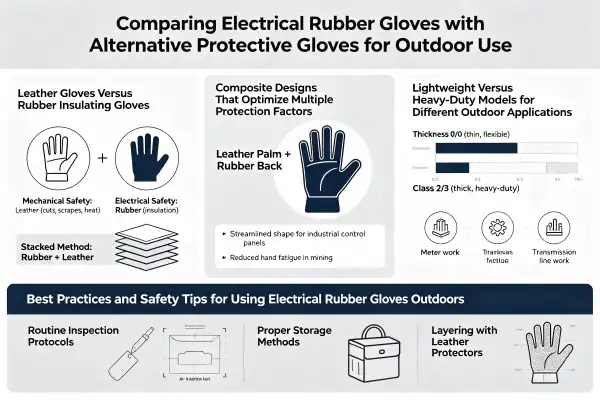
When it comes to mechanical safety, leather work gloves are great against cuts, scrapes, heat, and holes. They let air flow through them easily, are easy to work with, and can handle being rough. But leather carries electricity and doesn't protect against the risk of getting an electric shock. When working on or near live wires, people doing electrical work outside can't wear leather gloves instead of insulated rubber gloves. The best way to do things is to use both types of gloves together in a stacked method. The electrical shield comes from the electrical rubber gloves, and the mechanical sturdiness comes from the leather guard glove. This set covers all the risks that come with working with electricity outside, from working on 26,000-volt power lines to maintaining transformers at ground level with electrical rubber gloves.
Composite Designs That Optimize Multiple Protection Factors
New developments in the glove industry have led to combined designs where leather hands attach directly to rubber backs, making gloves that are made of a single piece. These gloves are smaller than other glove systems, and workers won't have to worry about forgetting to put on leather protection when they're in a hurry. Through decades of field feedback, we've seen that combined designs make it easier for people to follow the rules in busy workplaces. Maintenance workers who work on industrial control panels like the streamlined shape, which makes it easier to use the tool. Underground mining workers like that their hands don't get tired as quickly during 10-hour shifts. There are some downsides, like a slightly lower maximum voltage rating and not being able to check the rubber layer on your own, but composite gloves are a great compromise for many tasks below Class 2 voltage levels.
Lightweight Versus Heavy-Duty Models for Different Outdoor Applications
Voltage class determines minimum material thickness, which directly impacts weight, flexibility, and comfort. Class 00 and Class 0 gloves remain relatively thin and flexible, suitable for utility meter work, residential service connections, and industrial control applications where workers need to feel small components through the glove material. Class 2 and Class 3 gloves protecting against distribution voltage (17kV to 26.5kV) necessarily incorporate thicker rubber walls, resulting in reduced tactile feedback and increased hand fatigue. These heavy-duty models suit transmission line work, substation maintenance, and high-voltage equipment operations where maximum electrical protection outweighs dexterity concerns. Procurement decisions should align glove class ratings with actual job site voltages rather than defaulting to higher classes that introduce unnecessary bulk and reduced productivity.
Best Practices and Safety Tips for Using Electrical Rubber Gloves Outdoors
Proper usage protocols extend glove lifespan while maintaining the protective integrity that workers depend on. We've learned these practices through six decades of manufacturing experience and close collaboration with industrial safety professionals across 134 countries.
Routine Inspection Protocols Before Each Use
Air inflation testing represents the gold standard for pre-use glove inspection. Workers roll the cuff to trap air inside, then apply pressure while observing for leaks that indicate holes, cuts, or embedded conductive materials. This simple field test takes 30 seconds but catches potentially fatal damage before gloves go into service. Visual inspection should accompany air testing, checking for surface cracks, ozone deterioration, chemical contamination, and embedded foreign objects. We mark our gloves with clear date codes showing the manufacturing date and last electrical test date, allowing supervisors to quickly verify compliance with the six-month retest requirement mandated by OSHA 1910.137 and ASTM F496 standards.
Proper Storage Methods to Prevent Environmental Damage
How should these gloves be stored? Store in cool, dark, dry locations away from direct sunlight and ozone sources. Use canvas bags with cuffs down, avoiding folding or compression. This storage protocol prevents the accelerated aging that occurs when gloves sit in truck cabs exposed to sunlight or warehouse shelves near electrical equipment generating ozone. We provide dedicated storage bags with every glove shipment, marked with class ratings to prevent dangerous mix-ups. Never store gloves inside-out, which stresses the material at fold points and creates permanent creases that concentrate electrical stress. Avoid areas near steam pipes, HVAC equipment, battery charging stations, and welding operations where heat, moisture, or ozone accelerate rubber degradation.
Layering with Leather Protectors for Complete Outdoor Protection
Leather protectors are not optional accessories—they constitute mandatory protective equipment whenever insulating rubber gloves go into service. Class 3 Insulating Gloves specifically require leather protectors to guard against mechanical damage that would compromise the rubber's dielectric integrity. The protector must allow the rubber glove to extend beyond its edge by at least two inches, maintaining adequate gap distance to prevent electrical tracking. Before donning gloves, inspect both the rubber and leather layers separately. Check that the leather shows no embedded metal fragments, exposed stitching that could puncture rubber, or oil contamination that might degrade the insulating material. After completing work, remove leather protectors first to allow moisture evaporation from the rubber glove before storage. This sequence prevents trapped condensation that can harbor mold and accelerate material breakdown.
Making an Informed Procurement Decision: Electrical Rubber Gloves for Outdoor Work
Selecting the right insulating gloves requires balancing technical specifications, environmental conditions, supplier reliability, and total cost of ownership. Procurement managers supporting large workforces need suppliers who understand these complex requirements and deliver consistent quality across high-volume orders.
Matching Voltage Class Ratings to Actual Job Site Conditions
Determine the maximum voltage your workers encounter, then select the appropriate glove class with an adequate safety margin. Class 0 gloves suffice for residential electrical work and low-voltage industrial applications up to 1,000V AC. Distribution utility work typically requires Class 2 gloves rated for 17,000V AC maximum use. Transmission line maintenance demands Class 3 or Class 4 protection depending on system voltage. Avoid the temptation to over-specify glove classes, which introduces unnecessary bulk, reduced dexterity, and increased worker fatigue without corresponding safety benefits. A Class 2 glove used for 480V panel work provides excessive protection that hampers productivity, while proper Class 0 gloves deliver adequate insulation with superior manual dexterity. We guide procurement teams through this selection process based on documented job hazard analyses and voltage exposure assessments.
Evaluating Material Types for Your Specific Climate and Application
Organizations operating in sunny outdoor environments should prioritize Type II EPDM gloves that resist UV degradation. Companies working primarily indoors or in temperate climates can choose Type I natural rubber for its superior flexibility and lower cost. Mixed operations benefit from stocking both types and assigning them according to specific task requirements. Consider also the frequency of use when selecting between disposable and reusable electrical rubber gloves. High-volume operations like utility companies performing hundreds of service connections monthly achieve better economics with durable reusable electrical rubber gloves that withstand multiple test cycles. Occasional-use scenarios might justify disposable electrical rubber gloves that eliminate retesting costs and storage concerns, though per-use costs increase substantially.
Certifications, Warranties, and Supplier Support That Matter
Every dielectric glove should carry clear certification markings indicating compliance with ASTM D120 and IEC 60903 standards. Reputable suppliers provide documentation showing proof test voltages, class ratings, and manufacturing dates. We include detailed test reports with every shipment, giving procurement managers the traceability needed for safety audits and regulatory compliance verification. Supplier support extends beyond the initial purchase. Establishing relationships with electrical rubber glove manufacturers who offer technical consultation, sample evaluations, and responsive customer service proves invaluable when safety questions arise. Global brands like 3M, Honeywell, and Ansell earned their reputations through consistent quality and comprehensive after-sales support. At PPE MAX, we've built our name since 1956 on that same foundation—delivering reliable products backed by expertise gained through decades of protecting workers worldwide.
Bulk purchasing programs offer significant cost advantages for organizations with stable, recurring demand. We work with mid-to-large enterprises to develop customized supply agreements that ensure product availability, lock in favorable pricing, and provide just-in-time delivery that minimizes inventory carrying costs. OEM and private labeling opportunities allow global brands to develop proprietary PPE lines while leveraging our manufacturing expertise and quality control systems refined over 68 years of production.
Conclusion
Electrical rubber gloves are great for working outside as long as they are chosen, kept in good shape, and used according to safety rules. The key is to make sure that the glove's specs match its real use. This means picking the right voltage classes, materials that can handle harsh environments, and strict checking and storage procedures. When used with leather protection, Type II EPDM gloves give the best performance in outdoor industrial tasks where UV rays, water, and physical wear and tear make equipment last less long. Buyers should give more weight to sellers whose goods are recognised, who offer full expert help, and whose factories have a history of being reliable. We've been protecting workers in 134 countries since 1956 by making safety gear that is both highly insulating and long-lasting in the real world. At PPE MAX, we don't just make safety gear; we test it ourselves and depend on it every day.
FAQ
1. Can electrical insulating gloves be safely used in wet outdoor conditions?
Quality insulating gloves maintain their dielectric properties when wet because the rubber material resists electrical conductivity. The safety concern involves surface contamination where water bridges between the glove exterior and energized equipment, potentially creating current paths. Proper protocols include using leather protector gloves that shed water, performing pre-use air inflation tests to verify glove integrity, and following ASTM D120 guidelines for moisture contamination limits. Workers should inspect both rubber and leather layers before use and avoid working during severe weather when possible.
2. How frequently should outdoor work gloves undergo electrical testing?
ASTM F496 and OSHA 1910.137 mandate electrical testing every six months after gloves enter active service. Gloves remaining in storage require testing within 12 months before being issued to workers. Organizations performing high-risk work or operating in harsh outdoor environments often implement more frequent testing intervals—quarterly inspections provide additional safety margins. Beyond formal electrical testing, workers must perform visual and air inflation inspections before each use to catch physical damage between official test cycles.
3. Which certifications matter most for outdoor electrical work applications?
ASTM D120 certification verifies that gloves meet North American standards for voltage class ratings, proof testing, and material specifications. IEC 60903 provides the international equivalent, essential for global operations. Look for manufacturer documentation showing compliance with OSHA 1910.137 and NFPA 70E workplace safety standards. Type II material designation indicates EPDM construction with superior ozone and UV resistance, critical for outdoor applications. Class markings (00, 0, 1, 2, 3, or 4) must match or exceed the maximum voltage exposures workers encounter on job sites.
Partner with PPE MAX for Certified Electrical Rubber Glove Solutions
Securing reliable, certified electrical rubber gloves suited for outdoor work requires partnering with suppliers who combine manufacturing excellence with deep safety expertise. PPE MAX brings 68 years of proven performance to your procurement decisions, delivering electrical rubber gloves tested to ASTM D120 and IEC 60903 standards that protect workers across distribution utilities, mining operations, construction sites, and manufacturing facilities. Our team doesn't just produce protective equipment—we use it ourselves, personally verifying the quality and reliability that your workforce depends on. As an established electrical rubber glove supplier serving 134 countries, we offer comprehensive support, including voltage class selection guidance, sample evaluations, bulk purchasing programs, and OEM manufacturing capabilities. Connect with our safety specialists at marketing@ppemax.com to discuss your specific outdoor application requirements and discover how our tailored solutions optimize both worker protection and operational efficiency for your organization.
References
1. American Society for Testing and Materials. (2022). ASTM D120-20: Standard Specification for Rubber Insulating Gloves. West Conshohocken, PA: ASTM International.
2. International Electrotechnical Commission. (2019). IEC 60903:2019 Live Working – Gloves of Insulating Material. Geneva, Switzerland: IEC Central Office.
3. Occupational Safety and Health Administration. (2021). OSHA 1910.137: Electrical Protective Equipment Standards. Washington, DC: U.S. Department of Labor.
4. National Fire Protection Association. (2021). NFPA 70E: Standard for Electrical Safety in the Workplace, 2021 Edition. Quincy, MA: NFPA Publications.
5. American Society for Testing and Materials. (2020). ASTM F496-20: Standard Specification for In-Service Care of Insulating Gloves and Sleeves. West Conshohocken, PA: ASTM International.
6. Doughty, R.L. & Floyd, H.L. (2018). Protective Grounding for Electrical Power Systems: A Reference Manual for the Electric Power Industry. Piscataway, NJ: IEEE Press.
Learn about our latest products and discounts through SMS or email