- English
- French
- German
- Portuguese
- Spanish
- Russian
- Japanese
- Korean
- Arabic
- Greek
- German
- Turkish
- Italian
- Danish
- Romanian
- Indonesian
- Czech
- Afrikaans
- Swedish
- Polish
- Basque
- Catalan
- Esperanto
- Hindi
- Lao
- Albanian
- Amharic
- Armenian
- Azerbaijani
- Belarusian
- Bengali
- Bosnian
- Bulgarian
- Cebuano
- Chichewa
- Corsican
- Croatian
- Dutch
- Estonian
- Filipino
- Finnish
- Frisian
- Galician
- Georgian
- Gujarati
- Haitian
- Hausa
- Hawaiian
- Hebrew
- Hmong
- Hungarian
- Icelandic
- Igbo
- Javanese
- Kannada
- Kazakh
- Khmer
- Kurdish
- Kyrgyz
- Latin
- Latvian
- Lithuanian
- Luxembou..
- Macedonian
- Malagasy
- Malay
- Malayalam
- Maltese
- Maori
- Marathi
- Mongolian
- Burmese
- Nepali
- Norwegian
- Pashto
- Persian
- Punjabi
- Serbian
- Sesotho
- Sinhala
- Slovak
- Slovenian
- Somali
- Samoan
- Scots Gaelic
- Shona
- Sindhi
- Sundanese
- Swahili
- Tajik
- Tamil
- Telugu
- Thai
- Ukrainian
- Urdu
- Uzbek
- Vietnamese
- Welsh
- Xhosa
- Yiddish
- Yoruba
- Zulu
Are Dielectric Gloves Reusable After Routine Testing Procedures?
Yes, dielectric gloves can be used again after regular testing as long as they pass the needed dielectric withstand and visible inspection tests and don't have any holes, tears, or contaminants embedded in them. When electrical shielding gloves pass the strict tests outlined in ASTM D120 or EN 60903 standards regularly, they keep their protective properties and can be used safely again. But any glove that fails voltage testing or shows obvious damage must be taken off right away to keep workers safe from electrical dangers that could kill them. It is important for buying managers and safety officers who balance worker safety with asset life to know the exact pass/fail criteria.
Understanding Dielectric Gloves and Their Usage
What Makes Electrical Insulating Gloves Different
When it comes to personal safety equipment, dielectric gloves are made from high-quality insulating rubber or elastomer materials. In contrast to regular work gloves, these ones go through a lot of research to make sure they can handle certain power levels without putting workers' safety at risk. Usually, natural rubber (which is more flexible and sensitive to touch) or EPDM (Ethylene Propylene Diene Monomer), which is more resistant to ozone and ultraviolet damage, are used in the mix.
Voltage Classification Systems
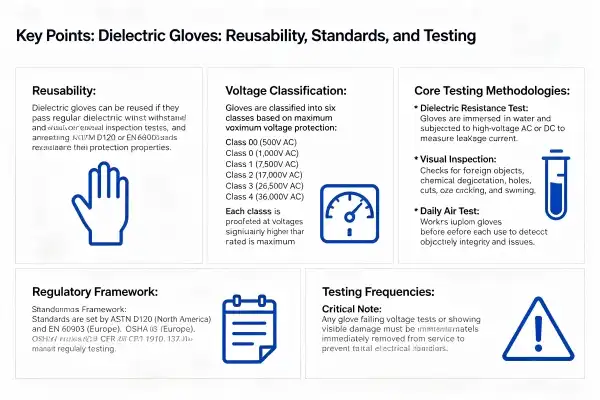
Based on the highest voltage that can be used, the industry divides electrical shielding gloves into six separate groups. Class 00 gloves are good for low-voltage electrical work and EV battery systems because they protect against 500 volts AC. Class 0 protects up to 1,000 volts and is often used for upkeep on commercial buildings. Class 1 gloves protect against 7,500 volts and Class 2 gloves protect against 17,000 volts. They are used by utility workers who work on distribution lines. Class 3 and Class 4 gloves offer the best safety, with protection up to 36,000 volts for work on power lines and in substations. To make sure there are enough safety gaps, each classification is proof-tested at voltages that are much higher than their maximum use rate.
Real-World Application Scenarios
Maintenance work on utility power grids is the hardest job for electrical insulation gloves. Linemen who fix overhead power lines are constantly exposed to high-voltage AC because they work at heights and in all kinds of weather. In the EV manufacturing industry, workers have to work with large DC battery packs and must be able to move carefully in small areas. When maintenance engineers work in industrial plant substations, they have to run switchgear and test circuit breakers while being careful not to touch live busbars or cause an arc flash. In these situations, the gloves have to work regularly even though they may be exposed to water, hydraulic fluids, mechanical wear, and temperature changes that could weaken their protective structure.
The Necessity and Standards of Routine Testing for Dielectric Gloves
Why Regular Testing Cannot Be Compromised
Electrical insulating gloves are constantly under stress from chemical contact, mechanical wear, and external factors that weaken their protective qualities over time. Microscopic holes that can't be seen with the naked eye can make ways for electricity to flow, turning a safety device into a deadly threat. The rubber compounds age naturally because they are exposed to ozone and UV light, which makes the material weak and lowers its electrical strength over time. According to OSHA rules (29 CFR 1910.137), testing must be done on a regular basis because eye inspection alone isn't a reliable way to find these dangerous situations for dielectric gloves.
Regulatory Framework and Testing Frequencies
The detailed rules for checking electrical insulating gloves are set by ASTM D120 in North America and EN 60903 in Europe. According to these guidelines, gloves that are regularly used can only be tested every six months at most. However, many groups choose to test gloves more often, depending on how often they are used and the situations where they are used. To reduce risk, government agencies and big businesses often set up testing schedules that run every three months. For each glove class, the guidelines spell out exact voltage levels, the length of time that electrical stress can be applied, and the largest leaking current that can happen.
Core Testing Methodologies
The dielectric resistance test is the most important part of normal testing. Technicians put each glove in water and use high-voltage AC or DC current to test how much current leaks through the insulation material. When proof test volts are used, gloves that keep leaking below certain levels show that they can still protect. Electrical testing is followed by a visual review of both the inside and outside areas to look for foreign objects, chemical breakdown, holes, cuts, ozone checking (surface cracking), and swelling that means the material is breaking down. Workers do a daily air test before each use that goes along with official testing. They blow up the glove to look for obvious integrity problems.
Are Dielectric Gloves Reusable After Routine Testing?
Interpreting Test Results for Reusability Decisions
To make the right reusability decision, you need to have a full understanding of the pass-fail criteria for dielectric gloves. Gloves that pass the dielectric resistance test without going over the maximum leakage current limits and don't have any visible flaws can go back to work safely. The testing record should include the actual voltage that was used, the measured leakage current, and any comments made by the tester. Even though they formally pass, gloves that show leakage currents close to but not exceeding limits should be closely watched and may need a shorter time between tests.
Industry Case Studies and Best Practices
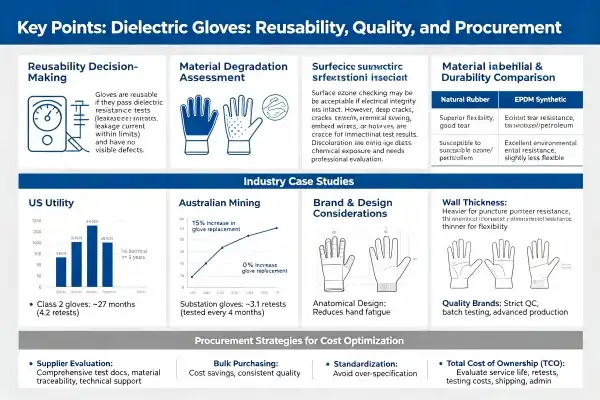
Material degradation brings up more complex problems. A glove may still be acceptable even if the surface has some checking from being exposed to ozone if the damage is only on the surface and electrical testing shows that the shielding is good. But deep cracks, chemical growth, wires buried in the material, or holes of any size are failures that can't be fixed, no matter what the electrical test results say. Even if the electrical tests pass, changes in the rubber's color often mean that it has been exposed to chemicals that break down the material's features and need to be looked at by a professional.
A big utility business in the northeastern United States set up a scheme to track more than 5,000 pairs of gloves every year using data. Based on their research, Class 2 gloves used on the distribution line had an average of 4.2 good retests before they broke. This means that they would last for about 27 months. On the other hand, gloves used in substations with higher levels of ozone only passed an average of 3.1 retests. This company set different repeat intervals for different deployment environments. For example, testing for substation gear was increased to happen every four months, while testing for field work was kept at six-month intervals.
Leading Australian mining companies have a rule that any glove that reaches 80% of the highest allowed leakage current during tests has to be thrown out right away, even if it legally passes. This cautious method came about after a review into an incident showed that gloves that were getting close to failing quickly got worse between testing cycles. The policy made people change their gloves 15% more often, but over three years, it completely stopped electrical contact incidents. These operational experiences show how companies balance following the rules with having more safety gaps, depending on how much risk they are willing to take and what their operational needs are.
Comparing Dielectric Gloves: Quality, Durability, and Reusability Factors
Material Composition Impact on Longevity
Because natural rubber materials are so flexible and sensitive to touch, they are best for jobs that need fine motor skills. These materials usually have better tear resistance, but they are more likely to break down in ozone and be contaminated by petroleum-based substances. EPDM synthetic rubber is very resistant to the environment; it keeps its qualities even after being exposed to sunshine, ozone, and extreme temperatures for long periods of time. However, synthetic materials are usually a little less flexible than natural rubber options for dielectric gloves.
Brand Performance Considerations
Wall width has a direct effect on both how well it protects and how long it lasts. In each voltage class, heavier gloves are better at resisting punctures and last longer, but they also make it harder to feel things. Thinner versions focus on flexibility for precise work, but they need to be replaced more often. The anatomical curved-hand design used by high-quality makers keeps hands from getting tired after long periods of use while also reducing the number of stress spots in the material that could cause it to break.
Leading makers have strict quality control standards that go above and beyond what is required by law. Well-known brands use strict batch testing methods, cutting-edge production methods that keep products clean, and special rubber mixtures that work best in certain situations. Even though they may cost more at first, these goods regularly have longer service lives and lower failure rates during routine tests.
Procurement Strategies for Cost Optimization
When looking at sources, buyers should give more weight to makers that offer thorough testing documents, the ability to track materials, and quick technical support. Being able to provide approved test results for every batch of production shows that you care about quality. Suppliers that offer testing services or relationships with accredited testing labs add a lot of value because they make it easier to handle compliance for big glove stocks.
By making bulk purchases from reputable sellers, you can save a lot of money and make sure that the quality of the products your whole company gets is always the same. Setting standard glove requirements based on real voltage exposure needs stops over-specification, which raises costs without improving safety. A lot of distributors offer inventory management services that keep track of testing dates, plan how to do retests, and keep the right amount of stock on hand so that you don't have to buy expensive items in a pinch.
Instead of just looking at the unit price, figure out the total cost of ownership. Multiple good retests that show gloves have a longer service life give better value, even if they cost more at first. When comparing suppliers, you should think about how much testing costs, how much it costs to ship things, and how much work it is to manage everything. Companies that have a lot of employees working in different places can save a lot of time and money by coordinating their purchases with providers that offer full fleet management services.
Best Practices for Maintaining and Testing Dielectric Gloves in B2B Settings
Daily Inspection and Handling Protocols
Before each use, workers must do the air expansion test, which creates internal pressure to find holes or tears in the material that let air escape. This easy step-by-step process takes less than 30 seconds and is very important for checking things in between official testing rounds for dielectric gloves. A visual study should look for color changes that show chemical contact, embedded objects, cuts in the surface, and ozone checking patterns. When workers are taught to spot the first signs of wear and tear, they can take off worn-out gloves before they are officially thrown away.
When gloves are being used, they last a lot longer if they are handled properly. Always put on leather protection gloves over electrical insulation to protect your hands from sharp edges, abrasion, and puncture dangers that could damage them. Take off any metal that might catch on the rubber or poke holes in it. Stay away from gasoline products, strong acids, and too much heat, all of which break down materials faster.
Storage Conditions That Preserve Integrity
The environment in which gloves are stored has a big effect on how long they last. Electrical insulation should be kept in cool, dark, dry places that are out of direct sunlight, away from ozone sources like electric motors, and from temperature changes. When gloves are put inside canvas storage bags with the cuffs down, dust doesn't get trapped inside, and air can flow. Don't fold gloves or put heavy things on them; doing so can cause stress points that could turn into cracks. Avoid getting too close to tools, chemicals, and other things that could get you sick or hurt you.
First-in, first-out inventory movement makes sure that gloves don't go past their recommended shelf life, even if they haven't been used. Before the first test, most makers list the longest time that the product can be stored, which is usually between 12 and 18 months. Labeling systems that keep track of when items were bought, their testing history, and who is responsible for what make compliance management easier for big stockpiles.
Establishing Effective Testing Schedules
When making testing schedules, organizations have to find a balance between legal standards and the needs of the business. The required maximum gap of six months is just that—a maximum. It's not a suggestion. More regular testing is necessary in places with a lot of use, rough working conditions, and high-risk profiles. By spreading out the test dates across your glove inventory, you can avoid having to take out a lot of them at once, which could slow things down.
Professional testing services are much better than systems that are run in-house. Accredited labs keep their equipment regulated, hire trained techs, and give out certified paperwork that can stand up to regulatory scrutiny. When you outsource, you don't have to buy testing equipment or pay for regular adjustments, and the quality is always the same. Larger companies with lots of gloves, on the other hand, may find it more cost-effective to do their own tests, as long as they follow the right procedures for quality control, worker training, and equipment calibration.
Supplier Selection for Long-Term Success
Picking providers isn't just about picking ones with good products; it's also about picking ones with good service. Check out potential partners to see if they can offer technical advice, custom solutions for specific needs, and quick help when problems appear. Suppliers with a lot of experience in your field know the operating problems you're facing and can help you find the best goods for your workplace. Look for partners that can help you with your safety management by providing extra services like coordinating tests, managing supplies, and training programs for workers.
Over the past 60 years, PPE MAX has learned that trust, dependability, and a shared dedication to worker safety are the most important parts of any business-to-business partnership. We've built our name by standing behind every product we sell and helping our partners by giving them expert advice, making sure the quality is high, and providing quick service that goes beyond the initial transaction.
Conclusion
In conclusion, dielectric gloves can be used again and again as long as they pass electrical and visual inspection standards without showing any flaws that could be dangerous. This reusability is a good way to save money while still meeting strict safety standards, as long as companies follow strict testing processes, good maintenance habits, and well-informed decision-making criteria. The important thing is to realize that passing electrical tests doesn't mean the product will keep working. A full review that looks at the material's state, its history of use, and its exposure to the environment is needed to get the full picture. As procurement professionals in charge of worker safety across multiple industrial operations, your glove lifecycle policies should strike a balance between regulatory compliance, risk management, and operational efficiency. You can do this by working with qualified suppliers who share your dedication to protecting the workers who depend on this important equipment every day.
FAQ
How often must we test our electrical insulating gloves?
According to OSHA rules, dielectric gloves that are used regularly must be tested no more than every six months. However, many organizations use more regular plans, like every three months or even once a month, depending on how much they use their systems, the conditions around them, and how much risk they are willing to take. Gloves must also be tested before they are used for the first time, after any damage that might have happened, and after being stored for a long time.
What should we do when gloves fail routine testing?
Take off the worn-out gloves right away and clearly mark them as broken so they don't get used by chance. For safety records, write down the failure mode, the date of the test, and the name of the glove. Depending on your company's rules, used gloves usually need to be thrown away in the right way. You should never try to fix electrical insulated gloves because that breaks the safety seal and is against the rules.
Can dielectric gloves protect against all electrical hazards?
If you choose the right electrical shielding gloves, keep them in good shape, and only use them within their voltage levels, they will protect you from getting shocked. But they don't protect against arc flashes very well, which cause very high temperatures and pressure. For arc flash protection, you need extra PPE like clothes that don't catch fire, face shields, and the right body armor based on the event energy.
Partner with PPE MAX for Reliable Electrical Insulating Glove Solutions
PPE MAX is a reliable partner for procurement managers and safety officers looking for dielectric gloves. We've been making high-quality electrical insulating gloves that meet ASTM D120 and EN 60903 standards since 1956, and we've done business with companies in 134 countries. We do more than just sell certified gloves. We also give full support, such as technical advice, bulk purchasing programs, and services that make it easier to handle compliance. Get in touch with us at marketing@ppemax.com to talk about your unique needs and find out how our decades of experience can improve your electricity safety program while lowering your long-term costs.
References
1. American Society for Testing and Materials. (2021). ASTM D120-20: Standard Specification for Rubber Insulating Gloves. West Conshohocken, PA: ASTM International.
2. Occupational Safety and Health Administration. (2019). 29 CFR 1910.137: Electrical Protective Equipment Standards. Washington, DC: U.S. Department of Labor.
3. International Electrotechnical Commission. (2018). IEC 60903:2018: Live Working - Electrical Insulating Gloves. Geneva, Switzerland: IEC.
4. National Fire Protection Association. (2021). NFPA 70E: Standard for Electrical Safety in the Workplace. Quincy, MA: NFPA.
5. Cadick, J., Capelli-Schellpfeffer, M., & Neitzel, D. (2019). Electrical Safety Handbook, Fourth Edition. New York: McGraw-Hill Education.
6. Institute of Electrical and Electronics Engineers. (2020). IEEE 1584-2018: Guide for Performing Arc-Flash Hazard Calculations. Piscataway, NJ: IEEE Standards Association.
Learn about our latest products and discounts through SMS or email