- English
- French
- German
- Portuguese
- Spanish
- Russian
- Japanese
- Korean
- Arabic
- Greek
- German
- Turkish
- Italian
- Danish
- Romanian
- Indonesian
- Czech
- Afrikaans
- Swedish
- Polish
- Basque
- Catalan
- Esperanto
- Hindi
- Lao
- Albanian
- Amharic
- Armenian
- Azerbaijani
- Belarusian
- Bengali
- Bosnian
- Bulgarian
- Cebuano
- Chichewa
- Corsican
- Croatian
- Dutch
- Estonian
- Filipino
- Finnish
- Frisian
- Galician
- Georgian
- Gujarati
- Haitian
- Hausa
- Hawaiian
- Hebrew
- Hmong
- Hungarian
- Icelandic
- Igbo
- Javanese
- Kannada
- Kazakh
- Khmer
- Kurdish
- Kyrgyz
- Latin
- Latvian
- Lithuanian
- Luxembou..
- Macedonian
- Malagasy
- Malay
- Malayalam
- Maltese
- Maori
- Marathi
- Mongolian
- Burmese
- Nepali
- Norwegian
- Pashto
- Persian
- Punjabi
- Serbian
- Sesotho
- Sinhala
- Slovak
- Slovenian
- Somali
- Samoan
- Scots Gaelic
- Shona
- Sindhi
- Sundanese
- Swahili
- Tajik
- Tamil
- Telugu
- Thai
- Ukrainian
- Urdu
- Uzbek
- Vietnamese
- Welsh
- Xhosa
- Yiddish
- Yoruba
- Zulu
Astm Standard Arc Protection Gloves Using When Working With Electric
What Are ASTM Standard Arc Protection Gloves Using When Working With Electric?
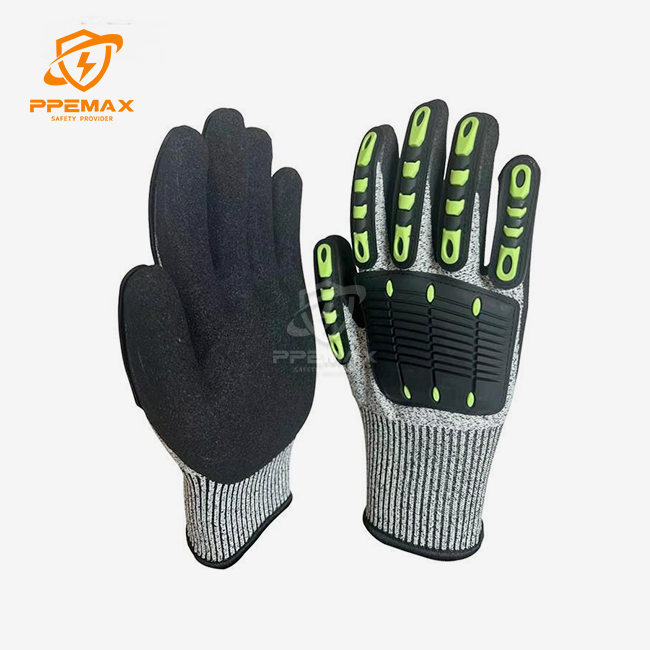
ASTM Standard Arc Protection Gloves Using When Working With Electric are made with inherent FR materials. Para-aramid and meta-aramid fibers supply that base. Certification comes under ASTM F2675/F2675M. Arc ratings run from Level 1 (>4 cal/cm²) to Level 4 (>40 cal/cm²). Electricians, utility workers, and EV technicians gain protection from thermal burns caused by arc flash events. Heat defense is one side of the build. The other side is dexterity for fine instrument work in energized areas.
What Are This Product?
These gloves are made to protect hands. They are certified under ASTM F2675/F2675M. That standard measures Arc Thermal Performance Value (ATPV) and Energy Breakopen Threshold (EBT) in cal/cm². Rubber insulating gloves (ASTM D120) guard against electric shock. Arc protection gloves face a different threat. Radiant heat from an arc blast is one threat they defend against. The pressure wave is another. Para-aramids are one part of the mix. Treated leather is another. Engineered knits are also used. Under extreme heat flux, these materials resist ignition. They also resist melting and dripping.
They address three specific problems on the job site:
- Standard gloves melt into skin during arc events — these do not.
- Bulky rubber glove setups reduce hand control — these restore dexterity.
- NFPA 70E compliance requires arc-rated hand protection even when shock hazards are absent — these fill that gap directly.


Standard Specifications
| Parameter | Details |
|---|---|
| Standard | ASTM F2675/F2675M |
| Arc Rating Levels | Level 1: >4 cal/cm²; Level 2: >8 cal/cm²; Level 3: >25 cal/cm²; Level 4: >40 cal/cm² |
| Base Material (Inner) | Cotton lining |
| Base Material (Outer) | Leather / Para-aramid (Kevlar®) / Meta-aramid (Nomex®) |
| Fiber Types | Para-aramid, Meta-aramid, Oxidized Polyacrylonitrile |
| Coating | FR neoprene or specialized grip polymers (non-drip) |
| Cut Resistance | ANSI/ISEA 105 / ASTM F2992 |
| Abrasion Resistance | ASTM D3389 |
| Ignition Requirement | Must not ignite or continue burning after arc exposure ends |
| Application Standard (Electrical) | NFPA 70E compliant |
| Finger Design | Pre-curved ergonomic fit |
Features
Inherent FR Material Construction
Para-aramid (Kevlar®) and meta-aramid (Nomex®) fibers make up the gloves. Flame resistance is built into those fibers. Chemical treatment is not added later. With proper care, that protection will not wash out over time.
Cotton Inner + Leather Outer Build
Moisture gets pulled away by the cotton inner layer, so hands stay comfortable through long tasks. Abrasion resistance comes from the leather outer shell, which also adds a second layer of thermal insulation. Together they work as a two-layer defense system.
Pre-Curved Ergonomic Fingers
Fingers are cut to follow the hand's natural curve. Fatigue drops during long electrical maintenance work. You also get steady control when handling multimeters, switches, and instrumentation.
FR Stitching Throughout
All seams are stitched with FR thread, preventing the seam from opening or burning through during an arc event — a construction detail that matters under direct thermal stress.
Permanent Arc Rating Label
The ATPV rating (cal/cm²) is permanently printed on each glove as required by ASTM and NFPA standards for Astm Standard Arc Protection Gloves Using When Working With Electric, allowing compliance verification before every job.
Advantages
- Structural integrity maintained under extreme heat flux — no melting, no dripping
- Arc rating levels span four tiers: matched to your site's incident energy analysis results
- Higher tactile sensitivity compared to traditional leather protectors over rubber gloves
- Abrasion and cut resistance built in for rough industrial environments
- Select models also carry NFPA 2112 flash fire protection certification
Applications
Utility Switching & Power Distribution
Substation operators use these gloves during switching operations on potential transformers and circuit breakers. Rubber gloves handle shock risk; arc protection gloves guard against radiant heat from arc faults — a leading cause of serious injury in these settings.
Industrial Panel Maintenance (NFPA 70E)
Dexterity and arc protection both matter for maintenance electricians on live 480V/600V control panels. Test instruments can be handled safely while these gloves are on. They also meet the PPE Level requirements that come out of your site's arc flash study.
EV Battery Production & Servicing
Electric vehicles run high-voltage DC systems above 400V. Arc flashes from DC current last longer than AC arcs do. Workers who assemble or service lithium-ion packs wear these gloves. The gloves resist molten metal splatter and heat stress when a battery tab weld fails.
Certifications for Astm Standard Arc Protection Gloves Using When Working With Electric
- ASTM F2675/F2675M: standard for arc protection performance
- ANSI/ISEA 105: Mechanical performance (cut, abrasion)
- ASTM D3389: Abrasion resistance
- NFPA 2112: Flash fire protection (select models)
Packing
Every pair is tagged with a permanent arc rating label. Gloves go out in cartons fit for international shipping. Need your own branding or label format? Custom packaging is available for OEM and bulk orders.
After-Sales Service
- Technical support for matching ATPV ratings to your arc flash study results
- Guidance on care and washing procedures to maintain FR performance
- Replacement and inspection support for damaged or post-incident gloves
- Documentation support for NFPA 70E compliance audits
About Xi'An PPE MAX Co., Ltd
Since 1956, Xi'An PPE MAX Co., Ltd has made hand protection for professionals. Arc protection gloves are, Astm Standard Arc Protection Gloves Using When Working With Electric, one of our lines. The build uses cotton inner linings and outer shells of leather or aramid fiber. We deal directly with B2B buyers, safety managers, and procurement teams. Together we match the right arc rating level to the incident energy data on the ground.
Buyers and safety professionals are welcome to visit the factory. Want to arrange a visit or ask for product documentation? Get in touch.

FAQ
Q: Can these gloves replace rubber voltage-insulating gloves?
A: No. ASTM F2675 gloves protect against thermal burns, not electric shock. They do not provide dielectric protection unless specifically designed as composite gloves also meeting ASTM D120. For shock hazards, rubber insulating gloves must still be worn underneath leather protectors.
Q: How do I select the correct ATPV rating?
A: Selection must be based on an Incident Energy Analysis of your specific workspace. If your study predicts 8 cal/cm², you need this product rated above 8 cal/cm² to prevent second-degree burns.
Q: Do these gloves lose their arc rating after washing?
A: Gloves built with inherent FR fibers such as para-aramid usually keep their protection through washing. For gloves with FR coatings, follow the washing instructions from the manufacturer. Skip bleach and fabric softeners. They break down the FR coating or the grip substrate.
Q: How does ASTM F2675 differ from ASTM F696?
A: Leather gloves worn over rubber insulating gloves fall under ASTM F696. The point of those is to keep the rubber safe from physical damage. ASTM F2675 is a different test. It covers knit, coated, or engineered gloves built for arc protection, and those are usually worn where shock-protection rubber gloves are not needed.
Q: When should these gloves be retired?
A: Retire them immediately if you find cuts, tears, heavy oil saturation, or direct arc flash exposure — even when visible damage is not obvious.
Q: Are custom sizes or labeling available for bulk orders?
A: Yes. Custom sizing, labeling, and packaging options are available for B2B and OEM orders. Contact us with your incident energy analysis data and required arc rating level to discuss your application.
Contact Us
To request a quote or product samples, email bettybing@ppemax.com with your arc flash study data Astm Standard Arc Protection Gloves Using When Working With Electric and required protection level.
Learn about our latest products and discounts through SMS or email