- English
- French
- German
- Portuguese
- Spanish
- Russian
- Japanese
- Korean
- Arabic
- Greek
- German
- Turkish
- Italian
- Danish
- Romanian
- Indonesian
- Czech
- Afrikaans
- Swedish
- Polish
- Basque
- Catalan
- Esperanto
- Hindi
- Lao
- Albanian
- Amharic
- Armenian
- Azerbaijani
- Belarusian
- Bengali
- Bosnian
- Bulgarian
- Cebuano
- Chichewa
- Corsican
- Croatian
- Dutch
- Estonian
- Filipino
- Finnish
- Frisian
- Galician
- Georgian
- Gujarati
- Haitian
- Hausa
- Hawaiian
- Hebrew
- Hmong
- Hungarian
- Icelandic
- Igbo
- Javanese
- Kannada
- Kazakh
- Khmer
- Kurdish
- Kyrgyz
- Latin
- Latvian
- Lithuanian
- Luxembou..
- Macedonian
- Malagasy
- Malay
- Malayalam
- Maltese
- Maori
- Marathi
- Mongolian
- Burmese
- Nepali
- Norwegian
- Pashto
- Persian
- Punjabi
- Serbian
- Sesotho
- Sinhala
- Slovak
- Slovenian
- Somali
- Samoan
- Scots Gaelic
- Shona
- Sindhi
- Sundanese
- Swahili
- Tajik
- Tamil
- Telugu
- Thai
- Ukrainian
- Urdu
- Uzbek
- Vietnamese
- Welsh
- Xhosa
- Yiddish
- Yoruba
- Zulu
What Are the Top Benefits of Using Electrical Rubber Gloves?
Founded in 1956, PPEMAX stands as a premier global manufacturer and supplier of full-range personal protective equipment. All our products comply with internationally recognized standards including IEC, ASTM, CE, UKCA, NIOSH and ISO9001. Equipped with a 2,000-square-meter modern production plant, we boast over 25 years of mature OEM & ODM capabilities to deliver one-stop customized solutions covering R&D design through worldwide logistics. Our safety gear is distributed across 134 countries globally. Upholding our core tenet “Safety First, Quality Priority”, we serve as a dependable long-term PPE partner for industrial enterprises around the world.
In workplace settings, electrical rubber gloves are the first line of defence against electrical shock, arc flash, and contact burns. When workers touch live wires, these special shields protect them in ways that could save their lives and go beyond just covering their hands. The main benefits are better dielectric insulation that stops electrical current from getting to the skin, high durability that can handle chemical exposure and mechanical stress, higher worker productivity thanks to ergonomic designs that keep dexterity, and guaranteed regulatory compliance that lowers an organisation's risk and promotes a safety culture at work through the use of electrical rubber gloves.
Understanding Electrical Rubber Gloves: Materials, Types, and Safety Standards
Material Composition and Engineering
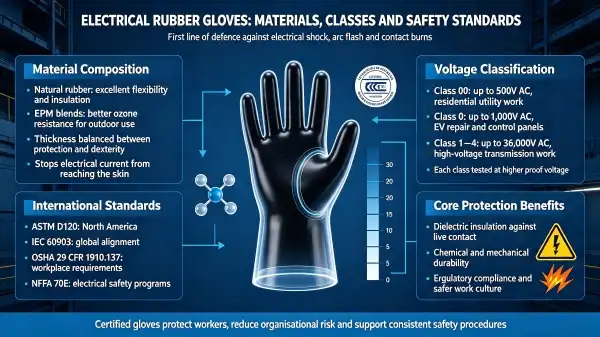
At our company, we make insulated gloves out of special materials that block electrical current completely. Natural rubber is still the best because it is flexible and has great insulating qualities. However, manmade mixes like EPDM are better at resisting ozone breakdown in outdoor settings. The chemical structure of these substances stops the flow of electrons, stopping electrical paths that would otherwise hurt or kill people. The thickness of the material changes depending on the power grade. Thinner shapes make it easier to move things by hand, while thicker builds protect against higher power levels. A big problem in the industry is keeping workers safe without losing the accuracy needed for complicated electrical work. This technical balance solves that problem.
Voltage Classification Systems
The electrical rubber gloves classification system is directly linked to their maximum use voltage. This makes it easy to choose the right electrical rubber gloves for different tasks. Class 00 gloves protect people who work with up to 500 Volts AC, which makes them perfect for installing smart meters and doing work on utilities in homes. Class 0 gloves cover up to 1,000 Volts AC, making them good for working on low-voltage industrial control panels and electric car repairs. Class 1 through Class 4 gloves offer increasing levels of safety up to 36,000 Volts AC for high-voltage gearbox work as the voltage needs rise. Different proof tests are done on each group at voltages that are much higher than their stated maximums. Class 00 gloves, which usually have brown labels, have to be able to handle 2,500 Volts AC during testing, even though they are only rated for 500 Volts of use. This big safety gap takes into account power spikes and short-term situations that happen in the real world.
International Compliance Standards
Standards like ASTM D120 and IEC 60903 control how things are made, how they are tested, and what labels they need to have on them in both the American and European markets. Manufacturers must meet certain dielectric strength levels, material makeup standards, and physical property requirements before their goods can be sold to businesses. The OSHA 29 CFR 1910.137 and NFPA 70E laws set even more rules for how to use electricity in the workplace, forcing businesses to create thorough electrical safety plans. Purchasing teams can be sure that gloves meet these strict requirements by looking for approval marks from approved testing labs. This lowers their risk of legal trouble and protects workers.
Top Benefits of Using Electrical Rubber Gloves in Industrial Settings
Quality insulating gloves provide benefits beyond protection. Safety, operational efficiency, and financial performance increase when companies use approved PPE. These gloves have these main benefits in harsh industrial environments:
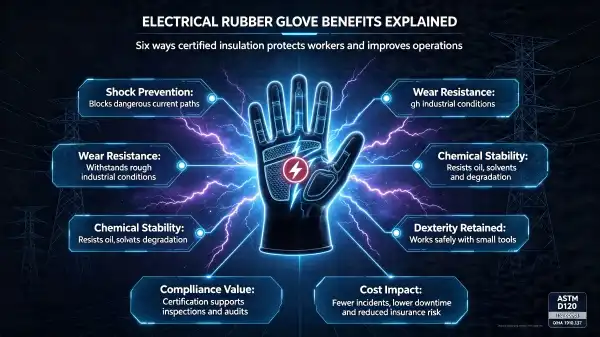
Superior Electrical Insulation and Shock Prevention: Unmatched electrical current protection remains the key advantage. Dielectric testing shows these gloves block current even under harsh temperatures, protecting workers' hands from energised conductors. Insulating gloves minimise utility electrical injury incidences by up to 70%, according to Electrical Safety Foundation International research. These gloves are the only protection against catastrophic injuries when personnel operate on live circuits during emergency repairs or system troubleshooting without de-energisation.
Natural rubber and synthetic materials resist deterioration from petroleum products, solvents, and industrial chemicals used in electrical work conditions. Gloves remain insulating despite transformer oils, cleaning solvents, and environmental toxins due to their chemical stability. The material's resilience to wear and puncture enhances service life compared to general-purpose gloves, saving money on replacements. Class 0 gloves in utility applications may last over three years with adequate maintenance, reducing overall ownership costs.
New insulating gloves have ergonomic shapes and optimised thickness profiles to retain tactile sensitivity and boost worker productivity. Technicians can handle precise tools, touchscreen interfaces, and tiny components without removing protective gear due to this dexterity. Workers remain safe and productive by not removing gloves for intricate operations. Comfortable equipment facilitates sustained use during work shifts, reducing hand fatigue and boosting productivity.
Waterproof barriers and thermal protection enhance these gloves' value beyond electrical insulation. Multi-hazard defence helps maintenance personnel manage wet or hot components. Water forms conductive channels that degrade insulation, but the gloves' moisture resistance prevents tracking. This adaptability simplifies inventory management and ensures workers have adequate protection by eliminating the need for numerous glove kinds.
These comprehensive advantages address procurement managers' operational challenges: worker safety, financial limits, regulatory compliance, and labour productivity. Quality insulating gloves decrease incidents, insurance costs, and operational continuity.
Organisations face significant legal and financial consequences when electrical incidents occur. Certified electrical rubber gloves demonstrate proactive safety commitment, providing crucial evidence during regulatory inspections and incident investigations. This documentation proves essential when defending against negligence claims or OSHA citations involving electrical rubber gloves.
Insurance carriers recognise the risk mitigation value of comprehensive electrical safety programs. Companies implementing robust PPE protocols, including proper glove selection and maintenance, often qualify for reduced workers' compensation premiums. These savings accumulate substantially across large workforces, offsetting equipment investment costs while protecting both employees and organisational assets.
If you're evaluating personal protective equipment suppliers and require batch-specific testing documents before placing an order, PPE MAX is able to provide official Certificates of Analysis, professional laboratory test reports, and product samples for your verification. Feel free to contact our team at marketing@ppemax.com to discuss your sourcing needs and obtain complete documentation for your quality assessment and procurement approval.
Comparative Insights: Electrical Rubber Gloves Versus Alternative Protective GlovesLeather Protector Gloves and Complementary Protection
Leather protection gloves supplement insulating rubber gloves. These tough outer layers protect rubber gloves against mechanical damage—cuts, punctures, and abrasions—that would undermine dielectric integrity. The leather's rough texture increases tool and component grip, improving electrical work control. Class 1–4 applications need leather protectors to extend two inches beyond the rubber glove cuff to prevent electrical tracking. This multi-layered safety device protects hands against electrical and mechanical threats in high-risk areas. Leather alone does not insulate against electrical risks; thus, it cannot replace rubber gloves.
Insulated Work Gloves and Application Distinctions
Normal insulated work gloves for cold weather are different from voltage-rated ones. Although labelled as "insulated," these items offer heat protection without dielectric testing or certification for electrical operations. This crucial difference confuses procurement choices dangerously. ASTM F496 requires true insulating gloves to be electrically tested every six months while in active service. They have obvious voltage labelling and certification. No matter their material or thickness, cold-weather work gloves are inappropriate for energised electrical work.
Reusable Versus Disposable Options
Standard electrical maintenance work uses reusable insulating gloves for their longevity and cost-effectiveness over many years. When properly maintained, these gloves may resist hundreds of testing cycles and remain protective. When contamination hazards or occasional use warrant them, disposable gloves are used. Emergency response, hazardous environment entrance, and frequent glove changes may need disposable gloves. However, their single-use nature increases long-term expenses and environmental waste, making them unsuitable for organisations with consistent electrical work needs. Large-scale procurement teams find higher value in reusable glove programs with rigorous testing and maintenance.
Procurement Guide: How to Source High-Quality Electrical Rubber Gloves
Critical Selection Criteria
Verifying voltage is key to buying. Safety teams must determine maximum voltage levels and choose gloves with suitable protection. Too low glove ratings provide life-threatening risks, while too high ratings impair dexterity and raise expenses. Environmental variables determine Type I natural rubber or Type II synthetic compounds. EPDM's weather resilience favours outside utility work in high-ozone conditions, while natural rubber's flexibility and comfort suit inside industrial uses. Size accuracy is also important since badly fitting gloves diminish dexterity and increase fatigue, reducing protection and productivity.
Trusted Manufacturers and Supply Chain Reliability
Established brands including 3M, Ansell, and Honeywell have earned industry recognition through consistent quality and comprehensive certification documentation. These manufacturers maintain rigorous quality control systems and provide detailed testing records that satisfy regulatory requirements. However, procurement professionals should also evaluate specialised PPE suppliers with deep electrical safety expertise. Companies demonstrating multi-decade manufacturing experience, extensive certification portfolios, and global distribution capabilities often deliver superior value through customised solutions and responsive technical support. We've served industrial safety needs since 1956, developing a comprehensive understanding of the challenges procurement teams face across 134 countries.
Bulk Purchasing Strategies and Pricing Considerations
Volume purchasing agreements deliver significant cost advantages while ensuring supply continuity. Negotiating annual contracts with established testing schedules built into pricing structures simplifies budget planning and maintains compliance. Transparent pricing models should account for glove cost, leather protectors, testing services, and replacement schedules based on usage intensity. Total cost of ownership extends beyond initial purchase price. Gloves with superior durability may command higher unit costs but deliver lower per-use expenses through extended service lives. Comprehensive warranties, responsive customer service, and readily available replacement inventory protect against supply disruptions that could compromise safety programs. Procurement specialists should evaluate suppliers based on their ability to provide end-to-end solutions including technical consultation, proper sizing guidance, and ongoing support.
Maintenance, Testing, and Safe Usage of Electrical Rubber Gloves
Electrical and Physical Testing Requirements
Regulatory standards mandate periodic testing to verify continued dielectric integrity of electrical rubber gloves. Every six months during active service, electrical rubber gloves must undergo electrical proof testing at voltages exceeding their rated maximums. ASTM F496 specifies exact testing protocols, voltage levels, and failure criteria that accredited laboratories must follow. Gloves in storage face different requirements—they cannot be issued for service if more than 12 months have elapsed since their last electrical test. This protocol ensures that time-dependent degradation does not compromise protection. Visual inspections before each use supplement formal testing, identifying obvious damage like cuts, punctures, embedded objects, or ozone cracking that would disqualify gloves from service.
Proper Storage and Handling Protocols
Storage conditions directly impact glove longevity and reliability. Gloves must be kept in cool, dark, dry locations away from direct sunlight, ozone sources, and temperature extremes. Canvas storage bags with gloves positioned cuffs-down prevent compression and folding that creates stress points leading to premature failure. Never store gloves inside-out or in wet conditions, as moisture promotes material degradation and bacterial growth. Avoid contact with sharp objects, petroleum products, and chemical contaminants during storage. Dedicated storage areas separate from general tool cribs protect gloves from accidental damage while maintaining organised inventory systems that support testing schedule compliance.
Integration with Comprehensive Safety Programs
Insulating gloves represent one component of layered electrical safety systems. Worker training must cover proper donning and doffing procedures, visual inspection techniques, and recognition of damage indicators requiring immediate glove removal. Understanding voltage ratings, work practice limitations, and emergency response protocols ensures workers use equipment correctly. Safety programs should emphasise that gloves alone cannot eliminate electrical hazards. They function within broader protection schemes including lockout-tagout procedures, arc-rated clothing, insulated tools, and engineered safety controls. This comprehensive approach, combined with consistent glove maintenance and testing, creates the robust safety culture that protects workers and satisfies regulatory obligations.
Conclusion
The strategic value of quality insulating gloves extends throughout industrial operations, directly impacting worker safety, regulatory compliance, and operational efficiency. These specialised protective barriers deliver proven shock prevention, exceptional durability, enhanced productivity through ergonomic designs, and multi-hazard protection that addresses diverse workplace challenges. Procurement decisions based on proper voltage classification, material selection, and supplier reliability create safety programs that measurably reduce incident rates while controlling long-term costs. Organisations investing in certified equipment supported by rigorous testing and maintenance protocols demonstrate the proactive safety commitment that protects both workforce and enterprise.
FAQ
1. Are insulating rubber gloves waterproof?
Yes, properly manufactured insulating gloves create impermeable barriers against moisture. This waterproof property serves dual purposes: preventing water from creating conductive pathways that compromise electrical protection, and protecting hands during wet-condition work. The material's impermeability ensures consistent dielectric performance regardless of environmental moisture levels.
2. What is the mandatory retesting interval for voltage-rated gloves?
According to ASTM F496 and OSHA 1910.137, gloves in active service require electrical testing every six months. Gloves in storage cannot be issued if testing occurred more than 12 months prior. This protocol ensures time-dependent degradation does not compromise protection, maintaining reliable safety margins throughout service life.
3. Can Class 0 gloves be used for high-voltage distribution work?
No, Class 0 gloves rated for 1,000 Volts AC maximum use voltage provide inadequate protection for distribution systems typically operating at 4,160V to 34,500V. High-voltage work requires Class 2, 3, or 4 gloves depending on specific voltage levels. Using underrated gloves creates immediate life-threatening hazards through inadequate insulation thickness and dielectric strength.
4. How should leather protector gloves fit relative to rubber gloves?
Rubber insulating gloves must extend at least two inches beyond leather protector cuffs. This gap distance prevents electrical tracking—the phenomenon where current travels along surfaces seeking ground paths. Proper overlap ensures voltage cannot bypass the insulating barrier by travelling along the leather-rubber interface.
Partner with PPE MAX for Certified Electrical Safety Solutions
We understand the critical decisions procurement teams face when specifying life-safety equipment for diverse industrial environments. Since 1956, PPE MAX has protected workers across 134 countries through comprehensive insulating glove solutions that meet both ASTM and IEC international standards. Our extensive manufacturing experience as Northwest China's largest PPE supplier translates into reliable protection you can verify through rigorous certification documentation.
Whether you need electrical rubber gloves in Class 00 for EV maintenance operations, Class 0 solutions for industrial control work, or Class 3 protection for utility distribution systems, we provide tailored recommendations aligned with your specific voltage requirements. Our team tests every electrical rubber gloves product we manufacture because we believe authentic safety commitment means using the equipment ourselves.
Connect with our electrical safety specialists to discuss bulk purchasing programs, customised sizing solutions, and comprehensive testing services that maintain compliance effortlessly. As a trusted electrical rubber gloves supplier, we offer OEM manufacturing capabilities for organisations building proprietary safety brands, backed by decades of quality assurance expertise. Reach out to marketing@ppemax.com for detailed product specifications, volume pricing, and technical consultation that transforms your electrical safety program. Protect your workforce with confidence—request your customised quote today.
References
1. American Society for Testing and Materials. (2020). ASTM D120-20: Standard Specification for Rubber Insulating Gloves. West Conshohocken, PA: ASTM International.
2. Occupational Safety and Health Administration. (2019). OSHA 29 CFR 1910.137: Electrical Protective Devices. Washington, DC: U.S. Department of Labour.
3. International Electrotechnical Commission. (2018). IEC 60903: Live Working—Gloves of Insulating Material. Geneva, Switzerland: IEC Publications.
4. Electrical Safety Foundation International. (2021). Workplace Electrical Safety and Prevention Statistics. Arlington, VA: ESFI Research Division.
5. National Fire Protection Association. (2021). NFPA 70E: Standard for Electrical Safety in the Workplace. Quincy, MA: NFPA Publications.
6. American Society for Testing and Materials. (2019). ASTM F496-19: Standard Specification for In-Service Care of Insulating Gloves and Sleeves. West Conshohocken, PA: ASTM International.
Learn about our latest products and discounts through SMS or email