- English
- French
- German
- Portuguese
- Spanish
- Russian
- Japanese
- Korean
- Arabic
- Greek
- German
- Turkish
- Italian
- Danish
- Romanian
- Indonesian
- Czech
- Afrikaans
- Swedish
- Polish
- Basque
- Catalan
- Esperanto
- Hindi
- Lao
- Albanian
- Amharic
- Armenian
- Azerbaijani
- Belarusian
- Bengali
- Bosnian
- Bulgarian
- Cebuano
- Chichewa
- Corsican
- Croatian
- Dutch
- Estonian
- Filipino
- Finnish
- Frisian
- Galician
- Georgian
- Gujarati
- Haitian
- Hausa
- Hawaiian
- Hebrew
- Hmong
- Hungarian
- Icelandic
- Igbo
- Javanese
- Kannada
- Kazakh
- Khmer
- Kurdish
- Kyrgyz
- Latin
- Latvian
- Lithuanian
- Luxembou..
- Macedonian
- Malagasy
- Malay
- Malayalam
- Maltese
- Maori
- Marathi
- Mongolian
- Burmese
- Nepali
- Norwegian
- Pashto
- Persian
- Punjabi
- Serbian
- Sesotho
- Sinhala
- Slovak
- Slovenian
- Somali
- Samoan
- Scots Gaelic
- Shona
- Sindhi
- Sundanese
- Swahili
- Tajik
- Tamil
- Telugu
- Thai
- Ukrainian
- Urdu
- Uzbek
- Vietnamese
- Welsh
- Xhosa
- Yiddish
- Yoruba
- Zulu
How Do Insulating Gloves Improve Worker Confidence?
Insulating gloves give workers a lot more confidence because they protect them from electrical dangers. This turns worry into confidence during live electrical work. When workers wear properly certified electrical safety gloves, they worry less about getting shocked, which lets them focus on precise tasks instead of thinking about the danger. This change in attitude comes from real protection: good rubber insulation gloves make a wall that isn't conducting electricity that workers can rely on, especially when worn with leather guards for mechanical defence. The clear certification signs and regular testing periods strengthen this trust, making it so that workers treat powered equipment with respect instead of fear, which can paralyse them.
Understanding Insulating Gloves and Their Role in Worker Safety
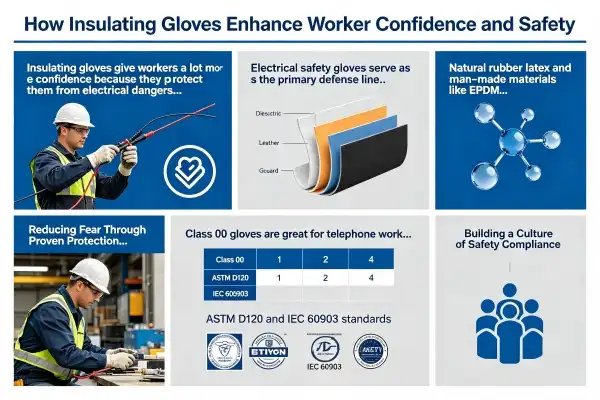
Electrical safety gloves serve as the primary defense line between workers and potentially fatal voltage exposure. These specialized PPE items differ fundamentally from standard work gloves in their construction from dielectric materials that resist electrical current flow.
The Science Behind Electrical Insulation
Natural rubber latex and man-made materials like EPDM are what make voltage-rated gloves work. The chemical shapes of these materials stop electrons from moving. This stops electrical paths that would normally go through a worker's body and connect to ground. The highest power a glove can safely handle is based on its thickness and makeup. This is why there are rating systems that match safety levels with different work settings.
Classification Systems That Matter
Clear groups for electrical safety gloves are set by international standards. Class 00 gloves are great for telephone work, low-voltage electrical upkeep, and fixing HVAC systems because they protect against voltages up to 500V AC. Class 0 gloves cover up to 1,000V AC and can be used to place utility meters and do some light industrial work. Higher classes—1, 2, 3, and 4—offer more safety against power levels that become more dangerous when working on transmission lines and in substations. Knowing these differences helps people who work in buying match tools perfectly to the risks in the workplace.
Compliance Standards Build Trust
Electrical shielding gloves that follow the strict testing procedures required by ASTM D120 and IEC 60903 standards are guaranteed to work. These standards require proof testing at voltages that are much higher than the rated maximums. This is done to make sure that there are enough safety gaps. Products that have these approvals go through dielectric breakdown tests, physical inspections to look for flaws, and material ageing tests. When workers see these certification marks clearly stamped on their gloves, they know that their gear has been tested in harsh conditions that are far worse than what they'll find in the field.
How Insulating Gloves Enhance Worker Confidence: Practical Benefits
The psychological impact of quality electrical safety equipment, such as Insulating gloves, extends far beyond basic physical protection, fundamentally reshaping how workers approach hazardous tasks.
Reducing Fear Through Proven Protection
There are real risks to life that come with doing electrical work, which is why techs are afraid. High-quality voltage protection gloves change this link with danger by being proven to block shock risks. When workers wear properly rated gear, they feel less anxious when they get close to live circuits. This frees up their mental resources to focus on the task at hand instead of worrying. This mental clarity directly leads to better decision-making during important steps where mistakes can have serious effects.
Enhancing Focus and Operational Efficiency
When you wear effective PPE, you can be sure that you will be more productive. Technicians who trust their safety gear can finish jobs faster without losing safety standards because they aren't paralysed by fear or too much caution. Modern rubber insulation gloves are made in a way that keeps your physical awareness, so you can work with small parts and make precise wire connections without compromising your safety. With this mix of safety and agility, workers can keep working quickly even in dangerous places.
Building a Culture of Safety Compliance
When companies buy approved electrical protective equipment, they send a strong message to their workers about how important safety is to them. When companies give their workers Class 00 insulated gloves that meet IEC 60903 standards instead of generic ones, they show that they care about their health. This makes safety environments stronger so that workers are more likely to follow rules, report dangers, and hold their coworkers responsible for following safe practices. The resulting setting lowers the number of incidents and brings teams closer together around agreed safety values.
Choosing the Right Insulating Gloves for Maximum Confidence
Selecting appropriate voltage-rated gloves requires a systematic evaluation of multiple technical and practical factors that directly impact worker protection and comfort.
Voltage Rating Compatibility
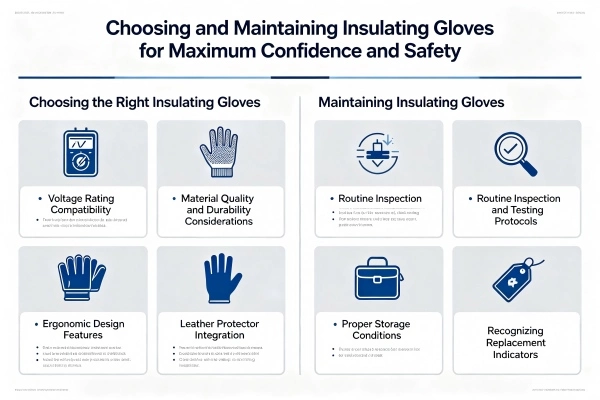
The most important decision factor is matching glove classification to real working energies. By doing detailed electrical hazard studies, you can find out the highest voltage levels that workers could be exposed to, as well as any problem situations that might suddenly raise voltage levels. When picking gloves, make sure they are rated for volts higher than standard working levels. This way, you can be ready for sudden spikes and protect yourself from uncertainty. When tested at 2,500V, PPE MAX's Class 00 insulation gloves provide extra safety for telecommunications and low-voltage industry uses. They protect against 500V AC.
Material Quality and Durability Considerations
Natural rubber latex is better for jobs that need fine motor control because it is more flexible and has a better physical reaction. Type I materials used in Insulating gloves work best in places where flexibility is important, but they need to be kept safe from UV rays and ozone. Synthetic options like EPDM rubber used in Insulating gloves give up some flexibility but are more resistant to damage from the environment, which means they last longer when used outside. The 0.5 mm thickness standard strikes a good mix between safety and usability, ensuring both electrical insulation and the freedom of movement needed for complicated processes with Insulating gloves.
Ergonomic Design Features
Hand tiredness from wearing the same thing for long amounts of time hurts both safety and production. Modern electrical safety gloves have shaped contours that fit the normal positions of the hands. This makes them easier on the muscles when used for long periods of time. There are 11-inch and 14-inch length choices that fit different clothing styles and give different amounts of coverage of the wrist. Colour-coding systems, like the red and black choices on Class 00 models, make it easy to quickly check the grades of gloves while inspecting tools. This keeps protection levels from matching the needs of the job, which could be dangerous.
The Importance of Leather Protector Integration
Even though rubber insulation gloves protect against electricity, they can still be damaged by rough surfaces, sharp edges, and other materials that are common in industrial settings. When leather protective gloves are worn on top, they protect the delicate dielectric rubber from cuts and punctures that could damage the insulation. This two-layer method protects against both electrical and mechanical dangers, so workers can be sure that their safety gear can handle all of the risks they face at work.
Maintaining Insulating Gloves to Sustain Worker Confidence and Safety
Preservation of protective capabilities demands disciplined maintenance protocols that verify ongoing glove integrity and performance.
Routine Inspection and Testing Protocols
Visual checks are done before each use to find clear flaws like holes, cracks, or foreign objects buried in the material. Workers should blow up their gloves and listen for air leaks. This is a simple test that can be done in the field and shows damage that can't be seen at first glance. Formal electrical testing with specialised tools every six months makes sure that the dielectric strength hasn't dropped below safe levels. Keeping records of these testing rounds provides audit trails that show OSHA 29 CFR 1910 compliance.137 standards and gives objective proof to back choices about whether to keep using the equipment or remove it.
Proper Storage Conditions
When gloves are not being used for a while, environmental factors speed up the breakdown of rubber. Exposure to ozone, which happens a lot near electrical motors and welding equipment, breaks down the chemical bonds in rubber, making it weak and less able to insulate. Direct sunshine also contains UV rays that break down materials in the same way. Extreme temperatures cause chemicals in rubber materials to change. Gloves stay in good shape if they are stored in cool, dark, dry places away from electrical equipment. Canvas bags keep your things from being squished and folded, which can cause stress points that could crack.
Recognizing Replacement Indicators
Electrical safety gloves have limited useful lives, even if they are well taken care of. This is because they wear out over time and are subject to more stress. Any entry, cuts that show the inner layers, surface-breaking, swelling from chemical exposure, or stiffness showing rubber degradation are all clear signs that the worker needs to stop right away. Subjective signs, such as less flexibility or changes in stickiness, show that a material's properties have changed. Instead of waiting for clear signs of failure, procurement managers should set repair plans based on how often the equipment is used. This way, workers will never have to rely on broken equipment.
Navigating Procurement: Where and How to Buy Certified Insulating Gloves
Strategic sourcing decisions for electrical safety equipment balance cost considerations against uncompromising safety requirements while ensuring supply chain reliability.
Bulk Purchasing Advantages for B2B Clients
Organizations managing electrical work across multiple sites or large crews benefit significantly from volume procurement strategies. Purchasing Class 00 Insulating gloves in quantities—like the 20-pair carton configurations PPE MAX offers—reduces per-unit costs while ensuring consistent inventory availability. Standardizing on single suppliers of Insulating gloves streamlines training requirements, as workers become familiar with specific product characteristics, sizing conventions, and care protocols. Bulk orders also provide negotiating leverage for customization options like company branding or specialized sizing distributions matching workforce demographics.
Evaluating Supplier Credentials
Reliable electrical safety glove suppliers demonstrate manufacturing expertise through certifications, testing capabilities, and production history. PPE MAX's foundation in 1956 represents over six decades of continuous improvement in protective equipment design and manufacturing processes. Suppliers serving 134 countries develop insights into diverse regulatory environments and industry-specific requirements that inform product development. Technical support availability—including product training and responsive inquiry handling—separates transactional vendors from true partners in workplace safety programs.
Balancing Cost and Safety Standards
Budget constraints represent legitimate business realities, but compromising on electrical protective equipment quality invites catastrophic consequences. Market pricing variations often reflect meaningful differences in material quality, testing rigor, and manufacturing precision. Products meeting both ASTM D120 and IEC 60903 standards typically command premium pricing justified by dual certification testing costs and enhanced global acceptability. The 170g reference weight of quality Class 00 gloves indicates substantial material thickness that cheaper alternatives sacrifice, directly impacting protective capabilities.
Lead Times and Customization Options
Global supply chains introduce delivery timeline considerations that procurement professionals must anticipate. Standard configurations like the 11-inch and 14-inch length options ship more quickly than specialized variants requiring custom production runs. Organizations with unique requirements—unusual size distributions, specialized color coding, or private labeling—should communicate needs early in procurement cycles to accommodate manufacturing lead times. Established suppliers maintain inventory buffers for standard products, enabling rapid fulfillment for urgent replacement needs or expansion scenarios.
Conclusion
Worker confidence in electrical environments stems directly from trust in protective equipment that stands between them and life-threatening hazards. Quality insulating gloves provide this foundation through verified electrical protection, ergonomic design enabling task performance, and visible certification proving rigorous testing. Organizations that prioritize proper glove selection, implement disciplined maintenance protocols, and source from established manufacturers create safety cultures where workers approach electrical tasks with appropriate respect rather than debilitating fear. The resulting confidence improvements manifest as enhanced productivity, stronger safety compliance, and reduced incident rates—outcomes that justify premium investments in certified electrical protective equipment.
FAQ
1. What voltage levels do Class 00 insulating gloves protect against?
Class 00 electrical safety gloves provide protection for maximum use voltages of 500V AC and 750V DC. These gloves undergo proof testing at 2,500V AC to ensure adequate safety margins beyond rated capacities. This classification makes them suitable for telecommunications installations, low-voltage industrial electrical maintenance, HVAC system repairs, and laboratory testing environments where voltage exposures remain below 500 volts.
2. How often should electrical protective gloves be tested?
OSHA regulations and ASTM F496 standards mandate electrical testing every six months after gloves enter service. Visual inspections should occur before each use to detect obvious damage. Organizations must document testing dates and results to demonstrate compliance during safety audits. Gloves failing electrical tests or showing physical defects require immediate retirement regardless of previous testing schedules.
3. Can rubber insulating gloves be used without leather protectors?
Rubber insulating gloves should never be used without leather protective gloves in industrial environments. While rubber provides electrical insulation, it offers minimal resistance to mechanical hazards like cuts, punctures, and abrasions common in electrical work settings. Leather protectors shield the delicate dielectric rubber from physical damage that would compromise electrical protection, creating essential dual-layer defense against combined electrical and mechanical risks.
4. What's the difference between Type I and Type II insulating glove materials?
Type I gloves use natural rubber latex, delivering superior flexibility and tactile sensitivity preferred for tasks requiring fine motor control and precise manipulation. Type II gloves incorporate synthetic rubber compounds like EPDM, sacrificing some dexterity for enhanced resistance to ozone degradation and UV radiation. Outdoor applications and environments with electrical equipment generating ozone benefit from Type II materials' extended service life despite slightly reduced flexibility.
Partner with PPE MAX for Certified Electrical Safety Solutions
Since 1956, we've protected workers across 134 countries through rigorously tested Insulating gloves that meet both ASTM D120 and IEC 60903 standards. Our Class 00 models combine 500V AC protection with ergonomic design, available in sizes 8 through 11 to fit your diverse workforce needs. As a leading Insulating gloves manufacturer in Northwest China, our Class 00 models combine 500V AC protection with ergonomic design, available in sizes 8 through 11 to fit your diverse workforce needs. As a leading Insulating gloves manufacturer in Northwest China, we offer competitive bulk pricing with 20-pair carton configurations, customization capabilities for private labeling, and responsive technical support. Contact us today at marketing@ppemax.com to discuss volume discounts, product specifications, and how our decades of manufacturing expertise can strengthen your electrical safety program.
References
1. American Society for Testing and Materials. (2016). ASTM D120-14a: Standard Specification for Rubber Insulating Gloves. West Conshohocken: ASTM International.
2. International Electrotechnical Commission. (2018). IEC 60903:2002+AMD1:2018: Live Working - Gloves of Insulating Material. Geneva: IEC Publications.
3. Occupational Safety and Health Administration. (2020). 29 CFR 1910.137: Electrical Protective Equipment. Washington: U.S. Department of Labor.
4. National Fire Protection Association. (2021). NFPA 70E: Standard for Electrical Safety in the Workplace. Quincy: NFPA Publications.
5. Cadick, J., Capelli-Schellpfeffer, M., & Neitzel, D. (2019). Electrical Safety Handbook (4th ed.). New York: McGraw-Hill Education.
6. American Society for Testing and Materials. (2017). ASTM F496-14: Standard Specification for In-Service Care of Insulating Gloves and Sleeves. West Conshohocken: ASTM International.
Learn about our latest products and discounts through SMS or email