- English
- French
- German
- Portuguese
- Spanish
- Russian
- Japanese
- Korean
- Arabic
- Greek
- German
- Turkish
- Italian
- Danish
- Romanian
- Indonesian
- Czech
- Afrikaans
- Swedish
- Polish
- Basque
- Catalan
- Esperanto
- Hindi
- Lao
- Albanian
- Amharic
- Armenian
- Azerbaijani
- Belarusian
- Bengali
- Bosnian
- Bulgarian
- Cebuano
- Chichewa
- Corsican
- Croatian
- Dutch
- Estonian
- Filipino
- Finnish
- Frisian
- Galician
- Georgian
- Gujarati
- Haitian
- Hausa
- Hawaiian
- Hebrew
- Hmong
- Hungarian
- Icelandic
- Igbo
- Javanese
- Kannada
- Kazakh
- Khmer
- Kurdish
- Kyrgyz
- Latin
- Latvian
- Lithuanian
- Luxembou..
- Macedonian
- Malagasy
- Malay
- Malayalam
- Maltese
- Maori
- Marathi
- Mongolian
- Burmese
- Nepali
- Norwegian
- Pashto
- Persian
- Punjabi
- Serbian
- Sesotho
- Sinhala
- Slovak
- Slovenian
- Somali
- Samoan
- Scots Gaelic
- Shona
- Sindhi
- Sundanese
- Swahili
- Tajik
- Tamil
- Telugu
- Thai
- Ukrainian
- Urdu
- Uzbek
- Vietnamese
- Welsh
- Xhosa
- Yiddish
- Yoruba
- Zulu
Dielectric Gloves Buying Guide for Safety Professionals
When your workers deal with high-voltage risks every day, it's important to make sure they have the right electrical safety gear. Dielectric gloves are the main thing that protects electrical workers from possibly fatal shocks. Because of this, safety professionals, purchasing managers, engineers, and dealers who work in global B2B markets need to make smart buying choices. This detailed guide looks at the most important things you need to know about choosing, buying, and taking care of these specialised insulated dielectric gloves to meet safety standards and protect your employees. Our goal is to make your choice easier by going over important features, international standards, and best practices that will make sure your company gives its teams the right voltage-rated security that meets both legal requirements and the needs of the modern workplace.
Understanding Dielectric Gloves: What, How, and Why
Defining Dielectric Gloves and Their Critical Function
Dielectric gloves are a special kind of safety gear made from high-quality insulation rubber or elastomer materials. They are designed to keep electrical workers from touching live wires because they don't carry electricity. Unlike regular work gloves, these ones go through strict electrical tests to make sure they can handle certain voltage levels. This keeps workers from getting shocked while they maintain, repair, or install things on utility grids, in factories, or on construction sites.
Material Composition and Insulation Mechanisms
Manufacturers usually make these gloves out of natural rubber, which is more flexible and sensitive to touch, or EPDM (Ethylene Propylene Diene Monomer), which is more resistant to ozone, UV radiation, and hard weather. How well shielding works relies on how pure the material is, how thick it is, and how many electrical paths it has. Natural rubber materials have great insulating strength and keep the natural "curved-hand" shape that keeps your hands from getting tired after long wear. The different coloured layers on the inside and outside make it easier to check for holes, cuts, or other damage that could make security less effective.
Understanding Class Ratings and Voltage Protection Levels
These gloves are categorised by international standards into four groups, from Class 00 to Class 4. Each group specifies the highest use voltage and proof test voltage that the gloves can handle. Class 00 gloves protect people who work with up to 500 volts AC and are good for low-voltage electrical work and battery service for electric vehicles. Class 0 protects up to 1,000 volts, and Class 1 protects up to 7,500 volts for repair on substations. Utility workers who fix power lines in the air use Class 2 and Class 3 gloves, which are designed for 17,000 and 26,500 volts, respectively. At a maximum use voltage of 36,000 volts AC, Class 4 gloves offer the best safety. Proof test voltages can hit 40,000 volts.
Mandatory Standards and Certification Requirements
North America still requires products to meet ASTM D120 standards, while European markets need EN 60903 approval. These guidelines lay out how to test for dielectric strength, physical longevity, and quality control. According to OSHA rule 29 CFR 1910.137, electrical safety equipment must meet certain standards. For example, dielectric gloves that are being used must be retested every six months. NFPA 70E adds strict safety rules to how electrical work is done. This creates a set of rules that safety workers must follow when choosing and buying voltage-rated dielectric gloves.
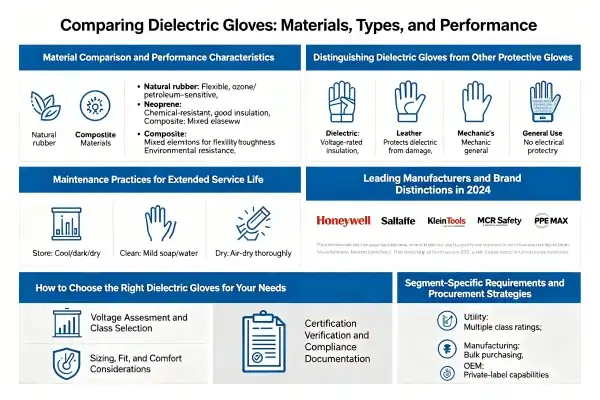
Comparing Dielectric Gloves: Materials, Types, and Performance
Material Comparison and Performance Characteristics
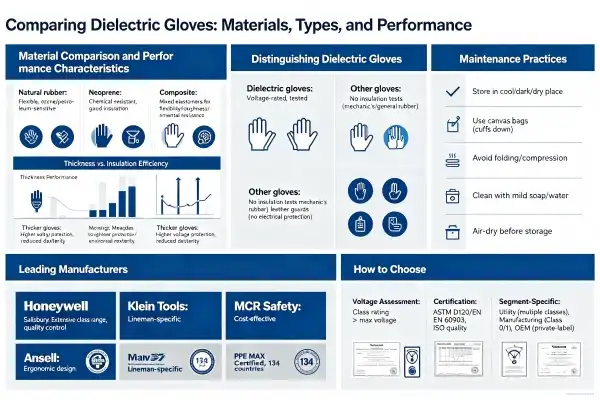
Depending on the needs of the product, different types of elastomers have different benefits. Natural rubber is very flexible, which lets workers keep their skills while working with small parts or complicated engineering jobs. However, natural rubber is sensitive to ozone and chemicals made from petroleum. Neoprene mixes are better at resisting chemicals while still having good electrical insulating qualities. Multiple elastomers are mixed together in composite materials to get the right combination of flexibility, toughness, and resistance to damage from the environment. Insulation efficiency and physical awareness are both directly affected by thickness. Thicker gloves protect against higher voltages but make it harder to move your fingers.
Distinguishing Dielectric Gloves from Other Protective Gloves
In electrical safety programs, standard rubber work gloves and leather protection are used for different things. When worn over voltage-rated gloves, leather guards protect the insulated rubber from damage like cuts, punctures, and wear and tear, but they don't provide electrical protection themselves. For electrical work, mechanic's gloves and general-use rubber gloves don't have the insulation tests and approval that are needed. Electrical shock risks can only be safely avoided with insulation gloves that have been properly rated and tested.
Maintenance Practices for Extended Service Life
Proper care extends glove lifespan while maintaining protective integrity. Store gloves in cool, dark, dry locations away from direct sunlight, ozone sources, and petroleum products. Canvas storage bags with cuffs positioned downward prevent dust accumulation inside gloves. Avoid folding, compressing, or placing heavy objects on stored gloves, as creases and compression can damage insulating properties. Clean gloves using mild soap and water, avoiding harsh solvents that degrade rubber compounds. Air-dry gloves thoroughly before storage to prevent moisture-related degradation.
Leading Manufacturers and Brand Distinctions in 2024
Several established manufacturers dominate the professional-grade market. Honeywell Salisbury products are recognized for an extensive class range offerings and rigorous quality control processes. Ansell emphasizes ergonomic designs that reduce hand fatigue during extended wear periods. Klein Tools focuses on lineman-specific requirements, offering gloves optimized for utility applications. MCR Safety provides cost-effective options for facilities with high-volume replacement needs. PPE MAX has served as a trusted insulation protection partner since 1956, delivering certified gloves to 134 countries with manufacturing capabilities that meet international standards while offering OEM solutions for distributors building their own brands.
How to Choose the Right Dielectric Gloves for Your Needs
Voltage Assessment and Class Selection
Begin your selection process by conducting a thorough voltage exposure assessment. Identify the maximum voltage your workers may contact, including both routine operational voltages and potential fault conditions. Select dielectric gloves with class ratings exceeding your identified maximum voltage by an appropriate safety margin. Electrical testing facilities, substations, and distribution networks each present distinct voltage profiles requiring corresponding protection levels from dielectric gloves.
Sizing, Fit, and Comfort Considerations
Proper fit is essential for both safety and productivity. Gloves that are too tight restrict blood circulation and cause hand fatigue, while oversized gloves reduce dexterity and increase the risk of catching on equipment. Measure hand dimensions according to manufacturer sizing charts, considering that leather protector sizing must accommodate the insulating glove underneath. Anatomically curved designs conform to natural hand positions, reducing muscle strain during extended tasks.
Certification Verification and Compliance Documentation
Verify that prospective gloves carry appropriate certifications from recognized testing laboratories. Request documentation showing compliance with ASTM D120 or EN 60903 standards, including test dates and results. Confirm that manufacturers maintain quality management systems certified to ISO standards. Documentation should accompany each glove shipment, enabling safety managers to maintain compliance records required during regulatory audits.
Segment-Specific Requirements and Procurement Strategies
Different B2B segments present unique requirements that influence purchasing decisions. Here are key considerations across major user categories:
Utility companies require extensive inventories across multiple class ratings to support diverse maintenance activities, from meter work requiring Class 00 protection to transmission line repairs demanding Class 3 or Class 4 gloves. Procurement strategies emphasize establishing vendor partnerships that ensure consistent supply chain reliability and rapid replenishment capabilities.
Manufacturing facilities typically specify Class 0 or Class 1 gloves for equipment maintenance involving motor control centers and automated production machinery. Bulk purchasing agreements reduce unit costs while ensuring workforce-wide availability. These organizations value vendors offering customized training programs supporting proper selection and use protocols.
OEM clients and distributors seek manufacturing partners capable of producing private-label products meeting specific market requirements. These relationships require suppliers with flexible production capabilities, comprehensive testing facilities, and expertise in navigating international certification requirements. Successful partnerships balance competitive pricing with quality assurance and reliable delivery schedules.
Where and How to Buy Dielectric Gloves: Procurement Tips for B2B Clients
Evaluating Purchasing Channels and Vendor Options
Multiple procurement channels serve the B2B market, each offering distinct advantages. Online industrial supply platforms provide convenient comparison shopping and transparent pricing, but may lack the technical consultation services valuable for complex specifications. Wholesale distributors typically offer volume discounts and established logistics networks, making them suitable for organizations managing multi-site operations. Direct manufacturer relationships deliver the best pricing for large-volume purchasers while enabling product customization and quality control oversight.
Identifying Certified and Trustworthy Suppliers
Getting safety-critical tools from a supplier that you can trust is very important. Check out possible sellers' factory qualifications, testing lab accreditations, and customer references from businesses in the same field. Ask for audit results and quality control records for the business. Find out how long suppliers have been in the electrical safety market. Suppliers that have been in business for a long time usually have well-established quality control systems and legal knowledge. Companies like PPE MAX, which has been making things for more than 60 years, show a long-term dedication to quality that keeps your workers safe.
Optimizing Price-Performance for Bulk Orders
Many times, buying in bulk can help you save a lot of money without sacrificing safety. Talk about price systems that reward loyalty through yearly deals or combined orders from multiple locations. Ask for sample review programs that you can test out yourself before you buy a lot of them. Instead of just looking at the individual price, compare the total cost of ownership. Gloves of higher quality that need to be replaced less often may be a better long-term value, even if they cost more at first.
Managing Logistics, Warranties, and Supply Chain Risks
International purchasing adds complications that need to be carefully handled. During negotiations, make sure you understand the shipping terms, import taxes, and arrival times. Set up clear guarantee coverage that spells out the manufacturer's responsibility for faulty goods, including how to repair them and how much it will cost. Create backup sources to lower the risk of damage caused by quality or production delays. Supply chain robustness comes from having good partnerships with vendors that are built through regular contact, clear communication on performance, and fair negotiations.
Maintaining and Testing Dielectric Gloves for Maximum Safety
Daily and Routine Visual Inspection Protocols
Every use starts with an eye check to see if there are any clear problems. Check both the inside and outside areas for holes, cuts, tears, foreign items stuck in the rubber, and changes in texture that show the rubber is breaking down. Check for ozone splitting, which usually shows up as small breaks in the surface. Check the cuff of the glove for tears or other damage that could let energised parts touch it. If problems are found during an eye check, the gloves must be taken out of service right away until they can be properly evaluated.
Air Inflation Testing Procedures
The air inflation test represents the most practical field method for detecting small defects invisible to visual inspection. Roll the cuff of the dielectric gloves to trap air inside, then apply gentle pressure to inflate the dielectric gloves. Listen and feel for air escaping through pinholes or micro-tears. Maintain inflation for at least 15 seconds while carefully observing all surfaces. Mechanical inflation devices provide consistent pressure application and free both hands for thorough inspection. Dielectric gloves failing air tests must not be used until professional re-testing confirms their protective integrity.
Cleaning Methods That Preserve Insulation Properties
When oils, greases, or chemicals get into rubber materials, they break down and make shielding less effective. Mild soap and cold water should be used to clean gloves after each use. The surfaces should be gently massaged to remove dirt and germs. Do not use strong cleaners, acids, or scrubbing that is too rough on rubber. Rinse well to get rid of any soap residue, and then let it dry at room temperature, out of direct sunlight and heat sources. Do not dry things with compressed air, as the high pressure could damage the inside. To keep gloves from breaking down because of wetness, only store them when they are completely dry.
Laboratory Testing and Certification Requirements
OSHA says that the gloves that are being used must be professionally tested for electricity every six months at the most. When measuring leakage current, testing labs put gloves in conductive water tubs and apply certain AC or DC voltages. Gloves that leak more current than the maximum allowed amount fail the approval process and need to be replaced. To make sure that rubber keeps its protective properties, testing also looks at its physical properties, such as its tensile strength, tear resistance, and puncture resistance. Keep thorough records of all tests, including dates, results, and the names of each glove, so you can show that you're following the rules during safety checks.
Recognizing Replacement Indicators
Even gloves that pass regular tests need to be replaced at some point. Surface cracks, lasting changes in structure, or obvious thinning all mean that the material's purity has been weakened and it needs to be thrown away, even if the tests show otherwise. Too much hardness means that the rubber is breaking down, which makes it less flexible and raises the risk of failure. Most makers set maximum service life limits that aren't based on test results. These limits are usually 12 months for gloves that are used a lot or longer for stock that is kept in the right way. Setting clear replacement rules keeps workers from using equipment that is getting close to the end of its useful life.
Conclusion
To keep your workers safe from electrical dangers, you need to make smart buying choices based on a deep understanding of the capabilities of voltage-rated gloves, compliance with standards, and the right way to maintain them. This guide has looked at selection factors from evaluating voltage to evaluating vendors. This gives safety workers the information they need to choose the right amounts of protection while also making the buying process as efficient as possible. Successful electrical safety programs strike a balance between following the rules and being easy to use, knowing that workers will only accept protection if they are comfortable and able to move around easily. Organisations build long-lasting safety programs that protect workers in a wide range of electricity settings by following strict inspection routines, sticking to testing plans, and working with dependable suppliers.
FAQ
1. How often should dielectric gloves be tested?
OSHA regulation 29 CFR 1910.137 mandates electrical testing at a maximum of six-month intervals for gloves in active service. However, organizations should conduct daily air inflation and visual inspections before each use. Gloves exposed to suspected damage require immediate retesting before returning to service. Some high-risk environments implement monthly or quarterly professional testing to provide additional safety margins. Maintaining detailed testing logs documenting dates, results, and individual glove identification numbers demonstrates compliance during regulatory audits while enabling tracking of glove performance over time.
2. Can dielectric gloves be used for applications beyond electrical work?
These specialized gloves are engineered specifically for electrical insulation and should not be repurposed for general industrial tasks. The rubber compounds and construction methods optimized for dielectric strength may not provide adequate protection against chemicals, extreme temperatures, or mechanical hazards encountered in non-electrical applications. Using voltage-rated gloves for unintended purposes accelerates wear, increases contamination risks, and may compromise electrical protection when gloves return to electrical service. Maintain separate glove inventories designated exclusively for electrical work to preserve protective integrity.
3. What distinguishes Class 00 gloves from Class 4 gloves?
Class 00 gloves protect maximum use voltages up to 500 volts AC, suitable for low-voltage electrical work, electronics manufacturing, and electric vehicle servicing. Class 4 gloves protect against maximum use voltages up to 36,000 volts AC, designed for high-voltage transmission line work and substation maintenance. The distinction extends beyond voltage ratings to material thickness, flexibility, and cost. Higher-class gloves feature thicker insulation, reducing tactile sensitivity—appropriate for tasks requiring maximum protection but less suitable for detailed work. Match glove class ratings to actual workplace voltage exposures rather than defaulting to maximum protection levels that impair worker dexterity unnecessarily.
Partner with PPE MAX for Certified Dielectric Gloves That Protect Your Workforce
Your electrical safety program deserves a partner with proven expertise and unwavering commitment to worker protection. PPE MAX has manufactured certified insulation protection equipment since 1956, serving safety professionals across 134 countries with products meeting ASTM and EN standards. As a leading dielectric gloves supplier based in Northwest China, we combine decades of manufacturing experience with flexible OEM capabilities, enabling distributors and large enterprises to access quality-assured dielectric gloves products at competitive pricing. Our engineering team provides technical consultation supporting proper class selection, and our established logistics networks ensure reliable delivery for both sample evaluation and volume procurement. Contact our specialists at marketing@ppemax.com to discuss your specific voltage protection requirements, request certified test documentation, or explore customized manufacturing solutions. We test our own equipment because we believe in the protection we provide—trust PPE MAX to deliver the voltage-rated gloves your workers depend on every day.
References
1. American Society for Testing and Materials (2021). ASTM D120-20: Standard Specification for Rubber Insulating Gloves. West Conshohocken: ASTM International.
2. Occupational Safety and Health Administration (2020). OSHA 29 CFR 1910.137: Electrical Protective Equipment Standards and Testing Requirements. Washington: U.S. Department of Labor.
3. International Electrotechnical Commission (2019). IEC 60903: Live Working—Gloves of Insulating Material. Geneva: IEC Publishing.
4. National Fire Protection Association (2021). NFPA 70E: Standard for Electrical Safety in the Workplace. Quincy: NFPA Publications.
5. Cadick, J., Capelli-Schellpfeffer, M., & Neitzel, D. (2019). Electrical Safety Handbook (4th ed.). New York: McGraw-Hill Education.
6. IEEE Standards Association (2018). IEEE 1584: Guide for Performing Arc-Flash Hazard Calculations. Piscataway: Institute of Electrical and Electronics Engineers.
Learn about our latest products and discounts through SMS or email