- English
- French
- German
- Portuguese
- Spanish
- Russian
- Japanese
- Korean
- Arabic
- Greek
- German
- Turkish
- Italian
- Danish
- Romanian
- Indonesian
- Czech
- Afrikaans
- Swedish
- Polish
- Basque
- Catalan
- Esperanto
- Hindi
- Lao
- Albanian
- Amharic
- Armenian
- Azerbaijani
- Belarusian
- Bengali
- Bosnian
- Bulgarian
- Cebuano
- Chichewa
- Corsican
- Croatian
- Dutch
- Estonian
- Filipino
- Finnish
- Frisian
- Galician
- Georgian
- Gujarati
- Haitian
- Hausa
- Hawaiian
- Hebrew
- Hmong
- Hungarian
- Icelandic
- Igbo
- Javanese
- Kannada
- Kazakh
- Khmer
- Kurdish
- Kyrgyz
- Latin
- Latvian
- Lithuanian
- Luxembou..
- Macedonian
- Malagasy
- Malay
- Malayalam
- Maltese
- Maori
- Marathi
- Mongolian
- Burmese
- Nepali
- Norwegian
- Pashto
- Persian
- Punjabi
- Serbian
- Sesotho
- Sinhala
- Slovak
- Slovenian
- Somali
- Samoan
- Scots Gaelic
- Shona
- Sindhi
- Sundanese
- Swahili
- Tajik
- Tamil
- Telugu
- Thai
- Ukrainian
- Urdu
- Uzbek
- Vietnamese
- Welsh
- Xhosa
- Yiddish
- Yoruba
- Zulu
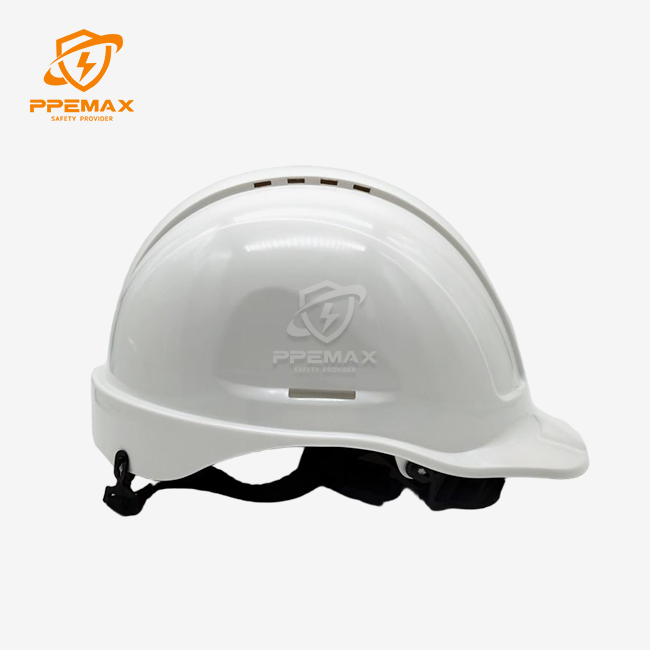
Water Transfer Cap
*Material: ABS
*Headband: Four-point type
*Style: Knob type or button type
*Color: Red/Yellow/Green/Blue
*Weight: 385±10 gsm
*Certification: EN 397:2012+A1:2012
*Pakcing :25pcs/1ctn
Water Transfer Cap for Complex Geometries — Hydrographic Finish Solutions by Xi'An PPE MAX Co., Ltd
Xi'An PPE MAX Co., Ltd has made protective equipment and technical parts since 1956. The Water Transfer Cap (Model M108) starts with an ABS body. It holds EN 397:2012+A1:2012 certification. Weight sits at 385 ± 10 gsm. A four-point headband comes with knob or button adjustment. Standard colors are red, yellow, green, and blue. Each carton holds 25 pcs. Who buys it? B2B buyers who need a strong structure and a sharp decorative finish on complex three-dimensional closures.


What Is This Product?
This product is a closure part finished with Hydrographic (Immersion) Printing. Patterned film goes on in a wet-transfer step. It wraps surfaces that are fully three-dimensional. Caps molded in one color can't do this. Wood grain is one option. Carbon fiber works too. Brushed metal and geometric camouflage are also possible. Curved shapes take the film well. So do tapered and concave geometry.
Older decoration methods lose registration and coverage on irregular shapes. Hot stamping is one. So are silk screening and offset printing. The hydrographic process floats a water-soluble PVA film on still water. Hydrostatic pressure pushes the ink layer right around the cap. Undercuts and threaded areas get covered too. No seams appear. No voids either.

Standard Specifications
| Parameter | Details |
|---|---|
| Model | M108 |
| Base Material | ABS |
| Headband Type | Four-point |
| Adjustment Style | Knob type / Button type |
| Available Colors | Red / Yellow / Green / Blue |
| Weight | 385 ± 10 gsm |
| Certification | EN 397:2012+A1:2012 |
| Packing | 25 pcs / carton |
| PVA Film Thickness | 30–40 microns |
| Ink Deposit After Activation | 1–2 microns |
| Topcoat Pencil Hardness | ≥ 1H to 2H |
| Dipping Speed | 2–4 meters/minute |
| Compatible Base Materials | ABS, PC, PP, PE, metal |
Process Parameters and What They Mean for Your Cap
The M108 uses ABS as the base material, which bonds well with primer and base coat systems. The PVA carrier film is 30–40 microns thick; after activation, the transferred ink deposit is only 1–2 microns. Thread tolerances remain within the original design specification because the coating adds no measurable dimensional bulk.
A pencil hardness of at least 1H to 2H is the level the protective clear coat has to reach, whether it is PU or acrylic. Hardness at that level keeps the pattern whole. It survives everyday handling, shipping and use in the field.
Dipping arms run by machine hold the same immersion angle every time. Speed stays at 2–4 meters per minute. That keeps the pattern geometry in check and cuts down the film-stretch variation you get when people dip by hand.

Key Advantages
360-Degree Coverage Without Seams
Ink spreads evenly under hydrostatic pressure. It works its way over handles, threads and undercut areas that a directional spray never reaches. Coverage comes out continuous, with no masked zones.
Chemical Bond, Not a Surface Overlay
The activator softens the ink layer. Softened ink then fuses with the base coat at the chemical level. Handled the same way, that bond holds up against peeling better than shrink sleeves or adhesive labels do.
No Dimensional Change
That ink layer measures just 1–2 microns, so cap thread fitment stays unaffected. It counts when the job calls for an airtight seal or a Water Transfer Cap precision-torque seal.
Multi-Pattern Design Range
Carbon fiber, faux wood, marble, and camouflage patterns are all achievable within the same production line — options that single-chrome vacuum plating cannot replicate.

Typical Application Areas
Luxury Cosmetic Packaging
Perfume and skincare brands use water transfer to copy wood, stone, or metallic textures onto standard plastic closures. Thread tolerances stay precise through the whole run. A premium surface comes out of it as well, with none of the dimensional instability that natural materials bring.
Automotive Aftermarket Caps
Carbon fiber or geometric patterns are commonly specified for radiator and oil tank caps in the aftermarket segment. The selection of base material and topcoat grade for temperature and chemical resistance in these applications should be validated by the buyer against their specific use conditions.
Premium Spirits and Beverage Closures
Whisky and cognac bottling uses weighted ABS caps. These come in wood-grain or tortoise-shell finishes. Ethanol vapors can attack the topcoat. Check with your coating supplier which topcoat suits the filling environment you work in.
Water Transfer Cap Quality Control Reference Points
Buyers and incoming QC teams should validate decorated caps against the following inspection criteria:
- Adhesion (ASTM D3359 / ISO 2409): Cross-cut tape test. Coating detachment of 0–5% is fine (grade 4B or 5B passes).
- Chemical Resistance: 50–100 double-rub cycles with MEK or 99% ethanol. No visible dulling, and the topcoat must not dissolve.
- Environmental Cycling: 48 hours at 40°C and 95% RH. Blistering and delamination did not occur.
- Visual Tolerance: Pattern stretch distortion stays under 5%. Any air pockets in threaded areas mean rejection.
Why PPE MAX
Protective components have come out of PPE MAX since 1956. Cartons are standardized at 25 pcs per box, which keeps inventory management simple. Headband adjustment with Water Transfer Cap comes in two styles: knob-type and button-type. Talk to us about custom colors for your project.

Certifications
- EN 397:2012+A1:2012: this is the European standard for industrial protective helmets. It covers mechanical performance, flammability, and electrical properties.

FAQ
Q: Will the finish peel off after a while, the way a sticker does?
A: No. The ink forms a chemical bond with the base coat. The clear topcoat then seals the design in. When peeling does happen, it usually points to a failure at the primer stage. Another cause is poor surface treatment on polyolefin materials such as PP.
Q: Can these caps withstand outdoor UV exposure?
A: The hydrographic ink layer on its own is not UV stable. What protects it under UV exposure is the topcoat. Specify a UV-inhibited clear coat for outdoor use. Which grade fits depends on the end-use environment, so confirm it with the coating supplier.
Q: What causes pattern stretching on corners?
A: Stretching results from incorrect dipping speed or immersion angle. The recommended immersion angle is 30–45 degrees. A dipping speed outside the 2–4 meters/minute range — too fast or too slow — disrupts film integrity or activator performance. Automated dipping arms reduce this variability.
Q: Is there a minimum order quantity for custom patterns?
A: Stock patterns such as carbon fiber and wood grain carry lower MOQs. Custom brand-specific patterns require rotogravure cylinder engraving, with film orders typically in the range of 250–500 square meters, making them practical primarily for orders above 5,000–10,000 units.
Q: How does cost compare to vacuum-plated caps?
A: Water transfer printing usually costs more than single-chrome vacuum plating. The reason is the number of steps: base coat, dipping, rinse, dry, and topcoat. What you get in return is access to multi-color and multi-texture patterns that chrome plating cannot produce.
Q: What base materials work with this process?
A: The process is compatible with ABS, PC, PP, PE, and metal caps. Polyolefins (PP and PE) require a dedicated adhesion primer or tie coat before dipping to achieve adequate bond strength.
Contact Us
To discuss your Water Transfer Cap requirements, contact us at bettybing@ppemax.com.
Learn about our latest products and discounts through SMS or email